It’s Not Easy Being Orange: How iPhone Cameras Fuel DJI’s Record Sales in Japan

In April 2026, the DJI Osmo Pocket 4 captured 21.5 percent of Japan’s entire video camera market in just nine days. When combined with the still-popular Osmo Pocket 3 the two models together represented nearly 39 percent of sales in the category. Overall DJI achieved a record 72.5 percent share according to official BCN+R point-of-sale data. These results stand out in a nation where iPhone adoption remains high among younger users. The figures point to a practical response to everyday frustrations with smartphone photography rather than mere gadget enthusiasm.

DJI’s Record-Breaking Performance in Japan’s Video Camera Market

BCN+R rankings from mid-May 2026 confirm the scale of the launch effect. The Osmo Pocket 4 launch drove a 158 percent year-on-year rise in overall video camera unit sales for April. DJI models claimed the top four positions with the Pocket 4 in first place & the Pocket 3 in second. Additional DJI entries such as the Osmo Action 4 & Osmo Nano rounded out the list.

Sony, Canon & Nikon together with Panasonic & GoPro held only single-digit shares within the BCN-tracked “video camera” segment. This category covers compact action cameras, pocket gimbals & similar portable devices rather than larger mirrorless systems or professional camcorders. DJI’s focus on mechanical stabilisation & creator-friendly features has allowed it to define the segment over multiple generations.

Japan’s strong gadget culture & active vlogging community have sustained demand for dedicated devices even as global compact camera sales declined after 2010. The Pocket series delivers smooth cinematic footage through built-in three-axis gimbals, flip screens & one-handed operation that smartphones cannot replicate without extra equipment.

DJI Pocket 4
Buy on Rakuten Japan

The Persistent Shortcomings of iPhone Computational Photography for Human Subjects

Recent iPhone models incorporate advanced hardware & sophisticated algorithms yet they repeatedly fail to deliver natural results when photographing people. Despite substantial research & development investment the post-processing produces orange or yellowish skin tones, excessive sharpening that highlights every pore & texture, & unnatural smoothing that can thin or erase eyebrows under common lighting conditions.

These outcomes feel particularly inconsiderate because most users capture images of themselves, family members & friends far more often than landscapes or wildlife. Daily life involves selfies, group photos & casual video calls while national park excursions or scenic holidays occur only once or twice a year for the average person. When a flagship device costing 200,000 yen consistently distorts the human form — the subject people care about most — it creates ongoing dissatisfaction.

I personally encountered this directly with the iPhone 13 Pro Max. Self-portraits appeared unrecognisable with pronounced orange casts & vanishing eyebrows. My immediate response was to purchase a DJI Osmo Pocket 3 to obtain reliable, non-distorted/tinged video & stills for content creation. Only after switching to a Samsung Galaxy Z Flip 6 did native phone photography become consistently usable without these distortions. The Pocket 3 now sees occasional use at most, demonstrating how one well-tuned device can eliminate the need for workarounds.

Such issues are not unique to one model. Similar complaints appear across all iPhones since the 13 series regarding camera rendering & video. Apple excels in metrics such as dynamic range & low-light performance yet these strengths matter less for the predominant use case of human-centred photography.

Korean Beauty Standards, Pale Complexions & Camera Processing Preferences

Korean beauty ideals emphasise strikingly pale, porcelain-like skin even more prominently than in Japan. This preference, often described as “glass skin” with a dewy yet luminous translucency, traces back to historical associations of fair skin with higher social status & has been amplified by K-pop, dramas & the global K-beauty industry. Japanese standards also value pale, even complexions through the concept of “bihaku” but tend toward a softer “mochi skin” texture that appears naturally nurtured rather than intensely luminous. These distinct preferences are clearly reflected in the camera features on Samsung devices, whereas iPhone cameras are oddly tailored to African diaspora & other darker skinned demographics on the global market at the expense of anyone who values pale beauty.

Samsung’s image processing aligns more closely with these regional preferences. It delivers smoother skin tones, balanced warmth & less aggressive sharpening that supports the desired pale, flawless appearance without introducing orange casts or over-emphasised texture. Whether this stems from deliberate optimisation for Asian markets or broader tuning differences remains open to discussion. Nevertheless, this is not just my opinion. Many users in Korea & across East Asia report more pleasing results for self-portraits & video with Samsung devices compared with recent iPhones.

This cultural emphasis on pale, harmonious skin makes accurate & flattering rendering essential. When smartphone cameras fail to support these daily beauty expectations users seek alternatives such as pocket gimbals that preserve natural tones & deliver smooth footage suitable for social media.

Buy on Rakuten Japan

The “Young-Tro” Trend & Dual-Phone Habits in Asia

In South Korea the “young-tro” movement sees many young women carrying both a current flagship & an older iPhone model such as the XS, X or SE 1. The older hardware provides gentler, more film-like processing that avoids the heavy computational interventions of newer iPhones. While the trend is most visible in Korean social media it reflects wider East Asian sensitivities around natural skin rendering.

In Japan high iPhone status & ecosystem integration mean many users retain their devices & simply add a dedicated camera for critical moments. The Osmo Pocket series popularity arises partly from this compensatory behaviour. Its pocketable design allows seamless pairing with an iPhone for vlogging or family videos where flattering human subjects matter most.

Samsung maintains a leading 54 percent market share in Korea versus Apple’s 32 percent. Its processing & in-app editing tools resonate strongly with users who prioritise daily self & family documentation over occasional nature photography.

Samsung Flip7
Buy on Rakuten Japan

Structural Advantages That Make Pocket Gimbals Essential

Beyond smartphone limitations several practical factors underpin DJI’s dominance:

  • Mechanical three-axis stabilisation produces consistently smooth video that phone sensors alone cannot achieve without bulky accessories.
  • The compact form factor with quick-launch recording & flip screens suits one-handed operation during travel or casual content creation.
  • Simplified workflows reduce file transfers & editing steps making social media uploads faster & less cumbersome.
  • Rapid iteration on creator tools such as AI tracking keeps the Pocket line ahead of slower-moving traditional manufacturers.

Japanese brands excel in optical quality & hybrid photo-video systems yet they have not matched DJI’s execution in the ultra-portable gimbal niche.

DJI Pocket 3
Buy on Rakuten Japan

Balanced Perspective on Market Trends & Future Outlook

DJI’s success combines genuine innovation with responses to smartphone shortcomings. iPhone dissatisfaction contributes but does not explain the full picture. Japan’s electronics enthusiasm, short-form video growth & the sheer convenience of pocket gimbals play equally important roles.

While racial or demographic tuning in Apple’s algorithms has never been formally announce, likely to avoid lawsuits, persistent user feedback across regions highlights the need for better adaptation to common portrait scenarios. Samsung’s approach demonstrates that alternatives exist & can build loyalty in key Asian markets.

Canon’s recent patent for a compact gimbal camera suggests Japanese manufacturers recognise the gap. Whether they can translate patents into market-ready products quickly enough to challenge DJI remains to be seen.

Practical Advice for Everyday Creators

  • Test any new smartphone extensively in real-world lighting before relying on it for portraits.
  • Adjust settings such as HDR or smoothing features to minimise unwanted effects.
  • Prioritise devices that match your most frequent subjects — typically people rather than scenery.

For social media creators, the combination of convenience & flattering output often outweighs raw technical specifications.

Further Reading on Necrolicious.com

Necrolicious “Photogenic” Funny Nosferatu Vampire Meme 100% Cotton Unisex Tee
Buy on Printify

FAQ

How significant is the DJI Osmo Pocket 4’s market performance in Japan?
BCN+R data shows it achieved 21.5 percent share in nine days with the Pocket 3 & 4 together nearing 39 percent. DJI’s total category share reached 72.5 percent in April 2026.

Why do iPhone cameras struggle with human faces despite advanced hardware?
Aggressive post-processing prioritises sharpness & metrics over natural rendering. This creates orange casts, over-emphasised texture & distortions that affect the daily use case of self & family photography far more than occasional landscape shots.

Does Korean beauty culture influence camera preferences more than in Japan?
Yes, the stronger emphasis on pale, glass-like skin in Korea amplifies demand for processing that supports even, luminous complexions. Samsung devices often meet this expectation more readily although the link to camera tuning remains partly speculative.

Is carrying an older iPhone alongside a new one a common practice?
It is well documented in South Korea’s “young-tro” trend & echoes preferences in other Asian markets for softer, less processed results from earlier iPhone models.

Should content creators consider a DJI Pocket even if they own a Samsung or iPhone?
It depends on priorities. For mechanical stabilisation & efficient video workflows the Pocket series remains superior regardless of phone improvements.

Unless otherwise noted, image assets above are NOT original content & are shared under fair use doctrine with NO claims to authorship or ownership.
Contact necrolicious@necrolicious.com for credit or removal.

This post was sponsored by…ME! If you’d like to support, please buy my original meme merchandise or check out my affiliate links to get yourself some other cool things. Additional affiliate links may be contained in the above article. If you click on an affiliate link & sign up/make a purchase, I may earn a commission. This does not increase the price you pay for the product or service, so it helps support this website at no cost to you.

Share this:

Canon’s Compact Gimbal Camera Patent: The Japanese Alternative to DJI That Content Creators Have Been Waiting For?

@necroliciouseng

Canon’s Compact Gimbal Camera Patent: The Japanese Alternative to DJI That Content Creators Have Been Waiting For? #dji #canon #digitalcamera #camera #creatorsearchinsights

♬ original sound – Sa

Content creators who value portability & stabilisation have long relied on one dominant name in the pocket category–DJI. As someone who owns the DJI Pocket 3, Osmo Nano, Mic 3 & (previously) the Mic 2, I remain happy with the DJI brand overall, but I would still prefer to support a Japanese company if comparable products become available.

At present, nothing on the Japanese market matches the ultra-compact convenience of the DJI Pocket line. Traditional Japanese cameras, while outstanding in image quality, are far bulkier. They demand additional lenses, flash attachments & tripods that I neither need nor want for run-and-gun shooting. Canon’s April 2026 patent for a pocket-sized three-axis gimbal camera could change that equation entirely.

The design includes an ergonomic grip, integrated rear screen, fixed lens & intelligent folding mechanism with smart power shutdown. Timed against persistent US restrictions on new Chinese-made creator tools, the filing offers a timely opportunity for Japanese innovation to fill a genuine gap. This development also echoes our recent discussion on the need for a Japanese flagship cell phone to compete effectively with Samsung & Apple.

The Patent Details: Moving Toward a Shelf-Ready Product

April 2026 filings describe a practical, production-oriented unit built around:

  • Ergonomic grip for comfortable all-day handheld operation
  • Built-in rear LCD screen for instant framing & review
  • Fixed lens optimised for quick vlogging & content capture
  • Automated folding system that protects the gimbal head during storage
  • Smart power management that senses inactivity through motor resistance, button input or static imagery before shutting down

Earlier concepts from 2021 have evolved into this refined iteration, focusing on real-world usability rather than experimental complexity. The shift signals Canon’s serious intent to enter the compact creator segment.

Canon コンパクトデジタルカメラ PowerShot SX70 HS

Why Compact Japanese Innovation Matters to Me & Many Creators

My own setup demonstrates the appeal of the Pocket form factor. The Pocket 3 delivers smooth, stabilised footage in tight spaces without extra bulk. The Osmo Nano & mics complete a lightweight kit ideal for spontaneous POV recording. Yet the preference for Japanese brands runs deeper than personal ownership. Supporting domestic manufacturers strengthens supply-chain resilience & aligns with a broader push for Japanese excellence in consumer tech.

Japanese cameras excel in professional contexts, yet their typical size & accessory requirements make them impractical for the same nimble workflows that drew me to DJI in the first place. A Canon pocket gimbal would bridge that divide, offering optical heritage without the compromises.

DJI Pocket 3
DJI Pocket 3 Creator Combo

Persistent U.S. DJI Restrictions: No Relief from the May 2026 Summit

The US Federal Communications Commission’s December 2025 decision placed foreign-made unmanned aircraft systems & critical components on the Covered List, effectively blocking authorisation for new imports & sales of DJI drones, cameras, microphones. etc.. Existing approved models remain fully legal & available, but future releases face ongoing barriers.

The mid-May 2026 Trump-Xi summit in Beijing delivered modest trade progress on tariffs & select technology areas but produced no concessions on drone or gimbal-camera policy. The FCC restrictions, rooted in national-security provisions of the National Defense Authorization Act, continue unchanged. Commerce Department proposals for broader limits were withdrawn earlier in 2026 ahead of diplomatic talks, yet the core authorisation hurdles for new Chinese-made creator tools persist.

This enduring gap creates space for alternatives from trusted non-restricted partners such as Canon.

Linking to Japan’s Broader Tech Resurgence

My earlier analysis highlighted the strategic importance of Japan reasserting itself in flagship smartphones against Samsung & Apple dominance. Canon’s gimbal patent illustrates the same principle in the mobile gimbal camera space. Rather than broad retreat, Japanese firms can leverage optical expertise & manufacturing precision where compact, user-focused innovation is most needed.

For creators who share my preference for supporting Japanese companies, this represents more than a technical curiosity. It offers a pathway to support Japan’s economy & maintain performance without relying on restricted supply chains.

Opportunity in the Creator Economy

Demand for pocket gimbals shows no signs of slowing across vlogging, live streaming & event coverage. Canon’s proposal could capitalise on:

  • Proven Japanese reputation for reliability & image quality
  • Alignment with preferences for diversified, geopolitically stable hardware
  • Practical features that address everyday pain points such as battery life & storage protection

Challenges around final commercialisation, pricing & software integration remain, yet Canon’s professional video heritage positions the company well to deliver.

Further Reading

Practical Takeaways for Creators

  1. Continue using existing approved DJI gear for immediate needs while monitoring Canon announcements.
  2. Prioritise native optics for superior post-production grading.
  3. Assess ergonomic & power-management benefits during extended event shoots.

The May 2026 summit’s limited scope on technology restrictions reinforces that supply chain diversification remains prudent.

Necrolicious “Photogenic” Funny Nosferatu Vampire Meme 100% Cotton Unisex Tee

FAQ

How does owning DJI gear influence your view on Canon’s patent?
I appreciate the Pocket 3, Osmo Nano, Mic 3 & Mic 2 for their compactness, yet I would welcome a Japanese-made equivalent that delivers similar portability without extra bulk or attachments.

What changed after the May 2026 US-China summit?
No relief on FCC restrictions for new DJI models. Existing products remain available, but future imports stay blocked.

Does Japan currently offer any direct Pocket-style competitor?
No. Larger Japanese cameras require lenses, flashes & tripods unsuitable for the spontaneous workflows many creators prefer.

When might Canon’s gimbal reach market?
Patents suggest possible 2027 timelines, though official confirmation is pending.

Who stands to benefit most?
The potential is in place for an all-around win for content creators & Japan’s economy alike.

Unless otherwise noted, image assets above are NOT original content & are shared under fair use doctrine with NO claims to authorship or ownership.
Contact necrolicious@necrolicious.com for credit or removal.

This post was sponsored by…ME! If you’d like to support, please buy my original meme merchandise or check out my affiliate links to get yourself some other cool things. Additional affiliate links may be contained in the above article. If you click on an affiliate link & sign up/make a purchase, I may earn a commission. This does not increase the price you pay for the product or service, so it helps support this website at no cost to you.

Share this:

Sony’s Xperia 1 VIII Proves Japan Has Given Up on Global Smartphone Dominance

@necroliciouseng

Sony’s Xperia 1 VIII Proves Japan Has Given Up on Global Smartphone Dominance #sony #xperia #smartphones #japan #electronics

♬ 夜の踊り子 – サカナクション

For decades Japan stood at the frontier of consumer electronics, exporting Walkmans, Vaio laptops & feature-rich mobile handsets that defined entire generations. Today that credibility is fading fast. A nation that once led the world in portable music, gaming & imaging now commands a mere 2.52% share of its own domestic smartphone market, with Apple alone holding nearly 60%.

The Xperia 1 VIII was supposed to change the narrative. Instead, it has become the latest exhibit in Sony’s stubborn refusal to build a true global contender. The device is, yet again, just a camera with some phone features. The marketing missteps that followed have only deepened the sense that Sony is either incapable of competing with Apple & Samsung or, more worryingly, content not to try. Some observers have even begun to wonder whether these repeated blunders are designed to keep the stock volatile enough to benefit short sellers. Whatever the truth, the outcome is the same: Japan’s last realistic hope of fielding a major smartphone on the world stage is slipping away.

Japan’s Lost Edge: From Walkman Pioneer to iPhone Colony

Few countries have fallen as far & as fast in consumer technology as Japan. In the 1980s & 1990s Sony, Sharp, NEC & Panasonic dominated headlines & high-street shelves worldwide. Japanese firms invented the portable cassette player, the CD, the memory stick & the first commercially successful camera phones. Mobile culture itself was born in Japan with i-mode data services years before the rest of the world caught up.

Fast-forward to 2026 & the picture is bleak. Statcounter data for April 2026 shows Apple at 59.65 %, Google at 12.95 % & Samsung at 7.8 %. Sony languishes in sixth place. Even in its home market, where national pride & carrier relationships should offer an advantage, the Xperia line is an afterthought. Without a credible Japanese flagship that ordinary consumers actually want, the country’s once-vaunted reputation as a technological frontier risks becoming historical footnote rather than living reality.

Sony, more than any other Japanese firm, had the pedigree to reverse this decline. Its imaging division supplies sensors to half the world’s cameras. Its audio heritage is peerless. A smartphone that married those strengths with flagship performance, aggressive pricing & mainstream marketing could have restored national pride & global relevance. Instead, the company has doubled down on a niche strategy that guarantees irrelevance.

The Xperia 1 VIII: Camera First, Everything Else Forgotten

The official product announcement video runs for four-and-a-half minutes yet feels like a Sony Alpha camera commercial with a phone cameo. The bulk of the runtime is devoted to the new AI Camera Assistant, enlarged telephoto sensor, RAW multi-frame processing, human pose estimation & Auto Framing. Brief mentions are made of a brighter display, better speakers, two-day battery life & a refreshed design. The Snapdragon 8 Elite processor, RAM & storage configurations, charging speeds & software features are passed over in virtual silence.

This is not an oversight; it is the brand’s deliberate positioning. Sony has long marketed the Xperia 1 series exclusively to serious photographers & videographers who already own Alpha cameras. The dedicated shutter button, ZEISS optics, microSD slot & 3.5 mm headphone jack cater to that tiny audience. For everyone else the message is clear: look elsewhere.

The Marketing Blunder that Went Viral for All the Wrong Reasons

Sony’s official Xperia account on X posted a side-by-side comparison meant to showcase the AI Camera Assistant’s “expressive” edits. The backlash was instantaneous & brutal. The AI-processed images looked noticeably worse than the originals: washed-out colours, overexposed highlights & an unnatural flatness. A woman in a field, a flower in a vase & a simple croissant all suffered the same fate. Within hours the post had become an internet punchline, racking up thousands of quotes & replies labelling it the best anti-AI advertisement of the year.

For a company whose entire corporate identity rests on imaging excellence, this was catastrophic. It did not simply fail to impress; it actively eroded trust in the one feature Sony claims as its unique selling point. When even enthusiasts are laughing at your flagship’s flagship feature, the problem runs far deeper than creative direction.

Deliberate Failure or Institutional Inertia?

The pattern is now unmistakable. Successive Xperia launches have followed the same script: lead with camera wizardry, treat the rest as footnotes, price at a premium & watch sales remain microscopic. Sony’s mobile division has shrunk dramatically since the days of the joint venture with Ericsson. Global volumes are a fraction of Samsung’s or Apple’s. Yet the company shows no sign of changing course.

This stubbornness has led some market watchers to ask an uncomfortable question. Is Sony failing on purpose? With its stock price sensitive to headline volatility, repeated self-inflicted wounds in the consumer-facing Xperia line could theoretically create trading opportunities for short sellers. While no concrete evidence has surfaced, the consistency of the missteps & the refusal to address obvious market signals do raise eyebrows. A firm with Sony’s resources & talent could easily pivot toward broader appeal. That it chooses not to invites speculation.

Rays of Hope: Other Japanese Companies with Smartphone Potential

Imagine an Xperia flagship that retained the camera excellence but also delivered:

  • Aggressive pricing to undercut Galaxy S & iPhone equivalents
  • Deep ecosystem partnerships with Japanese carriers & services
  • Everyday AI tools marketed to normal users, not just creators
  • A global advertising campaign that celebrated Japanese design & engineering

Such a device could have reclaimed shelf space in Europe, the United States & emerging markets. It could have reminded the world that Japan still builds the best imaging hardware on the planet. Instead we get another camera with a phone attached. While Sony’s narrow focus has contributed to the broader erosion of Japan’s smartphone presence, it is worth noting that several domestic players retain genuine technological strengths that could, in theory, support a world-class flagship capable of restoring national credibility on the global stage. Sharp stands out as the most credible alternative, with its AQUOS series benefitting from proprietary IGZO display technology that delivers exceptional efficiency, brightness & battery life; recent models such as the AQUOS sense10 have already begun limited international expansion into Taiwan, Indonesia & Singapore. FCNT (the successor to Fujitsu’s mobile division) continues to emphasise rigorous in-Japan manufacturing, MIL-STD durability & extended software support in its Arrows range, while Kyocera’s DuraForce & Digno lines excel in rugged, enterprise-grade reliability that remains unmatched for professional users. Even Rakuten Mobile’s compact Hand & Mini devices demonstrate innovative integration with local services & minimalist design. Should any of these firms—or a fresh consortium—marry such specialised expertise with aggressive global pricing, mainstream marketing & comprehensive flagship specifications, Japan could yet field a serious contender against Apple & Samsung. At present, however, these efforts remain fragmented & overwhelmingly domestic, reinforcing rather than reversing the country’s slide from technological forerunner to follower.

Buy on Rakuten Japan

Practical Takeaways for Buyers & Observers Alike

If you are a professional photographer who values manual controls & expandable storage, the Xperia 1 VIII remains worth evaluating once independent reviews confirm real-world performance. For the vast majority of consumers, however, the established choices from Samsung & even Apple deliver a far more complete & future-proof experience.

Practical advice:

  • People are more likely to laugh at you than laugh with you if you buy one just because of the memes
  • Factor in the higher price, limited carrier availability & shorter software support
  • Consider waiting for hands-on reviews expected in late June 2026

Japan deserves better. The country that gave the world the Walkman & the PlayStation still possesses the engineering talent & cultural heritage to produce a smartphone that matters globally. Sony, for now, appears unwilling or unable to deliver it. Until that changes, Japan’s technological credibility will continue to erode, one viral marketing failure at a time.

Necrolicious “I Did Not Pay My Internet Bill” Funny Broke Witch Goth Meme 100% Cotton Unisex TeeBuy on Printify
Necrolicious “I Did Not Pay My Internet Bill” Funny Broke Witch Goth Meme 100% Cotton Unisex Tee
Buy on Printify

FAQ

Why does Sony focus almost exclusively on camera features?
The Xperia line is deliberately aimed at creators who already own professional Alpha gear. It is a conscious business choice rather than a failure to understand consumer needs.

Does Japan still have any chance of producing a major global smartphone brand?
Technically yes, but only if Sony or another Japanese firm dramatically broadens its appeal. Current trends suggest that window is closing fast.

Is the Xperia 1 VIII worth buying?
Only for a very specific niche. Most users will find better value & everyday usability elsewhere.

What is the current smartphone market share situation in Japan?
As of April 2026 Apple holds 59.65 % while Sony sits at just 2.52 %, underscoring the scale of the domestic challenge.

Could Sony’s marketing really be helping short sellers?
No proof exists, but the repeated pattern of self-sabotage has prompted the question among industry analysts.

Unless otherwise noted, image assets above are NOT original content & are shared under fair use doctrine with NO claims to authorship or ownership.
Contact necrolicious@necrolicious.com for credit or removal.

This post was sponsored by…ME! If you’d like to support, please buy my original meme merchandise or check out my affiliate links to get yourself some other cool things. Additional affiliate links may be contained in the above article. If you click on an affiliate link & sign up/make a purchase, I may earn a commission. This does not increase the price you pay for the product or service, so it helps support this website at no cost to you.

Share this:

DJI Osmo Pocket 4 Release Date Confirmed for April 16, 2026

DJI has officially teased the launch of its next-generation pocket gimbal camera with the Osmo Pocket 4 set to debut on April 16, 2026 at 12:00 PM GMT. The announcement highlights the compact device’s ability to capture “the world in my pocket” & builds anticipation among content creators & videographers worldwide.

A Brief History of the Osmo Pocket Series

Since its debut, the Osmo Pocket line has become a favourite among travellers, vloggers & filmmakers seeking professional stabilisation in an ultra-portable form. The Osmo Pocket 3 introduced significant upgrades in image quality battery life & creative features which helped solidify DJI’s position in the pocket-sized camera market. With the Osmo Pocket 4, DJI appears ready to refine the formula further, focusing on even greater accessibility for capturing high-quality footage on the go.

While full specifications remain under wraps ahead of the official event, early indications from the teaser suggest continued emphasis on intuitive design & cinematic results. The device is expected to appeal to both amateur enthusiasts & professional creators who require reliable performance without bulky equipment.

Buy on Rakuten Japan

What the Launch Means for Users

The global launch marks an important milestone as DJI expands availability simultaneously across regions. Interested parties can learn more via the official teaser page at dji.com & should monitor DJI’s channels for pre-order information pricing & complete feature details once revealed.

For those who have followed the series the timing feels particularly timely coming nearly two years after the previous model. The Osmo Pocket 4 promises to deliver the signature three-axis stabilisation that has defined the range alongside potential improvements in low-light performance & creative tools.

Content creators & photography enthusiasts alike will no doubt mark the date as DJI continues to push the boundaries of what a pocket-sized camera can achieve. The Osmo Pocket 4 represents the latest evolution in portable cinematic technology & early reactions suggest strong interest across the community.

Necrolicious “Photogenic” Funny Nosferatu Vampire Meme 100% Cotton Unisex Tee
Buy on Printify

Unless otherwise noted, image assets above are NOT original content & are shared under fair use doctrine with NO claims to authorship or ownership.
Contact necrolicious@necrolicious.com for credit or removal.

This post was sponsored by…ME! If you’d like to support, please buy my original meme merchandise or check out my affiliate links to get yourself some other cool things. Additional affiliate links may be contained in the above article. If you click on an affiliate link & sign up/make a purchase, I may earn a commission. This does not increase the price you pay for the product or service, so it helps support this website at no cost to you.

Share this:

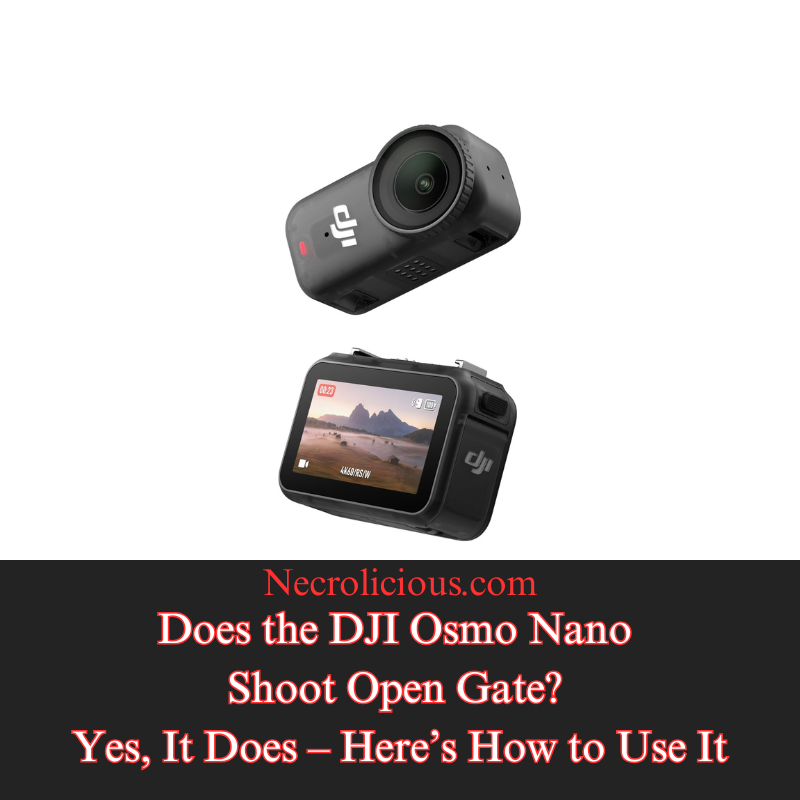
Does the DJI Osmo Nano Shoot Open Gate? Yes, It Does – Here’s How to Use It

For a company as big as DJI & a camera as prestigious as the Osmo Nano, there is surprisingly little information available when searching for answers to the question “Can the DJI Nano shoot open gate?”. The short answer is yes, & the Osmo Nano does so with impressive results through its full-sensor 4K 4:3 recording capability. If you are not familiar with open gate, it is the most versatile format that anyone can shoot in. The key advantage of shooting open gate is the versatility it offers when editing as it gives you a much wider field from which to choose when downsizing your video to meet ratio limitations enforced by social media platforms. If you are having trouble understanding this simply recognise most devices especially phone cameras force you to choose between 9:16 ratio, 16:9 ratio or 1:1 square ratio. With open gate rather than locking yourself to a dedicated frame you utilise your camera’s entire sensor. You get the entire width of 16:9 & the entire height of 9:16. This full-sensor approach opens up creative possibilities that feel liberating once experienced, transforming a single take into multiple polished deliverables ready for any platform.

DJI OSMO NANO
Buy on Rakuten Japan

What Is Open Gate Shooting on the DJI Osmo Nano?

Open gate shooting refers to capturing video using the full readout of the camera’s sensor without applying any in-camera crop. On the DJI Osmo Nano this is achieved through its 1/1.3-inch CMOS sensor which records in native 4:3 resolution at up to 4K. The result is footage that preserves maximum pixel information across both the horizontal & vertical axes. Unlike traditional locked aspect ratios that discard sensor data at the point of capture open gate defers all framing decisions to post-production. This approach mirrors professional cinema workflows where the full negative or digital sensor is exposed first & then cropped or reframed as needed. For the Osmo Nano the open gate mode effectively combines the benefits of a wide horizontal field with an extended vertical canvas allowing creators to extract multiple deliverables from a single take without quality loss. It is this flexibility that makes open gate particularly exciting for creators who value efficiency & creative control in fast-paced or unpredictable shooting environments.

Open Gate Use Cases for Content Creators

The practical applications of open gate on the DJI Osmo Nano extend across diverse shooting scenarios where flexibility is paramount. Walk-and-talk vloggers & run-and-gun filmmakers benefit from the ability to capture dynamic movement without committing to a specific orientation upfront. Action & POV filming benefit immensely because the camera’s magnetic mounting system & compact form factor encourage spontaneous angles, yet open gate ensures footage can later be reframed for any orientation. Travel vloggers & documentary makers use it to capture immersive wide scenes that can be repurposed into both landscape hero shots & portrait social clips. In automotive or product cinematography, including reviews & unboxings, a single pass records full-resolution horizontal & vertical versions simultaneously, eliminating the need for multiple setups or retakes. Even for corporate or event videography where deliverables must serve both widescreen presentations & vertical social stories, open gate streamlines workflow & reduces storage demands. The DJI Osmo Nano’s RockSteady stabilisation pairs naturally with this format ensuring that reframed extracts remain smooth & professional regardless of the final ratio chosen in editing software.

The 4:3 Ratio in Open Gate Workflow

The 4:3 ratio serves as the foundation for open gate shooting on the DJI Osmo Nano because it closely matches the sensor’s native proportions. At 4K resolution this translates to 3840 by 2880 pixels, providing a balanced canvas (wider than it is tall). When shooting in 4:3 open gate you retain the full horizontal width required for cinematic landscape shots while gaining extra vertical pixels that can be used for cropping. In post-production editors simply mask or crop the top & bottom to produce a clean 16:9 frame or retain more of the height for vertical compositions. This ratio maximises creative freedom without compromising resolution & it future-proofs footage against evolving platform requirements. For users of the Osmo Nano selecting 4:3 in the camera’s video settings unlocks the true potential of the sensor & transforms a single recording into a multi-format asset ready for any distribution channel.

The 3:4 Ratio & Its Role in Vertical Content

While 4:3 is the horizontal open gate baseline the 3:4 ratio represents its vertical counterpart & proves equally valuable for portrait-oriented deliverables. Essentially a 90-degree rotation of 4:3 (taller than it is wide), the 3:4 frame utilises the sensor’s full height while narrowing the width to create a taller composition ideal for certain social formats. On the DJI Osmo Nano open gate footage shot in 4:3 can be rotated & cropped in editing to achieve a native 3:4 output at high resolution. This is particularly useful for platforms that favour slightly less extreme vertical framing than 9:16 or for hybrid projects that mix landscape & portrait elements within the same timeline. Creators working on Instagram carousels, YouTube community posts or legacy broadcast formats appreciate 3:4 because it offers a more classical proportion than ultra-tall 9:16 yet still delivers the pixel density needed for sharp downscaling. The ability to extract 3:4 from open gate footage eliminates guesswork at capture time & ensures consistent quality across mixed-media campaigns.

Social Media Ratio Standards & Optimisation for X

Social media platforms enforce specific aspect ratios for optimal display & performance & open gate shooting on the DJI Osmo Nano provides the most efficient way to satisfy them all from one master file. Horizontal 16:9 remains the standard for YouTube long-form & traditional video ads while vertical 9:16 dominates TikTok, Instagram Reels & YouTube Shorts. Square 1:1 continues to perform well for certain Instagram & Facebook posts. The 3:4 ratio fits niche applications such as Pinterest or older mobile feeds. X, formerly Twitter has evolved its video standards to support a wide range of ratios but performs best with 16:9 for desktop viewing, 9:16 for mobile-first scrolling & 1:1 for quick engagement. X recommends uploading at 1920 by 1080 for horizontal or 1080 by 1920 for vertical to avoid compression artefacts & it automatically detects & displays the correct orientation. Because open gate on the Osmo Nano captures surplus pixels in both dimensions, creators can export platform-specific versions without re-shooting or losing detail. Notably the 3:4 extracts from open gate footage deliver videos that are taller than wide while avoiding the pronounced shrinking effect often seen with 9:16 content. In the latest X mobile feed these proportions create a more balanced & visually appealing presence that fills the screen elegantly without feeling overly constrained. This single-source workflow saves time, reduces editing overhead & ensures maximum reach across X & competing networks where vertical video now drives the majority of impressions.

How to Access & Use Open Gate Mode on the DJI Osmo Nano

Now that you have read all about open gate you are probably eager to try it yourself. The process is straightforward but if you have already updated to the latest DJI Nano firmware this unfortunately may have complicated matters slightly. What came with the latest firmware update was a ratio lock. This lock means that you no longer have to rely solely on camera orientation in order to film in 9:16 or 16:9 & can instead move the camera body as freely as you wish without having to worry about output orientation. However, if you utilise 9:16 or 16:9 locked orientation modes you will not see any open gate option. This might prompt you to think “Is my model too old to include open gate?” or “Did DJI remove this feature?” The answer is neither. You can still access open gate but what you must first do is go back to the orientation menu where you pick 16:9 or 9:16 & instead pick the very first option of “Automatic.” Only then will you be able to see the 3:4 open gate option for 1080p, 2.7K & 4K. In case it was not abundantly clear, being in automatic mode means that you are absolutely not frame locked & must position the camera body yourself if you wish to have 4:3 or 3:4 orientation. While it is a little unfortunate that it has become somewhat more difficult to find open gate, rest assured that it is there. Perhaps in a future firmware update DJI will add it to the ratio lock alongside the 9:16 & 16:9 to make it just a little bit easier for everyone to find.

To access open gate mode follow these steps:

  1. Open the orientation menu in the camera settings.
  2. Select Automatic instead of the locked 9:16 or 16:9 modes.
  3. The 3:4 open gate option will now appear for 1080p, 2.7K. & 4K.

By leveraging the DJI Osmo Nano’s open gate capability, content creators gain unprecedented control over final framing & distribution. The camera’s full-sensor approach combined with its portable design & robust stabilisation positions it as a strategic tool for anyone producing video across multiple platforms.

The content of this article pertains specifically to the DJI Osmo Nano. Some readers may wonder “Does the world-famous DJI Pocket 3 also shoot in open gate?: Unfortunately, it does not, as of the time of this writing. However, the potential exists should DJI ever opt to include it in a future firmware update. In the meantime anyone that wishes to have the 4:3 or 3:4 open gate ratio can also export any video in this format using the DJI Mimo app. However, this is a little bit of a backward concept because the point of recording in open gate is to have a wider space to zoom in on specific details such as a particular filming subject being tracked. Therefore there is little point in this feature apart from nicely filling out the space allotted to videos in posts on the X feed.

Buy on Printify

Unless otherwise noted, image assets above are NOT original content & are shared under fair use doctrine with NO claims to authorship or ownership.
Contact necrolicious@necrolicious.com for credit or removal.

This post was sponsored by…ME! If you’d like to support, please buy my original meme merchandise or check out my affiliate links to get yourself some other cool things. Additional affiliate links may be contained in the above article. If you click on an affiliate link & sign up/make a purchase, I may earn a commission. This does not increase the price you pay for the product or service, so it helps support this website at no cost to you.

Share this:

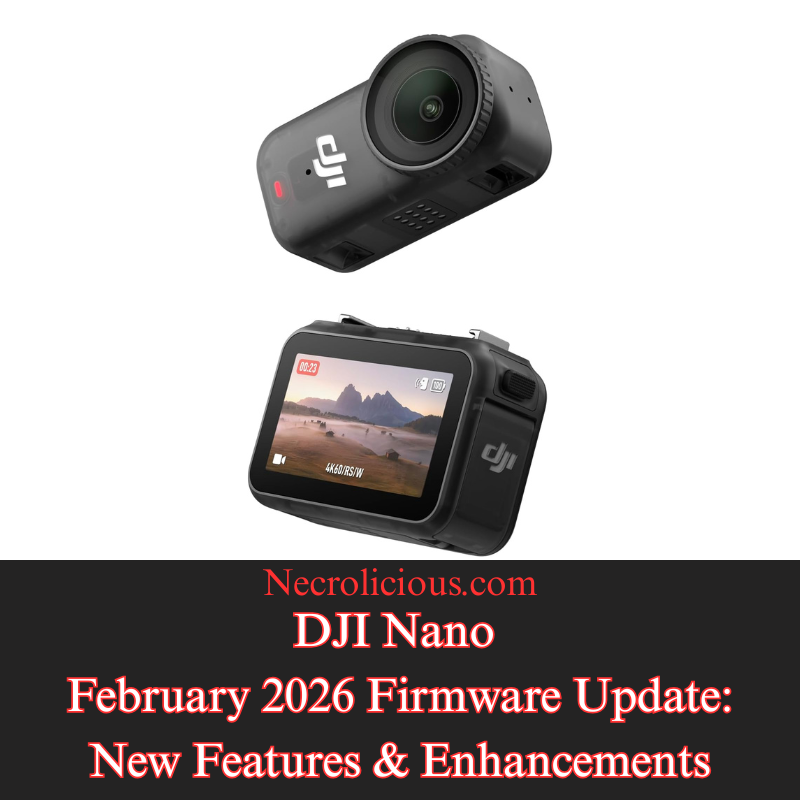
DJI Nano February 2026 Firmware Update: New Features & Enhancements

In the rapidly evolving world of portable photography & videography, DJI continues to refine its offerings through regular firmware updates. The most recent update for the DJI Nano, just released in February 2026, brings the firmware version to v01.01.27.51. Available via the DJI Mimo app for both iOS (v2.6.12) & Android (v2.6.12), this update introduces practical improvements designed to enhance creative flexibility & device reliability. For users encountering installation issues, DJI advises restarting the camera & app, ensuring Wi-Fi & Bluetooth are enabled, & reconnecting before attempting the update again. Persistent problems should prompt contact with DJI Support. This follows a prior update in November 2025 (v01.01.16.50), which added features such as Natural Wide FOV, HorizonCorrection, & improved microphone integration with the vision dock. Below, we explore the new additions in detail, highlighting how they benefit content creators & enthusiasts.

Native 9:16 Aspect Ratio Support in Video Mode

The addition of support for a 9:16 aspect ratio in video mode represents a user-focused enhancement tailored to the growing demand for vertical content in social media & short-form video platforms. This feature allows the DJI Nano to natively capture footage in a portrait orientation, which aligns perfectly with formats used on apps like TikTok, Instagram Reels, & Snapchat, eliminating the need for post-production cropping that could degrade image quality or alter the intended composition. By adjusting the sensor’s output to prioritise height over width, users can achieve fuller utilisation of the camera’s resolution—typically up to 4K in this mode—resulting in sharper, more immersive vertical videos. This is especially beneficial for creators on the go, such as vloggers or social influencers, as it streamlines the workflow from capture to upload, saving time while maintaining professional-grade results. Additionally, it opens up creative possibilities for storytelling, like emphasising tall subjects or vertical panning shots, without compromising on the device’s gimbal stabilisation or intelligent shooting modes.

Introduction of Film Tone in Photo & Video Modes

The introduction of the “Film Tone” option to image parameters in both photo & video modes brings a layer of cinematic sophistication to the DJI Nano’s capabilities, allowing users to apply pre-set colour grading effects that mimic the aesthetic of traditional film. This mode adjusts key elements such as colour balance, contrast, & saturation to produce a more dramatic & evocative look, often with warmer tones, deeper shadows, & controlled highlights that evoke the feel of classic cinema. Unlike standard colour profiles, Film Tone is designed for users who want to infuse their content with artistic flair right at the point of capture, reducing reliance on editing software for basic corrections. It can be particularly advantageous in low-light scenarios or when shooting narrative content, as it enhances dynamic range & preserves details in highlights & shadows. Creators can toggle this option via the DJI Mimo app, experimenting with it alongside other parameters like sharpness or exposure to customise the output, making the Nano a more versatile tool for aspiring filmmakers or photographers seeking a polished, ready-to-share result.

Resolution of Minor Bugs for Improved Performance

The fixing of minor bugs in this firmware update underscores DJI’s commitment to ongoing device optimisation, addressing subtle issues that could impact user experience without introducing major disruptions. These corrections typically target areas like software stability, such as resolving occasional app crashes during live previews, improving Bluetooth connectivity reliability for smoother remote control, or refining algorithm accuracy in features like subject tracking or auto-exposure. While the specifics are often kept general to protect against potential exploits, such updates collectively enhance the Nano’s performance, leading to fewer interruptions during shoots & more consistent battery efficiency. For users, this means a more dependable tool in real-world scenarios, whether filming action sequences or casual clips, & it helps prevent cumulative frustrations that might arise from unaddressed glitches over time. Overall, these bug fixes contribute to the longevity & resale value of the device by ensuring it remains responsive & up-to-date with evolving user needs.

Buy on Rakuten Japan

This firmware update positions the DJI Nano as a competitive choice in the compact camera market, catering to both amateur & professional users who value portability without sacrificing quality. By incorporating vertical video support, cinematic colour options, & essential stability improvements, DJI addresses key trends in content creation while maintaining the device’s core strengths in gimbal technology & ease of use. Users are encouraged to update promptly to access these features, & those new to the DJI ecosystem may find the Nano’s blend of innovation & reliability particularly appealing. For the latest details & troubleshooting, refer to the official DJI website or community forums.

Buy on Suzuri

Unless otherwise noted, image assets above are NOT original content & are shared under fair use doctrine with NO claims to authorship or ownership.
Contact necrolicious@necrolicious.com for credit or removal.

This post was sponsored by…ME! If you’d like to support, please buy my original meme merchandise or check out my affiliate links to get yourself some other cool things. Additional affiliate links may be contained in the above article. If you click on an affiliate link & sign up/make a purchase, I may earn a commission. This does not increase the price you pay for the product or service, so it helps support this website at no cost to you.

Share this:

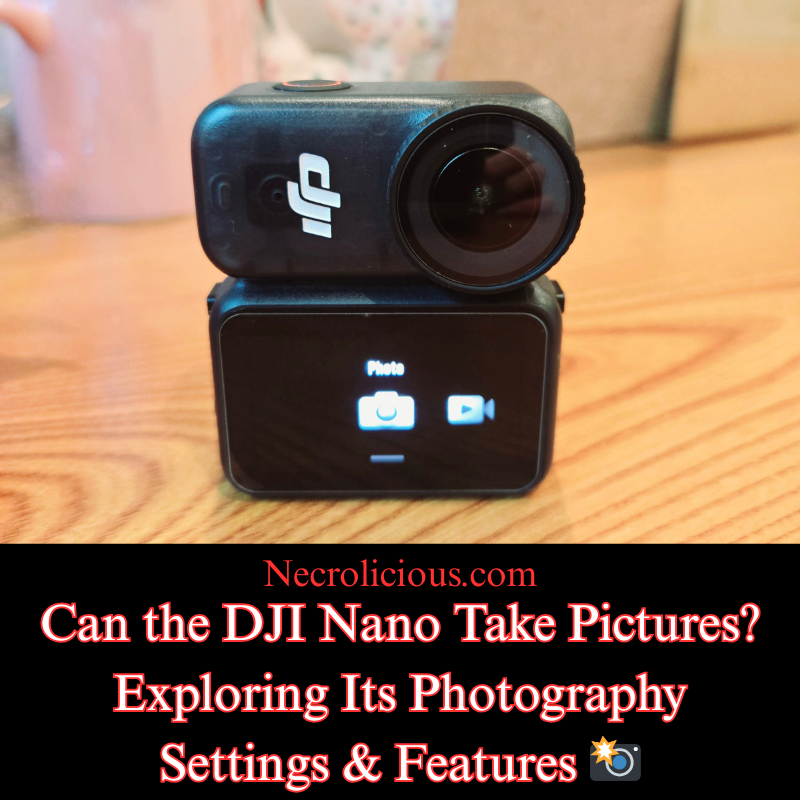
Can the DJI Nano Take Pictures? Exploring Its Photography Settings & Features 📸

In the realm of compact action cameras, the DJI Osmo Nano stands out for its versatility & portability. Designed for adventurers & content creators alike, this device combines advanced video recording with robust still photography capabilities. If you have been wondering whether the DJI Osmo Nano can take pictures, the short answer is yes. Beyond that, it offers a range of settings & features that make it a compelling choice for capturing high-quality images on the go. This article delves into the specifics, highlighting how these elements enhance your photographic experience.

An Overview of the DJI Osmo Nano

The DJI Osmo Nano is an ultra-compact, wearable action camera featuring a modular design with a 1/1.3-inch sensor & a 143° wide field of view. Weighing just 52 grams for the camera unit, it is ideal for mounting in various positions, whether for sports, travel or everyday documentation. While primarily known for its 4K/60fps video recording & 10-bit D-Log M colour performance, the device’s photography functions provide professional-grade results in a diminutive form factor.

8% off until February 2, 2026!
Buy on Rakuten Japan

Key Photography Settings & Features

The DJI Osmo Nano excels in still photography thanks to its dedicated sensor & lens configuration, which support detailed image capture across diverse conditions. Below is a summary of the primary photo specifications:

SpecificationDetails
Sensor1/1.3″ CMOS
LensFOV: 143°, Aperture: f/2.8, Focus Range: 0.35 m to ∞
ISO Range100-25600
Electronic Shutter Speed1/8000-30 s
Max Photo Resolution6880 × 5160 (approximately 35 MP)
Still Photography ModesSingle, Countdown (Off/0.5/1/2/3/5/10 s), Burst (up to 30 images in 3 s)
Photo FormatsJPEG/RAW

These settings allow users to adapt to various lighting scenarios & creative needs. For instance, the wide ISO range facilitates low-light photography, while the burst mode is particularly useful for action shots where timing is critical. The option to shoot in RAW format provides greater flexibility in post-production, enabling adjustments to exposure & colour without loss of quality.

Additionally, the camera’s 13.5 stops of dynamic range ensure that images retain detail in both highlights & shadows, making it suitable for landscapes & high-contrast environments. Features such as Horizon Balancing & stabilisation, borrowed from DJI’s broader ecosystem, further aid in producing sharp, level photographs even during movement.

Practical Applications for Photography

With its magnetic mounting system & waterproof design (up to 10 m for the camera), the DJI Osmo Nano is well-suited for capturing stills in challenging settings. Whether documenting a hike, a pet’s adventures or urban scenes, the device’s photo modes integrate seamlessly with its video functions, allowing for hybrid content creation. Users can switch effortlessly between modes via the 1.96-inch touchscreen or the companion app, ensuring that spontaneous moments are never missed.

The DJI Osmo Nano not only answers the question of whether it can take pictures with a resounding yes but also delivers a suite of advanced settings & features that rival larger cameras. From its high-resolution sensor to versatile modes & formats, it empowers photographers to capture compelling images with ease. If you are seeking a compact yet capable device for your next project, the Osmo Nano merits consideration.

Buy on SUZURI

Unless otherwise noted, image assets above are NOT original content & are shared under fair use doctrine with NO claims to authorship or ownership.
Contact necrolicious@necrolicious.com for credit or removal.

This post was sponsored by…ME! If you’d like to support, please buy my original meme merchandise or check out my affiliate links to get yourself some other cool things. Additional affiliate links may be contained in the above article. If you click on an affiliate link & sign up/make a purchase, I may earn a commission. This does not increase the price you pay for the product or service, so it helps support this website at no cost to you.

Share this:

Samsung x DJI: Did Samsung Make a Bigger, Better Vision Dock for the DJI Nano?

To be clear, Samsung has not officially made any new hardware in partnership with DJI. This “bigger, better” experience stems from DJI Mimo app compatibility with the cover screens featured on Samsung’s Z Flip lineup. The Mimo app connects wirelessly to the Osmo Nano via Wi-Fi & Bluetooth, supporting full functionality including Pro mode on the cover screen, providing a larger, but still palm-sized, means to remotely access the camera preview & more advanced Mimo features that are not as easily accessed on the Nano’s Vision Dock. This setup proves particularly useful for POV shooting with the Nano magnetically mounted, allowing quick framing, parameter tweaks & monitoring on Samsung’s more spacious & vibrant Super AMOLED displays.

The DJI Osmo Nano pairs exceptionally well with Samsung’s Galaxy Z Flip series from the Z Flip5 onwards, where the outer cover screen serves as a larger, more capable alternative to the official Multifunctional Vision Dock’s 1.96-inch OLED touchscreen. By running the DJI Mimo app on the closed phone’s cover display (enabled via Samsung’s Good Lock or native customisations for any app support), users gain a bigger portable viewing & control interface for live preview, remote operation & granular settings adjustments – all without unfolding the device or relying on the smaller, somewhat harder to see & operate dock.

Contrasting Cover Screen Operation of the DJI Mimo App on Galaxy Z Flip5, Flip6 & Flip7

The cover screen experience evolves across models, with progressive improvements in size, resolution & usability for app-based control of the Osmo Nano.

Galaxy Z Flip5 Cover Screen Operation

Buy on Rakuten Japan

The 3.4-inch Super AMOLED cover display (720 × 748 resolution) provides a solid step up from the Vision Dock’s 1.96-inch screen, offering roughly 70% more diagonal area for clearer live previews & easier touch interactions.
Mimo app runs effectively when forced to the cover screen (via Good Lock or settings), enabling real-time viewing, basic remote start/stop & access to Pro mode parameters.
Navigation feels more comfortable than on the dock for sliders & menus, though the resolution & brightness limit fine colour judgement in bright conditions compared to later models.
Ideal for quick checks during action but may require occasional unfolding for the most detailed edits.

Galaxy Z Flip6 Cover Screen Operation

Buy on Rakuten Japan

Retains the same 3.4-inch Super AMOLED size & 720 × 748 resolution as the Flip5, with enhancements in overall phone performance (better battery, processing & brightness).
Mimo app operation mirrors the Flip5 closely on the cover screen – reliable wireless connection, live feed & granular controls – but benefits from improved touch response & outdoor visibility.
Users report smoother app performance & less lag in previews, making it marginally preferable for extended monitoring without the dock.
The experience remains compact yet noticeably larger than the Vision Dock, prioritising portability over expansive real estate.

Galaxy Z Flip7 Cover Screen Operation

Buy on Rakuten Japan

Features a significantly enlarged 4.1-inch Super AMOLED cover display (1048 × 948 resolution, up to 120Hz refresh rate), representing the largest & highest-resolution cover screen in the series to date – with reduced bezels for edge-to-edge usability & approximately double the usable area of predecessors.
This delivers the most compelling alternative to the Vision Dock: substantially bigger live previews, more precise touch targets for sliders/numeric inputs, superior colour accuracy & brightness (up to 2600 nits peak in some modes), & fluid navigation of Pro mode settings even in challenging lighting.
Mimo app excels here for detailed tweaks, with real-time feedback on exposure, stabilisation & more feeling far less constrained.
The larger interface supports better multitasking glimpses (e.g., quick parameter checks mid-shoot) & positions the Flip7 as the standout for app-driven Osmo Nano control.

Viewing Area Comparison Table

Device/ModelCover Screen TypeDiagonal SizeResolution (approx.)Key Advantages for DJI Mimo App Operation on Cover Screen
DJI Osmo Nano Vision DockOLED Touchscreen1.96 inches314 × 556Compact & integrated; phone-free basics; 800 nits typical brightness
Galaxy Z Flip5Super AMOLED Cover3.4 inches720 × 748Larger preview area; good for quick Pro mode access; vibrant but standard resolution
Galaxy Z Flip6Super AMOLED Cover3.4 inches720 × 748Same size as Flip5; enhanced brightness & performance for smoother app use
Galaxy Z Flip7Super AMOLED Cover4.1 inches1048 × 948Biggest & sharpest; edge-to-edge design; superior visibility & precision for detailed controls

The Mimo app unlocks superior granular adjustments on these cover screens compared to the Vision Dock, thanks to larger interfaces & precise controls. Key parameters easier to manage include:

Core Exposure Parameters (Pro mode > Manual “M”)

  • Shutter Speed – Large sliders & real-time preview judge motion blur instantly; dock feels cramped.
  • ISO – Precise selection with visible noise impact on bigger display.
  • Exposure Compensation (EV) – Intuitive live tweaks for balanced brightness.
  • Exposure Mode – Tap-to-toggle with full context visible.

Other Image & Advanced Parameters

  • White Balance – Sliders/presets with accurate colour judgement outdoors.
  • Color Profile – Clear toggle to D-Log M with previews.
  • Bitrate – Easy comparison of quality vs storage.
  • Stabilisation (EIS) – Mode switch with FOV previews.
  • Field of View (FOV) – Better composition on larger framing.

Additional Granular/Custom Settings

  • Custom Mode Saving – Easier naming & management of presets.
  • Pre-Rec (Buffer Recording) – Clear toggles & status.
  • Audio Settings – Detailed sliders for mic gain & wind reduction.

Lastly, let’s not forget your phone’s ability to upload directly to social media–something the DJI Vision Dock just can’t do!

Overall, Samsung’s Galaxy Z Flip cover screen workflow – especially on the Flip7 – offers a bigger, often more practical way to operate the Mimo app for the Osmo Nano, blending foldable convenience with enhanced control. The Vision Dock retains advantages for fully standalone use (extended battery & direct mounts), but for app-centric precision & visibility, the Flip series stands out. For compatibility confirmation & updates, refer to DJI’s Mimo download page & Samsung device specs. The Osmo Nano’s 4K/60fps, 143° FOV & 10-bit D-Log M continue to deliver excellent results in this ecosystem. As a Flip6 owner, I can say that this works with these devices. It may also work with other flip-style phone models, such as those made by Motorola, but since I do not possess such a device, I personally cannot confirm.

As a small side note, DJI is presently offering an 8% discount on the Nano until February 2, 2026. Bundled with point back campaigns & other credit card rewards, this can jump up to about 10%, so get it while the getting is good!

Buy on Rakuten Japan

Unless otherwise noted, image assets above are NOT original content & are shared under fair use doctrine with NO claims to authorship or ownership.
Contact necrolicious@necrolicious.com for credit or removal.

This post was sponsored by…ME! If you’d like to support, please buy my original meme merchandise or check out my affiliate links to get yourself some other cool things. Additional affiliate links may be contained in the above article. If you click on an affiliate link & sign up/make a purchase, I may earn a commission. This does not increase the price you pay for the product or service, so it helps support this website at no cost to you.

Share this:

DJI NANO Action Camera: Unbiased First Thoughts & Impressions

@necroliciouseng

I got the DJI NANO but Tiktok blocks duplicate uploads, so I reversed the video to avoid the flag 🤣 Check out my Japanese channel if you want to see the unboxing 🇯🇵 #dji #djinano #djinanoactioncamera #actioncamera #reboxing

♬ Take A Picture – Filter

I just got ahold of the DJI NANO action camera. As my first action camera, I thought I would share my initial thoughts & impressions of it. This post is not sponsored by DJI, so I am sharing my own unbiased opinion.

Buy on Rakuten Japan

Why Did I Buy the DJI Nano?

Why now & why this specific model? There are several reasons. Firstly, as I have repeatedly warned, electronic prices have been trending upward. Even last-generation devices are being marked up rather than priced down as they are phased out like they used to be. It may be years before we see the type of price decreases that we use to as items were phased out. Additionally, there have been intensifying rumours of supply constraints specific to Japan in the form of import restrictions. Overall, I wanted to beat the market & get the NANO while I could before it gets marked up or otherwise becomes unavailable. As for why I got this specific model, already having the DJI Pocket 3 as well as my Samsung Flip 6, the reason is that it is compact & discreet in comparison to those. I primarily intend to use the NANO to shoot hands-free, utilising the included necklace attachment for easy point-of-view recording. I find that getting out my phone is intrusive since I have to hold it & draw attention to the fact that I am recording. Same with the DJI Pocket 3. For first-person-perspective shots with either of those devices, I need to carry around a chest harness mount then strap it on when I want to shoot. The result is much bulkier & ungainly, drawing undue attention to the fact that I am recording. Specific to my phone, I always worry that I might drop & seriously damage it in the process. As cool as they are, Samsung’s Flip series aren’t known for durability or ruggedness at all, & being without a phone for weeks due to an accident is not a position I wish to put myself in. With the NANO, I can easily wear it & nobody even knows that I’m recording. I also don’t have to worry that an accidental drop will cut me off from the world as it would with my phone. It is still a fairly large lens, so I think anybody paying attention would notice it immediately. I would not recommend it for 100% covert recording for that reason, but spying like that is not my intent. I simply want an unobtrusive, discreet way to record various events & attractions that I visit or overhead views of product unboxing/testing. At this point of what I suppose you would call my video career, it seems that the faceless videos I post get more traction than those of me talking. Maybe one day I will surpass this level, but in the meantime, I think this camera will give me a great edge in recording the types of videos that seem to perform best on my TikTok, YouTube, etc. Lastly, I am already somewhat locked into the DJI ecosystem, possessing not only the Pocket 3 but also the Mic 2. Therefore, buying another brand without the compatibility was less appealing than just sticking to something I was already familiar with & had both hardware/software for.

What Is the Performance Like?

So far, so good. I had been worried since numerous reports of overheating issues occurring within less than 10 minutes were rampant at release, but this does not seem to be the case with my model. Whether that is due to an upgrade of the hardware or firmware, I am not sure, but in my initial testing I got over 20 minutes shooting at maximum settings with no signs of overheating. Feeling safe, since I personally never record any longer than that, I cut off the overheat testing at that point to check out other features. I had initially mistaken the screen timeout for overheating. This occurred less than two minutes in, but after a slight bit of research, I realised all I needed to do was swipe right on the screen to set the timeout to “never” & the issue has not returned. I should also note that there is on-board memory capacity so, unlike the Pocket 3, you do not need an SD card before you can record anything. I opted for the 128GB, rather than the 64GB model, due to memory shortages being a driving force in global technology price increases. I tend to shoot everything in 1080p, but it is good to know that I have the 4K option there if I ever happen to want or need it. I do not think that we are at the point where most platforms fully welcome 4K, but since I am uploading to social media in an effort to become monetised, I do not think wasting space to have a 4K video that only anyone at my own home can see is worth the sacrifice. Just to mention the one real problem I’ve had so far, the DJI Mimo app not exporting my edited videos to my phone. The app will say that it is exported, but it does not appear in the DJI Exports album or anywhere else in my gallery. It takes several tries to push it through &, however many tries it takes, that many copies are pushed to the album when it finally does work (today, I had to push it through 7 times &, when it finally went through, I ended up with 7 copies of the same video). This is annoying & frustrating, but I cannot blame it on the NANO particularly since I am not sure if it is the camera, the Mimo app or even my phone itself. I intend to contact DJI support to see if they can provide some help with this.

Do I Recommend This Camera?

I do. Many reviews that I watched & read prior to making my own purchase warned that it is not a true action camera, but that is not my intended purpose anyway. I do not plan to take my NANO kayaking, rock-climbing or on a motorcycle (especially since I no longer have one). I simply want to use it for both event videos & product unboxing/review videos. If your intentions are the similar mine, I would definitely recommend it. A closed model such as the DJI Action series would likely be better for you if you are planning to partake in more extreme activities such as outdoor sports, etc.

As I mentioned above, prices may soon go up due to shortages of memory at an industrial scale &, if you are in Japan, additional import restrictions may further limit or cease availability. Therefore, I would advise getting it sooner rather than later.

Buy on SUZURI

Unless otherwise noted, image assets above are NOT original content & are shared under fair use doctrine with NO claims to authorship or ownership.
Contact necrolicious@necrolicious.com for credit or removal.

This post was sponsored by…ME! If you’d like to support, please buy my original meme merchandise or check out my affiliate links to get yourself some other cool things. Additional affiliate links may be contained in the above article. If you click on an affiliate link & sign up/make a purchase, I may earn a commission. This does not increase the price you pay for the product or service, so it helps support this website at no cost to you.

Share this:

DJI Osmo Pocket 4 Launch Delayed?

The highly anticipated DJI Osmo Pocket 4, the next iteration of DJI’s popular ultra-compact 3-axis gimbal camera, has encountered a setback in its release schedule. Initially rumoured to launch as early as 18 December 2025, the device is now expected to arrive in the latter half of January 2026, according to reliable industry sources.

Reasons Behind the DJI Osmo Pocket 4 Delay

Insider reports from Photorabz indicate that the postponement stems from unprepared accessories for the new model. The core camera is reportedly ready, but ensuring a complete and polished ecosystem has led to the shift. Recent updates suggest the release is slated for January 2026, likely towards the latter half of the month.

Potential Teaser & Ongoing Preparations

Action camera outlets report that DJI may unveil a teaser page by the end of December 2025. While a December launch is now ruled out, preparations continue – the device has secured FCC certification in the United States, clearing regulatory pathways.

What to Expect from the DJI Osmo Pocket 4

As the successor to the acclaimed Osmo Pocket series, the DJI Osmo Pocket 4 is poised to feature enhancements such as a larger battery, potential dual-camera setup & improved stabilisation for portable videography.

Plenty of Recent DJI Releases for Enthusiasts

DJI fans are far from short of new gear. The company has delivered several notable launches in recent months, including the compact DJI Osmo Nano wearable camera (launched September 2025), the flagship Osmo Action 6 action camera (launched November 2025), & the advanced DJI Mic 3 wireless microphone system (released August 2025). Additionally, the innovative Osmo 360 panoramic camera debuted in July 2025, expanding options for immersive content creation.

Advice for Osmo Pocket 3 Owners Looking to Upgrade

Buy on Rakuten Japan

Those considering selling their Osmo Pocket 3 to fund the Pocket 4 & secure the best resale value should act promptly. The delay provides an extra grace period before the new model’s arrival potentially impacts second-hand prices. Listing on resale platforms now could yield stronger returns ahead of the January 2026 launch.

Unless otherwise noted, image assets above are NOT original content & are shared under fair use doctrine with NO claims to authorship or ownership.
Contact necrolicious@necrolicious.com for credit or removal.

This post was sponsored by…ME! If you’d like to support, please buy my original meme merchandise or check out my affiliate links to get yourself some other cool things. Additional affiliate links may be contained in the above article. If you click on an affiliate link & sign up/make a purchase, I may earn a commission. This does not increase the price you pay for the product or service, so it helps support this website at no cost to you.

Buy on SUZURI
Share this: