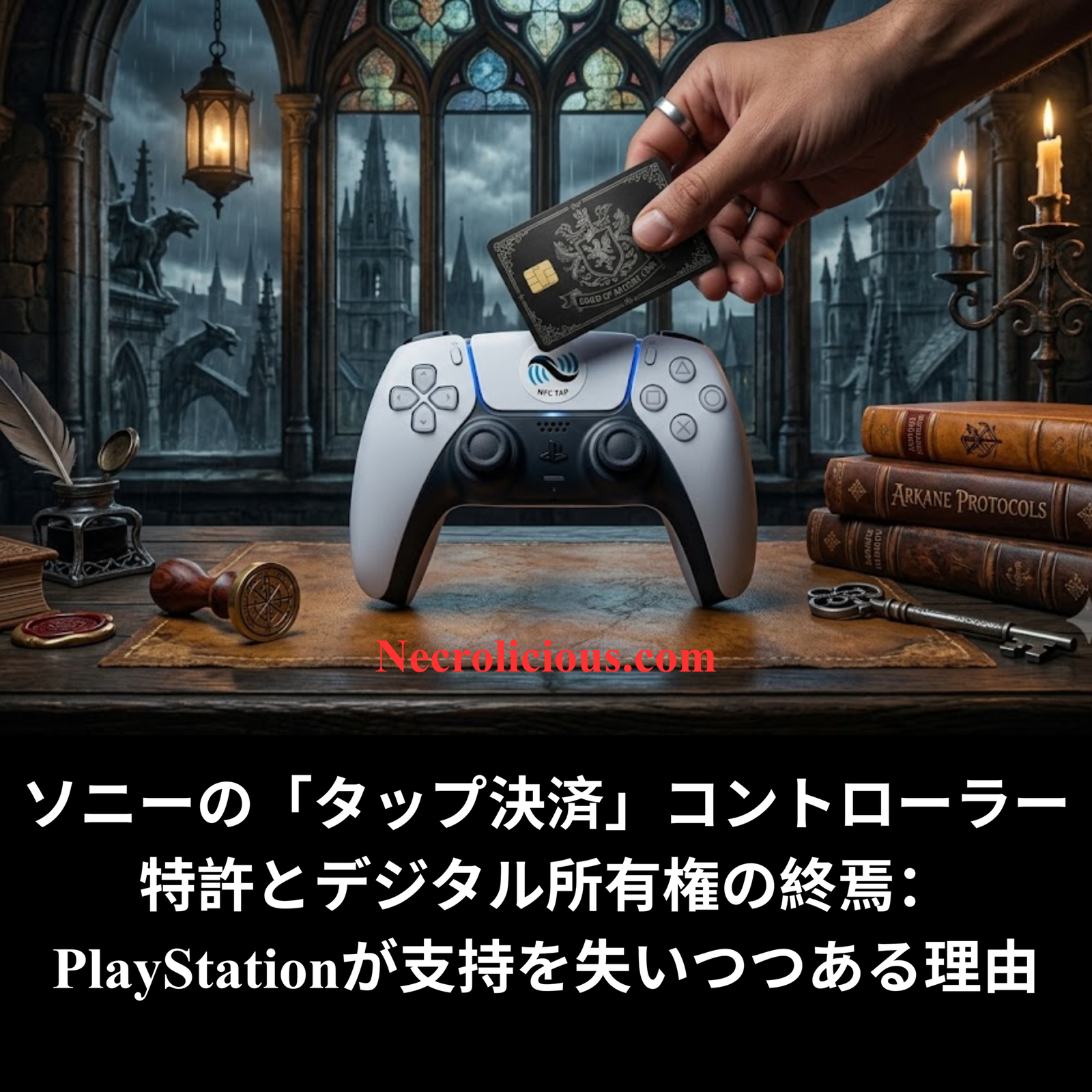
PlayStation Blogに英語と日本語の両方で掲載された公式発表は、全世界に一律に適用される。発表によると、期限後に発売される新作ゲームは、PlayStation Storeおよび小売店でデジタル版のみで入手可能となる。既存のタイトルおよび2028年1月以前に発売されるタイトルは影響を受けない。日本を含む地域ごとの例外措置は明記されていない。
Nintendo Switchでは、物理カートリッジにアカウントに紐づけられたダウンロードコンテンツ(DLC)が同梱され、内蔵メモリまたはSDカードにインストールされます。他のゲーム機でも同様の仕組みで、ディスクまたはカートリッジがインストーラーとライセンスの両方の役割を果たします。一部のリリースでは追加コンテンツがプリロードされていたり、以前の拡張パックを同梱した完全版が提供されたりします。
When Sony confirmed the end of physical disc production for new PlayStation games from January 2028, reactions diverged sharply between Western gamers & those in Japan. In the days since the announcement, Western platforms have seen sustained criticism alongside corporate responses such as social media pauses, while Japanese responses have remained more measured. This divergence reveals differing cultural priorities around physical media, even as digital convenience continues to advance.
The official announcement, published on the PlayStation Blog in both English & Japanese editions, applies uniformly worldwide. It states that new games releasing after the cutoff will be available only via the PlayStation Store & at retailers in digital formats. Existing titles & those launching before January 2028 remain unaffected. No regional exceptions were noted for Japan or elsewhere.
Scope of the Policy & Official Context
Sony framed the change as adaptation to consumer trends, noting that digital preference significantly outpaces physical discs. The decision affects all new releases on PlayStation consoles, including third-party titles. Retailers may continue selling digital codes, but physical discs themselves will no longer be manufactured.
This marks a clear endpoint for optical media on the platform after decades of support. Historical context shows physical discs enabled resale, lending & offline preservation in ways many players still value. The policy aligns with broader industry shifts, yet it arrives amid heightened sensitivity to digital licensing terms.
Western Reactions: Focus on Ownership & Access
In English-language spaces such as forums, social platforms & news comment sections, responses emphasised concerns over true ownership. Many users highlighted risks of server shutdowns rendering purchased content inaccessible, echoing past closures of older PlayStation stores. Discussions frequently referenced the phrase that buying no longer equates to owning, with some advocating alternative acquisition methods including piracy.
Practical worries included impacts on preservation, the second-hand market & collector value. High-engagement posts framed the move as accelerating a shift toward temporary licences rather than permanent media. Balanced voices acknowledged convenience benefits of digital distribution while questioning long-term reliability without physical backups.
In the days immediately following the announcement, the backlash manifested in visible corporate responses. PlayStation’s official social media accounts across X, Instagram, Facebook & Bluesky fell silent for more than 24 hours, with no new posts appearing after the initial statement. Unrelated updates from associated Sony accounts were quickly inundated with thousands of critical replies focused on physical ownership. This pause has been widely noted as an attempt to navigate the intense public reaction.
Japanese Netizen Responses: Pragmatic Concerns Over Outrage
Coverage in Japanese outlets including the Japan Times, Famitsu & ITmedia presented the announcement factually, often alongside notes on concurrent PlayStation Store changes for older hardware. Reader comments & social media posts on platforms such as X showed disappointment, particularly among those who value packaging & physical collections.
Common themes included potential effects on used-game retailers & future access if digital services change. However, outright anger appeared less prevalent than in Western discussions. Many expressed resignation that the industry trend toward digital was inevitable, with some noting they had already shifted purchasing habits. Concerns centred on preservation & second-hand ecosystems rather than immediate calls for protest or alternative acquisition.
One recurring observation was that physical preference persists in Japan despite smaller average living spaces, creating an irony where storage constraints meet strong collector traditions. Reactions remained civil & focused on adaptation rather than confrontation. Coverage & discussion in Japanese outlets and communities have not shown significant escalation in the days following the announcement, with focus remaining on practical continuity for collectors and second-hand markets.
Cultural Context: Physical Media Traditions in Japan
Japan maintains a robust culture around physical game releases, limited editions & retro collecting. Data from earlier industry reports indicated higher proportions of physical sales for certain platforms compared with many Western markets. This preference extends to homebrew scenes, where small publishers produce boxed cartridges with manuals & artwork.
The announcement intersects with these traditions at a moment when digital adoption continues rising even in Japan. Historical parallels exist with earlier transitions, such as the move from cartridges to discs, yet physical media retains cultural resonance through tactile ownership & display value. Smaller housing may eventually favour digital for practicality, but enthusiast communities continue supporting physical options where available.
Corporate & Promotional Fallout in the Days Following the Announcement
The timing of the announcement coincided with heightened attention on Grand Theft Auto VI, whose physical edition contains only a download code rather than a disc. Reports also surfaced of PlayStation adjusting promotional branding and app icons around the title, including temporary themed changes that were later reverted. These elements have been cited by observers as amplifying perceptions of an accelerating shift away from physical media. The developments have not prompted any policy reversal from Sony, but they underscore the broader industry movement and the challenges of managing collector expectations.
Opportunities for Indies & Retro Scenes
Removal of physical disc options on PlayStation could redirect attention toward platforms that retain physical support. Nintendo Switch cartridges, PC limited editions & retro formats offer alternatives for developers seeking tangible releases.
The Game Boy Color homebrew title Dracula: Dark Reign, released physically in 2026 by Incube8 Games with a clear cartridge & boxed presentation, illustrates ongoing demand in retro scenes. Such projects demonstrate that independent creators can deliver collector-focused physical products outside major console ecosystems.
Publishers specialising in limited runs have long partnered with indies to produce premium editions. Heightened awareness of ownership issues may encourage more studios to pursue these channels on platforms where physical remains viable. Multi-platform titles could prioritise physical on Switch or through specialist distributors, capturing collector interest while digital handles updates.
Physical media need not remain static. Modern cartridges & discs already function in hybrid arrangements. The physical component provides the base game & ownership verification, while patches, updates, downloadable content & expansions download separately to console storage.
On Switch, physical carts pair with account-linked DLC that installs to internal memory or SD cards. Similar patterns apply on other consoles, where the disc or cartridge serves as installer & licence. Some releases preload additional content or offer complete editions bundling prior expansions.
Discussions since the announcement have highlighted that many current physical releases already function in this hybrid manner, allowing updates and expansions while preserving the physical base for ownership. This approach preserves offline play for the core experience & resale potential of the physical copy. Expansions enhance rather than replace the owned base. Limitations exist around storage requirements & reliance on ongoing support for digital additions, yet the model bridges traditional permanence with contemporary live-service flexibility.
Practical Takeaways for Collectors & Players
Collectors concerned about the 2028 cutoff can focus on pre-cutoff physical releases & titles from other platforms. Building libraries on Switch or through limited-edition publishers provides continued access to physical formats.
For those prioritising ownership, hybrid purchasing strategies work well: acquire the physical base for permanence & supplement with digital expansions as needed. Monitoring developer statements on long-term support remains advisable.
Retro & homebrew communities offer additional avenues. Physical releases in these spaces often emphasise complete, self-contained experiences with strong collector appeal. Players exploring alternatives may consider Nintendo’s ongoing physical support or specialist publishers for limited editions on other platforms. Monitor ongoing discussions around major titles like Grand Theft Auto VI and their physical formats, as these continue to intersect with the broader debate.
Balanced Outlook
Sony’s decision reflects measurable shifts in purchasing behaviour, yet it removes a hybrid option that many players have relied upon. Western emphasis on ownership debates contrasts with Japanese focus on practical continuity & market effects. Both perspectives underscore enduring value placed on physical media even as digital capabilities expand.
Indie & retro sectors stand positioned to respond through alternative physical channels. The hybrid model already demonstrates compatibility between permanent physical bases & ongoing digital enhancements. Players retain agency through platform choice & purchasing decisions.
For deeper exploration of physical retro releases, including vampire-themed homebrew examples, see our coverage of titles like Dracula: Dark Reign. Additional context on limited physical editions appears in our feature on indie collector strategies. Analysis of ownership debates in the digital era can be found in our dedicated guide. Insights into Japanese gaming culture & physical traditions feature in our article on regional collecting practices.
FAQ
Will Nintendo or Microsoft follow Sony’s approach? No official announcements indicate similar cutoffs. Nintendo continues strong support for physical cartridges on current & upcoming hardware.
Can physical copies still receive updates & DLC after purchase? Yes. Modern physical games routinely support downloaded patches & expansions while the disc or cartridge provides the base & ownership verification.
What happens to existing physical PlayStation libraries? Titles released before January 2028 remain available in physical form. Post-cutoff games will launch digitally only.
Are there ways to secure physical releases for future titles? Focus on Switch, PC limited editions or retro/homebrew platforms. Specialist publishers continue producing physical versions for many independent releases.
How does the hybrid model affect long-term preservation? The physical component preserves the original base game offline. Digital additions depend on ongoing platform support, creating a layered approach to access & ownership.
Unless otherwise noted, image assets above are NOT original content & are shared under fair use doctrine with NO claims to authorship or ownership. Contact necrolicious@necrolicious.com for credit or removal.
This post was sponsored by…ME! If you’d like to support, please buy my original meme merchandise or check out my affiliate links to get yourself some other cool things. Additional affiliate links may be contained in the above article. If you click on an affiliate link & sign up/make a purchase, I may earn a commission. This does not increase the price you pay for the product or service, so it helps support this website at no cost to you.
If you would like to support my work more directly, I accept voluntary cryptocurrency donations in BTC, ETH, XRP & XLM sent directly to necrolicious.x. necrolicious.x is an Unstoppable Domains name that resolves to the wallet addresses I have configured. Simply enter necrolicious.x as the recipient in a supported wallet (such as Trust Wallet, Blockchain.com or others that support Unstoppable Domains). Donation Disclaimer: All cryptocurrency donations sent to me are final, voluntary gifts & are non-refundable & irreversible. These donations are not tax-deductible since I am not a registered charitable organization, & no tax receipts will be issued. No memo or destination tag is required for XRP or XLM donations, as the domain resolves directly to a wallet address. By sending a donation you acknowledge & accept all associated risks, including cryptocurrency price volatility, network fees & potential loss of funds due to incorrect network selection or transaction errors. I am not responsible or liable for any loss related to your donation. No goods, services or other benefits are provided in exchange for donations. This is not financial, tax, legal or investment advice. Please consult a qualified professional regarding any implications of your donation.
The new AI Camera Assistant* with Xperia Intelligence brings stories to life. Using subject, scene and weather, it suggests expressive options with adjustments of colour, exposure, bokeh, and lens for breathtaking photos*.https://t.co/zgSQ9MLWFP#SonyXperia#Xperia1VIIIpic.twitter.com/1dsBeCNvhE
For decades Japan stood at the frontier of consumer electronics, exporting Walkmans, Vaio laptops & feature-rich mobile handsets that defined entire generations. Today that credibility is fading fast. A nation that once led the world in portable music, gaming & imaging now commands a mere 2.52% share of its own domestic smartphone market, with Apple alone holding nearly 60%.
The Xperia 1 VIII was supposed to change the narrative. Instead, it has become the latest exhibit in Sony’s stubborn refusal to build a true global contender. The device is, yet again, just a camera with some phone features. The marketing missteps that followed have only deepened the sense that Sony is either incapable of competing with Apple & Samsung or, more worryingly, content not to try. Some observers have even begun to wonder whether these repeated blunders are designed to keep the stock volatile enough to benefit short sellers. Whatever the truth, the outcome is the same: Japan’s last realistic hope of fielding a major smartphone on the world stage is slipping away.
Japan’s Lost Edge: From Walkman Pioneer to iPhone Colony
Few countries have fallen as far & as fast in consumer technology as Japan. In the 1980s & 1990s Sony, Sharp, NEC & Panasonic dominated headlines & high-street shelves worldwide. Japanese firms invented the portable cassette player, the CD, the memory stick & the first commercially successful camera phones. Mobile culture itself was born in Japan with i-mode data services years before the rest of the world caught up.
Fast-forward to 2026 & the picture is bleak. Statcounter data for April 2026 shows Apple at 59.65 %, Google at 12.95 % & Samsung at 7.8 %. Sony languishes in sixth place. Even in its home market, where national pride & carrier relationships should offer an advantage, the Xperia line is an afterthought. Without a credible Japanese flagship that ordinary consumers actually want, the country’s once-vaunted reputation as a technological frontier risks becoming historical footnote rather than living reality.
Sony, more than any other Japanese firm, had the pedigree to reverse this decline. Its imaging division supplies sensors to half the world’s cameras. Its audio heritage is peerless. A smartphone that married those strengths with flagship performance, aggressive pricing & mainstream marketing could have restored national pride & global relevance. Instead, the company has doubled down on a niche strategy that guarantees irrelevance.
The Xperia 1 VIII: Camera First, Everything Else Forgotten
The official product announcement video runs for four-and-a-half minutes yet feels like a Sony Alpha camera commercial with a phone cameo. The bulk of the runtime is devoted to the new AI Camera Assistant, enlarged telephoto sensor, RAW multi-frame processing, human pose estimation & Auto Framing. Brief mentions are made of a brighter display, better speakers, two-day battery life & a refreshed design. The Snapdragon 8 Elite processor, RAM & storage configurations, charging speeds & software features are passed over in virtual silence.
This is not an oversight; it is the brand’s deliberate positioning. Sony has long marketed the Xperia 1 series exclusively to serious photographers & videographers who already own Alpha cameras. The dedicated shutter button, ZEISS optics, microSD slot & 3.5 mm headphone jack cater to that tiny audience. For everyone else the message is clear: look elsewhere.
The Marketing Blunder that Went Viral for All the Wrong Reasons
The new AI Camera Assistant* with Xperia Intelligence brings stories to life. Using subject, scene and weather, it suggests expressive options with adjustments of colour, exposure, bokeh, and lens for breathtaking photos*.https://t.co/zgSQ9MLWFP#SonyXperia#Xperia1VIIIpic.twitter.com/1dsBeCNvhE
Sony’s official Xperia account on X posted a side-by-side comparison meant to showcase the AI Camera Assistant’s “expressive” edits. The backlash was instantaneous & brutal. The AI-processed images looked noticeably worse than the originals: washed-out colours, overexposed highlights & an unnatural flatness. A woman in a field, a flower in a vase & a simple croissant all suffered the same fate. Within hours the post had become an internet punchline, racking up thousands of quotes & replies labelling it the best anti-AI advertisement of the year.
For a company whose entire corporate identity rests on imaging excellence, this was catastrophic. It did not simply fail to impress; it actively eroded trust in the one feature Sony claims as its unique selling point. When even enthusiasts are laughing at your flagship’s flagship feature, the problem runs far deeper than creative direction.
Deliberate Failure or Institutional Inertia?
The pattern is now unmistakable. Successive Xperia launches have followed the same script: lead with camera wizardry, treat the rest as footnotes, price at a premium & watch sales remain microscopic. Sony’s mobile division has shrunk dramatically since the days of the joint venture with Ericsson. Global volumes are a fraction of Samsung’s or Apple’s. Yet the company shows no sign of changing course.
This stubbornness has led some market watchers to ask an uncomfortable question. Is Sony failing on purpose? With its stock price sensitive to headline volatility, repeated self-inflicted wounds in the consumer-facing Xperia line could theoretically create trading opportunities for short sellers. While no concrete evidence has surfaced, the consistency of the missteps & the refusal to address obvious market signals do raise eyebrows. A firm with Sony’s resources & talent could easily pivot toward broader appeal. That it chooses not to invites speculation.
Rays of Hope: Other Japanese Companies with Smartphone Potential
Imagine an Xperia flagship that retained the camera excellence but also delivered:
Aggressive pricing to undercut Galaxy S & iPhone equivalents
Deep ecosystem partnerships with Japanese carriers & services
Everyday AI tools marketed to normal users, not just creators
A global advertising campaign that celebrated Japanese design & engineering
Such a device could have reclaimed shelf space in Europe, the United States & emerging markets. It could have reminded the world that Japan still builds the best imaging hardware on the planet. Instead we get another camera with a phone attached. While Sony’s narrow focus has contributed to the broader erosion of Japan’s smartphone presence, it is worth noting that several domestic players retain genuine technological strengths that could, in theory, support a world-class flagship capable of restoring national credibility on the global stage. Sharp stands out as the most credible alternative, with its AQUOS series benefitting from proprietary IGZO display technology that delivers exceptional efficiency, brightness & battery life; recent models such as the AQUOS sense10 have already begun limited international expansion into Taiwan, Indonesia & Singapore. FCNT (the successor to Fujitsu’s mobile division) continues to emphasise rigorous in-Japan manufacturing, MIL-STD durability & extended software support in its Arrows range, while Kyocera’s DuraForce & Digno lines excel in rugged, enterprise-grade reliability that remains unmatched for professional users. Even Rakuten Mobile’s compact Hand & Mini devices demonstrate innovative integration with local services & minimalist design. Should any of these firms—or a fresh consortium—marry such specialised expertise with aggressive global pricing, mainstream marketing & comprehensive flagship specifications, Japan could yet field a serious contender against Apple & Samsung. At present, however, these efforts remain fragmented & overwhelmingly domestic, reinforcing rather than reversing the country’s slide from technological forerunner to follower.
If you are a professional photographer who values manual controls & expandable storage, the Xperia 1 VIII remains worth evaluating once independent reviews confirm real-world performance. For the vast majority of consumers, however, the established choices from Samsung & even Apple deliver a far more complete & future-proof experience.
Practical advice:
People are more likely to laugh at you than laugh with you if you buy one just because of the memes
Factor in the higher price, limited carrier availability & shorter software support
Consider waiting for hands-on reviews expected in late June 2026
Japan deserves better. The country that gave the world the Walkman & the PlayStation still possesses the engineering talent & cultural heritage to produce a smartphone that matters globally. Sony, for now, appears unwilling or unable to deliver it. Until that changes, Japan’s technological credibility will continue to erode, one viral marketing failure at a time.
Necrolicious “I Did Not Pay My Internet Bill” Funny Broke Witch Goth Meme 100% Cotton Unisex Tee Buy on Printify
FAQ
Why does Sony focus almost exclusively on camera features? The Xperia line is deliberately aimed at creators who already own professional Alpha gear. It is a conscious business choice rather than a failure to understand consumer needs.
Does Japan still have any chance of producing a major global smartphone brand? Technically yes, but only if Sony or another Japanese firm dramatically broadens its appeal. Current trends suggest that window is closing fast.
Is the Xperia 1 VIII worth buying? Only for a very specific niche. Most users will find better value & everyday usability elsewhere.
What is the current smartphone market share situation in Japan? As of April 2026 Apple holds 59.65 % while Sony sits at just 2.52 %, underscoring the scale of the domestic challenge.
Could Sony’s marketing really be helping short sellers? No proof exists, but the repeated pattern of self-sabotage has prompted the question among industry analysts.
Unless otherwise noted, image assets above are NOT original content & are shared under fair use doctrine with NO claims to authorship or ownership. Contact necrolicious@necrolicious.com for credit or removal.
This post was sponsored by…ME! If you’d like to support, please buy my original meme merchandise or check out my affiliate links to get yourself some other cool things. Additional affiliate links may be contained in the above article. If you click on an affiliate link & sign up/make a purchase, I may earn a commission. This does not increase the price you pay for the product or service, so it helps support this website at no cost to you.
If you would like to support my work more directly, I accept voluntary cryptocurrency donations in BTC, ETH, XRP & XLM sent directly to necrolicious.x. necrolicious.x is an Unstoppable Domains name that resolves to the wallet addresses I have configured. Simply enter necrolicious.x as the recipient in a supported wallet (such as Trust Wallet, Blockchain.com or others that support Unstoppable Domains). Donation Disclaimer: All cryptocurrency donations sent to me are final, voluntary gifts & are non-refundable & irreversible. These donations are not tax-deductible since I am not a registered charitable organization, & no tax receipts will be issued. No memo or destination tag is required for XRP or XLM donations, as the domain resolves directly to a wallet address. By sending a donation you acknowledge & accept all associated risks, including cryptocurrency price volatility, network fees & potential loss of funds due to incorrect network selection or transaction errors. I am not responsible or liable for any loss related to your donation. No goods, services or other benefits are provided in exchange for donations. This is not financial, tax, legal or investment advice. Please consult a qualified professional regarding any implications of your donation.
As I warned everyone last year, & again in January, the tech winter caused by ChatGPT’s sam altman is making electronic devices of all sorts more expensive. We’re not simply discussing next generation consoles, but current generation consoles are affected, too. As evidenced by the fact that Sony has officially announced a worldwide PS5 price increase that will take effect on April 2, 2026. The adjustment covers the standard disc edition, Digital Edition, PS5 Pro & PlayStation Portal remote player. This marks the second notable rise in roughly a year & stems from sustained global economic pressures including higher costs for components such as RAM & memory chips.
The change applies across all major markets with updated recommended retail prices now confirmed for the United States, United Kingdom, Europe & Japan. Consumers in other territories should consult local retailers for exact details.
Get your PlayStation 5 now before prices rise on April 2nd:
Note that Japan’s separate cheaper language-locked Digital Edition model sold only domestically remains unaffected by this increase.
PlayStation Portal Also Affected Globally
The handheld remote player sees a corresponding rise in every region.
United States: $249.99 (previously $199.99)
United Kingdom: £219.99 (previously £179.99)
Europe: €249.99 (previously €199.99)
Japan: ¥39,980 (previously ¥34,980)
Nintendo Switch Price Hike Update
Nintendo has not set any date for a console price increase on the Switch or Switch 2 in the West or Japan. While the company has acknowledged ongoing monitoring of component costs & market conditions, its president has stated it cannot comment on hypotheticals at this stage. No hardware price change is currently scheduled, but you can still buy one now to be safe.
The only confirmed upcoming Nintendo pricing adjustment concerns first-party Switch 2 games rather than the console itself. Starting in May 2026 with pre-orders for titles such as Yoshi & the Mysterious Book new Nintendo-published digital titles exclusive to Switch 2 will carry a lower MSRP than their physical versions. Physical game prices are not increasing. This policy applies across all regions including the West & Japan.
Shoppers planning a PS5 purchase may wish to review current stock & pricing before April 2, 2026 to secure the existing rates where still available. For the latest official confirmation always refer to Sony’s PlayStation Blog or authorised retailers in your location.
“I Did Not Pay My Internet Bill” Funny Broke Witch Goth Meme 100% Cotton Unisex Tee Buy on Printify
Unless otherwise noted, image assets above are NOT original content & are shared under fair use doctrine with NO claims to authorship or ownership. Contact necrolicious@necrolicious.com for credit or removal.
This post was sponsored by…ME! If you’d like to support, please buy my original meme merchandise or check out my affiliate links to get yourself some other cool things. Additional affiliate links may be contained in the above article. If you click on an affiliate link & sign up/make a purchase, I may earn a commission. This does not increase the price you pay for the product or service, so it helps support this website at no cost to you.
If you would like to support my work more directly, I accept voluntary cryptocurrency donations in BTC, ETH, XRP & XLM sent directly to necrolicious.x. necrolicious.x is an Unstoppable Domains name that resolves to the wallet addresses I have configured. Simply enter necrolicious.x as the recipient in a supported wallet (such as Trust Wallet, Blockchain.com or others that support Unstoppable Domains). Donation Disclaimer: All cryptocurrency donations sent to me are final, voluntary gifts & are non-refundable & irreversible. These donations are not tax-deductible since I am not a registered charitable organization, & no tax receipts will be issued. No memo or destination tag is required for XRP or XLM donations, as the domain resolves directly to a wallet address. By sending a donation you acknowledge & accept all associated risks, including cryptocurrency price volatility, network fees & potential loss of funds due to incorrect network selection or transaction errors. I am not responsible or liable for any loss related to your donation. No goods, services or other benefits are provided in exchange for donations. This is not financial, tax, legal or investment advice. Please consult a qualified professional regarding any implications of your donation.
The gaming industry is grappling with a significant challenge that may alter the timeline for next-generation console launches. Recent insights from industry insider Tom Henderson, combined with broader industry analysis, suggest that escalating RAM prices, driven by AI data centre demand which was worsened by ChatGPT’s hoarding of 40% of the world’s DRAM supply, could delay the anticipated 2027-2028 releases of the PlayStation 6 (PS6) & the next Xbox.
The Rising Cost of RAM & Its Impact on Console Development
Tom Henderson’s report highlights a dramatic surge in DRAM prices in the wake of OpenAI’s monopoly, with server modules increasing by 50% and some consumer variants rising by up to 170%. This scarcity presents a critical dilemma for console manufacturers, who must decide whether to absorb the costs, pass them onto consumers, or delay production in anticipation of stabilised prices. Industry analyses indicate that RAM prices have risen by several hundred percent in recent months, exacerbating the challenge for mass-producing consoles at competitive price points.
Supporting this, technical reports suggest that the shortage stems from a shift in manufacturing priorities, with major producers allocating resources to advanced memory types for AI applications rather than commodity DRAM. This supply constraint not only threatens next-generation hardware but also raises the possibility of price hikes for current-generation consoles in 2026.
Industry Response & Potential Delays
According to Henderson’s findings, manufacturers such as Sony and Microsoft are considering a delay beyond the 2027-2028 release window. This strategic decision hinges on whether RAM producers can expand their capacity to reduce costs. Industry forecasts suggest that memory shortages, driven by AI & data centre expansion, could persist for multiple years, potentially extending the lifecycle of current-generation consoles like the PS5 & Xbox Series X. This extended timeline would allow developers to maximise existing hardware with titles such as GTA 6 & enhancements like the PS5 Pro.
Economic analyses further indicate that the industry may prioritise software innovation & mid-generation upgrades over new hardware launches, ensuring competitiveness despite the supply constraints. This approach aligns with observations that current consoles remain relevant, with many games optimised for existing specifications rather than requiring new systems.
For gamers, the RAM price surge carries immediate implications. The industry’s reluctance to release new hardware at elevated costs suggests that existing consoles may face further price increases in 2026. Additionally, 2025’s price hikes for the Nintendo Switch 1—raising its cost from $300 to $340—demonstrate that the days of markdowns for last-generation consoles may be gone for the foreseeable future. This shift indicates that gamers who have not yet purchased a current-generation console should not wait. Price hikes are likely forthcoming for current generation consoles as supply constraints persist.
The correlation between Henderson’s initial report & subsequent industry analyses underscores a pivotal moment for the gaming sector. The RAM shortage, driven by AI demand & Sam Altman’s monopoly, could reshape release schedules & pricing strategies for years to come. As manufacturers navigate this challenge, gamers are advised to stay informed & consider their purchases carefully. With the potential for prolonged use of current hardware, the focus may shift towards software development & mid-generation enhancements, ensuring the industry remains robust despite economic pressures.
Unless otherwise noted, image assets above are NOT original content & are shared under fair use doctrine with NO claims to authorship or ownership. Contact necrolicious@necrolicious.com for credit or removal.
This post was sponsored by…ME! If you’d like to support, please buy my original meme merchandise or check out my affiliate links to get yourself some other cool things. Additional affiliate links may be contained in the above article. If you click on an affiliate link & sign up/make a purchase, I may earn a commission. This does not increase the price you pay for the product or service, so it helps support this website at no cost to you.
If you would like to support my work more directly, I accept voluntary cryptocurrency donations in BTC, ETH, XRP & XLM sent directly to necrolicious.x. necrolicious.x is an Unstoppable Domains name that resolves to the wallet addresses I have configured. Simply enter necrolicious.x as the recipient in a supported wallet (such as Trust Wallet, Blockchain.com or others that support Unstoppable Domains). Donation Disclaimer: All cryptocurrency donations sent to me are final, voluntary gifts & are non-refundable & irreversible. These donations are not tax-deductible since I am not a registered charitable organization, & no tax receipts will be issued. No memo or destination tag is required for XRP or XLM donations, as the domain resolves directly to a wallet address. By sending a donation you acknowledge & accept all associated risks, including cryptocurrency price volatility, network fees & potential loss of funds due to incorrect network selection or transaction errors. I am not responsible or liable for any loss related to your donation. No goods, services or other benefits are provided in exchange for donations. This is not financial, tax, legal or investment advice. Please consult a qualified professional regarding any implications of your donation.
In recent months, a notable shift has emerged in the video game industry, particularly amongst Western developers. After years of integrating overt social messaging—often characterised as “woke” agendas—into their titles, many studios appear to be recalibrating their priorities towards core entertainment value. This pivot coincides with Sony’s PlayStation 5 (PS5) achieving a historic milestone: outselling Nintendo’s Switch 2 in the United States for November 2025, the first such occurrence since the Switch 2’s launch in June. This development signals not merely a fleeting market fluctuation but a broader rebuke of ideologically driven content that has alienated core audiences, leading to sluggish sales & widespread industry turmoil.
Revisiting Gaming’s Roots: The Enduring Appeal of Mature Narratives
Reflecting on the evolution of console gaming, the distinctions between platforms were once stark & purposeful. During the formative years of the industry in the 1990s & early 2000s, Nintendo positioned itself as the family-friendly option, emphasising whimsical, accessible experiences suitable for younger players. In contrast, Sony’s PlayStation catered to a more mature demographic, offering complex, narrative-driven titles with themes of intrigue, conflict, & moral ambiguity—games that resonated with those seeking depth beyond lighthearted escapism.
This dichotomy persists today, albeit in evolved forms. The Switch 2 excels in portable, inclusive gameplay, bolstered by timeless franchises that appeal across generations. Yet, the PS5’s recent surge—fuelled by strategic holiday promotions & releases—underscores a return to PlayStation’s strengths. Sony’s platform is reclaiming its role as the preferred choice for discerning gamers. This uptick arrives amidst the industry’s lowest November hardware sales in the U.S. since 1995, highlighting how targeted, audience-aligned strategies can thrive even in a challenging economic landscape.
The Perils of Ideological Overreach: “Go Woke, Go Broke” in Practice
The preceding years have been marked by a discernible sales downturn for Western gaming entities, attributable in part to the infusion of progressive ideologies that prioritised messaging over gameplay. High-profile failures, such as Concord (shuttered mere weeks after its 2024 debut) & Suicide Squad: Kill the Justice League, exemplify this trend, with critics attributing their underperformance to forced diversity elements & narrative choices that felt didactic rather than organic. The adage “go woke, go broke” has gained traction as a shorthand for this phenomenon, reflecting consumer fatigue with content that lectures rather than entertains. Industry-wide layoffs exceeding 20,000 positions between 2023 & 2025 further illustrate the financial repercussions, reminiscent of the 1983 video game crash where market saturation & poor quality led to collapse.
The Shadowy Architect: BlackRock’s Coercive Role in DEI Proliferation
At the heart of this ideological push lies BlackRock, the world’s largest asset manager, whose insidious influence through Environmental, Social, & Governance (ESG) frameworks has been instrumental in embedding Diversity, Equity, & Inclusion (DEI) mandates across industries, including gaming. Far from an organic evolution towards civil rights, this was a calculated financial strategy: BlackRock, leveraging its trillions in assets, conditioned investments & loans on ESG compliance, effectively strong-arming publicly traded companies like Electronic Arts, Ubisoft, & Sony’s partners to adopt DEI policies. Studios were compelled to engage DEI consultants, such as the controversial Sweet Baby Inc., resulting in alterations that prioritised harmful social engineering over player engagement—to the detriment of not only sales & fan loyalty, but society as a whole.
BlackRock’s actions, under the stewardship of jew CEO Larry Fink—a figure with deep ties to & vocal support of the state of israel—have drawn scrutiny for advancing agendas that extend beyond mere profit motives. The firm maintains a significant presence in Israel, with dedicated offices & substantial investments in companies linked to Israeli defence & technology sectors, including those implicated in regional conflicts. Critics argue that BlackRock’s operations reflect a broader alignment with Israeli interests, as evidenced by Fink’s public condemnations of attacks on israel & the company’s portfolio choices that bolster israeli entities amidst geopolitical tensions. While BlackRock frames these as standard global investments, detractors view them as part of a pattern where financial power is wielded to influence cultural & political landscapes, potentially subverting entertainment mediums like gaming to serve external objectives.
This entanglement raises profound ethical questions about the intersection of finance, identity & media control, with BlackRock’s dominance enabling a form of covert manipulation that prioritises ideological conformity over artistic freedom.
A Partial Victory: Developers’ Awakening & the Lingering Threat
Encouragingly, the industry is showing signs of resistance. In February 2025, BlackRock announced the dissolution of its DEI targets, merging the division into a rebranded “Talent & Culture” team & excising explicit references from corporate reports. This reversal, prompted by political pressures including anti-DEI policies under the Trump administration, has been hailed as a step towards merit-based practices. Developers, such as those at CI Games, have echoed this sentiment, emphasising a return to “fun” as the primary directive. Sony’s PS5 sales rebound serves as tangible evidence that audiences reward this shift, opening their wallets in approval.
Yet, vigilance is imperative. This battle is far from concluded; BlackRock & similar entities are adept at adaptation. Rather than outright abandonment, DEI initiatives may simply be rebadged under nebulous acronyms—such as “Talent & Culture” or analogous terms like JPMorgan’s pivot to “Diversity, Opportunity, & Inclusion”—allowing the same subversive activities to persist under a veil of ambiguity. The gaming community must remain alert to these tactics, lest entertainment once again becomes a conduit for external agendas.
Towards a Sustainable Future: Prioritising Players Over Power Brokers
The PS5’s triumph over the Switch 2 in November 2025 is a harbinger of potential renewal for Western gaming, provided the industry sustains its focus on quality & authenticity. By extricating itself from the grip of entities like BlackRock, whose financial machinations have long distorted creative priorities, gaming can reclaim its essence as a medium of unbridled imagination. However, true progress demands ongoing scrutiny of corporate influences, including those intertwined with geopolitical interests. The path forward lies in empowering creators & consumers alike, free from the shadows of undue manipulation.
Unless otherwise noted, image assets above are NOT original content & are shared under fair use doctrine with NO claims to authorship or ownership. Contact necrolicious@necrolicious.com for credit or removal.
This post was sponsored by…ME! If you’d like to support, please buy my original meme merchandise or check out my affiliate links to get yourself some other cool things. Additional affiliate links may be contained in the above article. If you click on an affiliate link & sign up/make a purchase, I may earn a commission. This does not increase the price you pay for the product or service, so it helps support this website at no cost to you.
If you would like to support my work more directly, I accept voluntary cryptocurrency donations in BTC, ETH, XRP & XLM sent directly to necrolicious.x. necrolicious.x is an Unstoppable Domains name that resolves to the wallet addresses I have configured. Simply enter necrolicious.x as the recipient in a supported wallet (such as Trust Wallet, Blockchain.com or others that support Unstoppable Domains). Donation Disclaimer: All cryptocurrency donations sent to me are final, voluntary gifts & are non-refundable & irreversible. These donations are not tax-deductible since I am not a registered charitable organization, & no tax receipts will be issued. No memo or destination tag is required for XRP or XLM donations, as the domain resolves directly to a wallet address. By sending a donation you acknowledge & accept all associated risks, including cryptocurrency price volatility, network fees & potential loss of funds due to incorrect network selection or transaction errors. I am not responsible or liable for any loss related to your donation. No goods, services or other benefits are provided in exchange for donations. This is not financial, tax, legal or investment advice. Please consult a qualified professional regarding any implications of your donation.
Registers a unique ID on mobile devices to enable tracking based on geographical GPS location.
1 day
VISITOR_INFO1_LIVE
Tries to estimate the users' bandwidth on pages with integrated YouTube videos. Also used for marketing
179 days
PREF
This cookie stores your preferences and other information, in particular preferred language, how many search results you wish to be shown on your page, and whether or not you wish to have Google’s SafeSearch filter turned on.
10 years from set/ update
YSC
Registers a unique ID to keep statistics of what videos from YouTube the user has seen.
Session
DEVICE_INFO
Used to detect if the visitor has accepted the marketing category in the cookie banner. This cookie is necessary for GDPR-compliance of the website.
179 days
LOGIN_INFO
This cookie is used to play YouTube videos embedded on the website.