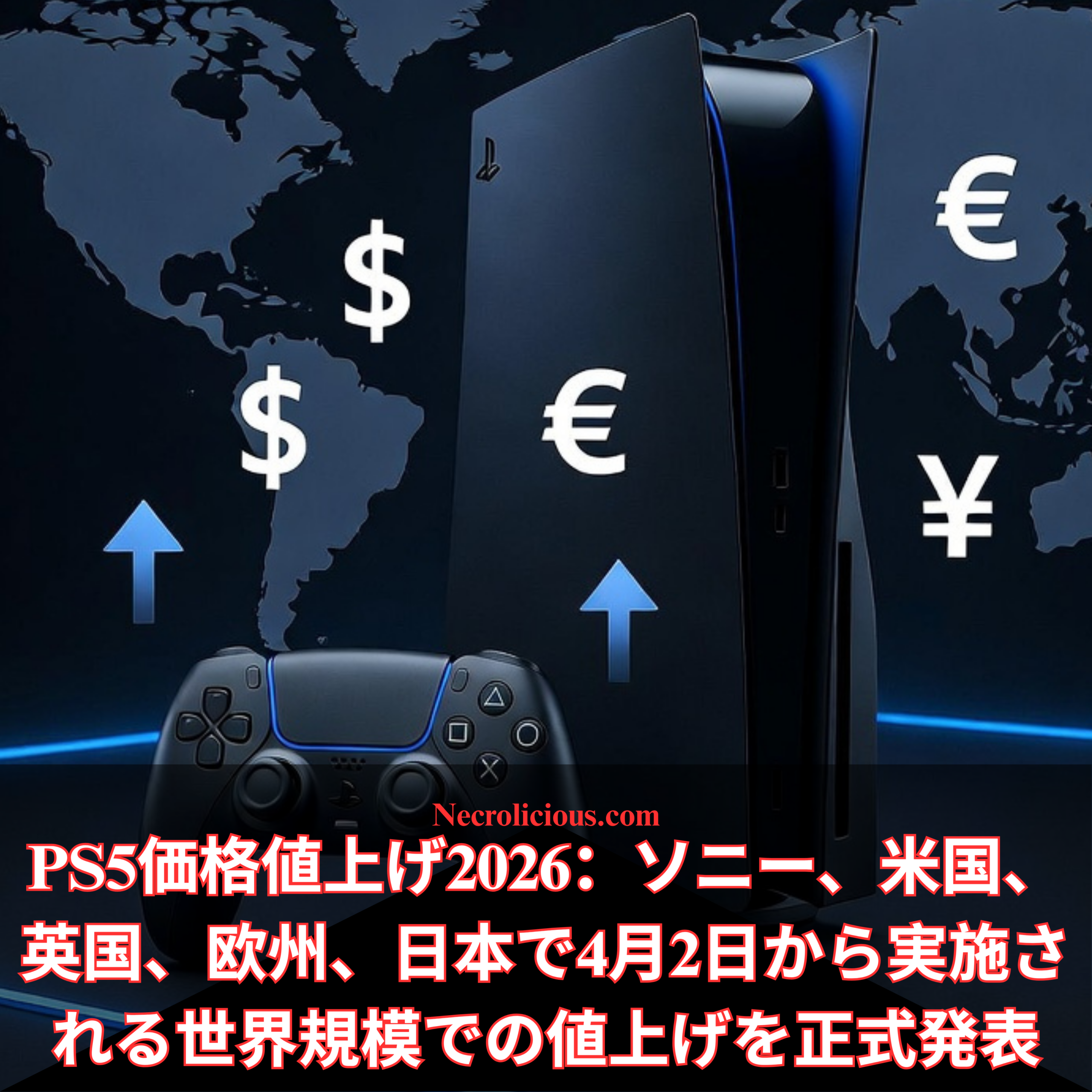
As I warned everyone last year, & again in January, the tech winter caused by ChatGPT’s sam altman is making electronic devices of all sorts more expensive. We’re not simply discussing next generation consoles, but current generation consoles are affected, too. As evidenced by the fact that Sony has officially announced a worldwide PS5 price increase that will take effect on April 2, 2026. The adjustment covers the standard disc edition, Digital Edition, PS5 Pro & PlayStation Portal remote player. This marks the second notable rise in roughly a year & stems from sustained global economic pressures including higher costs for components such as RAM & memory chips.
The change applies across all major markets with updated recommended retail prices now confirmed for the United States, United Kingdom, Europe & Japan. Consumers in other territories should consult local retailers for exact details.
Get your PlayStation 5 now before prices rise on April 2nd:
Note that Japan’s separate cheaper language-locked Digital Edition model sold only domestically remains unaffected by this increase.
PlayStation Portal Also Affected Globally
The handheld remote player sees a corresponding rise in every region.
United States: $249.99 (previously $199.99)
United Kingdom: £219.99 (previously £179.99)
Europe: €249.99 (previously €199.99)
Japan: ¥39,980 (previously ¥34,980)
Nintendo Switch Price Hike Update
Nintendo has not set any date for a console price increase on the Switch or Switch 2 in the West or Japan. While the company has acknowledged ongoing monitoring of component costs & market conditions, its president has stated it cannot comment on hypotheticals at this stage. No hardware price change is currently scheduled, but you can still buy one now to be safe.
The only confirmed upcoming Nintendo pricing adjustment concerns first-party Switch 2 games rather than the console itself. Starting in May 2026 with pre-orders for titles such as Yoshi & the Mysterious Book new Nintendo-published digital titles exclusive to Switch 2 will carry a lower MSRP than their physical versions. Physical game prices are not increasing. This policy applies across all regions including the West & Japan.
Shoppers planning a PS5 purchase may wish to review current stock & pricing before April 2, 2026 to secure the existing rates where still available. For the latest official confirmation always refer to Sony’s PlayStation Blog or authorised retailers in your location.
“I Did Not Pay My Internet Bill” Funny Broke Witch Goth Meme 100% Cotton Unisex Tee Buy on Printify
Unless otherwise noted, image assets above are NOT original content & are shared under fair use doctrine with NO claims to authorship or ownership. Contact necrolicious@necrolicious.com for credit or removal.
This post was sponsored by…ME! If you’d like to support, please buy my original meme merchandise or check out my affiliate links to get yourself some other cool things. Additional affiliate links may be contained in the above article. If you click on an affiliate link & sign up/make a purchase, I may earn a commission. This does not increase the price you pay for the product or service, so it helps support this website at no cost to you.
If you would like to support my work more directly, I accept voluntary cryptocurrency donations in BTC, ETH, XRP & XLM sent directly to necrolicious.x. necrolicious.x is an Unstoppable Domains name that resolves to the wallet addresses I have configured. Simply enter necrolicious.x as the recipient in a supported wallet (such as Trust Wallet, Blockchain.com or others that support Unstoppable Domains). Donation Disclaimer: All cryptocurrency donations sent to me are final, voluntary gifts & are non-refundable & irreversible. These donations are not tax-deductible since I am not a registered charitable organization, & no tax receipts will be issued. No memo or destination tag is required for XRP or XLM donations, as the domain resolves directly to a wallet address. By sending a donation you acknowledge & accept all associated risks, including cryptocurrency price volatility, network fees & potential loss of funds due to incorrect network selection or transaction errors. I am not responsible or liable for any loss related to your donation. No goods, services or other benefits are provided in exchange for donations. This is not financial, tax, legal or investment advice. Please consult a qualified professional regarding any implications of your donation.
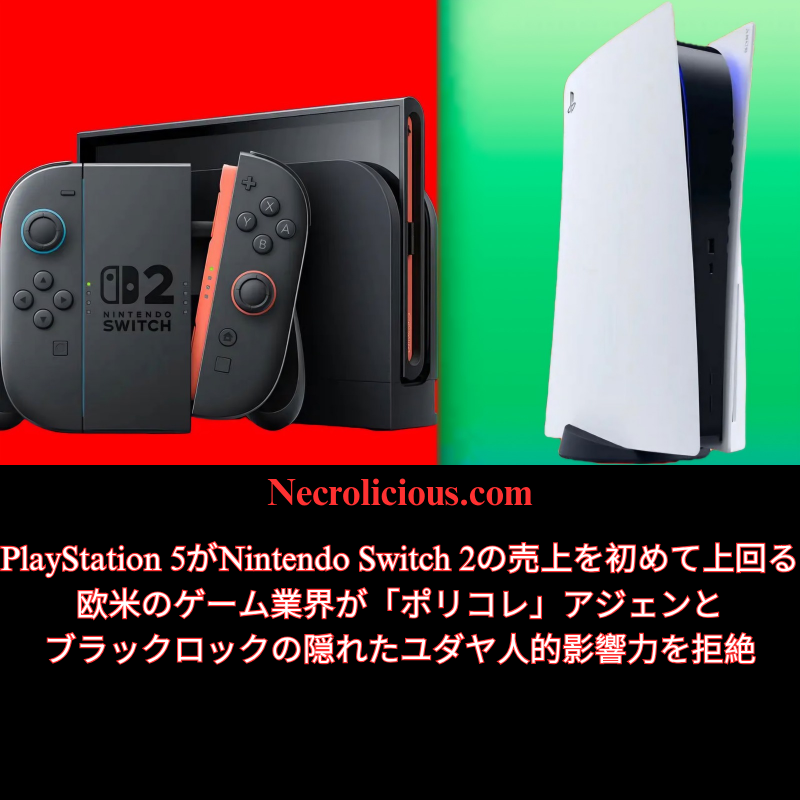
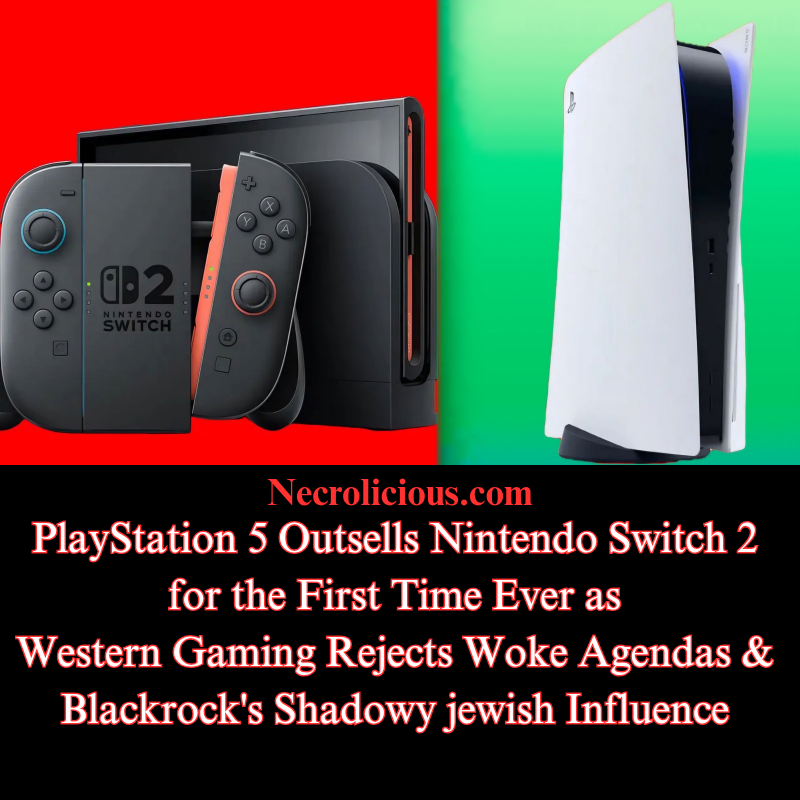
In recent months, a notable shift has emerged in the video game industry, particularly amongst Western developers. After years of integrating overt social messaging—often characterised as “woke” agendas—into their titles, many studios appear to be recalibrating their priorities towards core entertainment value. This pivot coincides with Sony’s PlayStation 5 (PS5) achieving a historic milestone: outselling Nintendo’s Switch 2 in the United States for November 2025, the first such occurrence since the Switch 2’s launch in June. This development signals not merely a fleeting market fluctuation but a broader rebuke of ideologically driven content that has alienated core audiences, leading to sluggish sales & widespread industry turmoil.
Revisiting Gaming’s Roots: The Enduring Appeal of Mature Narratives
Reflecting on the evolution of console gaming, the distinctions between platforms were once stark & purposeful. During the formative years of the industry in the 1990s & early 2000s, Nintendo positioned itself as the family-friendly option, emphasising whimsical, accessible experiences suitable for younger players. In contrast, Sony’s PlayStation catered to a more mature demographic, offering complex, narrative-driven titles with themes of intrigue, conflict, & moral ambiguity—games that resonated with those seeking depth beyond lighthearted escapism.
This dichotomy persists today, albeit in evolved forms. The Switch 2 excels in portable, inclusive gameplay, bolstered by timeless franchises that appeal across generations. Yet, the PS5’s recent surge—fuelled by strategic holiday promotions & releases—underscores a return to PlayStation’s strengths. Sony’s platform is reclaiming its role as the preferred choice for discerning gamers. This uptick arrives amidst the industry’s lowest November hardware sales in the U.S. since 1995, highlighting how targeted, audience-aligned strategies can thrive even in a challenging economic landscape.
The Perils of Ideological Overreach: “Go Woke, Go Broke” in Practice
The preceding years have been marked by a discernible sales downturn for Western gaming entities, attributable in part to the infusion of progressive ideologies that prioritised messaging over gameplay. High-profile failures, such as Concord (shuttered mere weeks after its 2024 debut) & Suicide Squad: Kill the Justice League, exemplify this trend, with critics attributing their underperformance to forced diversity elements & narrative choices that felt didactic rather than organic. The adage “go woke, go broke” has gained traction as a shorthand for this phenomenon, reflecting consumer fatigue with content that lectures rather than entertains. Industry-wide layoffs exceeding 20,000 positions between 2023 & 2025 further illustrate the financial repercussions, reminiscent of the 1983 video game crash where market saturation & poor quality led to collapse.
The Shadowy Architect: BlackRock’s Coercive Role in DEI Proliferation
At the heart of this ideological push lies BlackRock, the world’s largest asset manager, whose insidious influence through Environmental, Social, & Governance (ESG) frameworks has been instrumental in embedding Diversity, Equity, & Inclusion (DEI) mandates across industries, including gaming. Far from an organic evolution towards civil rights, this was a calculated financial strategy: BlackRock, leveraging its trillions in assets, conditioned investments & loans on ESG compliance, effectively strong-arming publicly traded companies like Electronic Arts, Ubisoft, & Sony’s partners to adopt DEI policies. Studios were compelled to engage DEI consultants, such as the controversial Sweet Baby Inc., resulting in alterations that prioritised harmful social engineering over player engagement—to the detriment of not only sales & fan loyalty, but society as a whole.
BlackRock’s actions, under the stewardship of jew CEO Larry Fink—a figure with deep ties to & vocal support of the state of israel—have drawn scrutiny for advancing agendas that extend beyond mere profit motives. The firm maintains a significant presence in Israel, with dedicated offices & substantial investments in companies linked to Israeli defence & technology sectors, including those implicated in regional conflicts. Critics argue that BlackRock’s operations reflect a broader alignment with Israeli interests, as evidenced by Fink’s public condemnations of attacks on israel & the company’s portfolio choices that bolster israeli entities amidst geopolitical tensions. While BlackRock frames these as standard global investments, detractors view them as part of a pattern where financial power is wielded to influence cultural & political landscapes, potentially subverting entertainment mediums like gaming to serve external objectives.
This entanglement raises profound ethical questions about the intersection of finance, identity & media control, with BlackRock’s dominance enabling a form of covert manipulation that prioritises ideological conformity over artistic freedom.
A Partial Victory: Developers’ Awakening & the Lingering Threat
Encouragingly, the industry is showing signs of resistance. In February 2025, BlackRock announced the dissolution of its DEI targets, merging the division into a rebranded “Talent & Culture” team & excising explicit references from corporate reports. This reversal, prompted by political pressures including anti-DEI policies under the Trump administration, has been hailed as a step towards merit-based practices. Developers, such as those at CI Games, have echoed this sentiment, emphasising a return to “fun” as the primary directive. Sony’s PS5 sales rebound serves as tangible evidence that audiences reward this shift, opening their wallets in approval.
Yet, vigilance is imperative. This battle is far from concluded; BlackRock & similar entities are adept at adaptation. Rather than outright abandonment, DEI initiatives may simply be rebadged under nebulous acronyms—such as “Talent & Culture” or analogous terms like JPMorgan’s pivot to “Diversity, Opportunity, & Inclusion”—allowing the same subversive activities to persist under a veil of ambiguity. The gaming community must remain alert to these tactics, lest entertainment once again becomes a conduit for external agendas.
Towards a Sustainable Future: Prioritising Players Over Power Brokers
The PS5’s triumph over the Switch 2 in November 2025 is a harbinger of potential renewal for Western gaming, provided the industry sustains its focus on quality & authenticity. By extricating itself from the grip of entities like BlackRock, whose financial machinations have long distorted creative priorities, gaming can reclaim its essence as a medium of unbridled imagination. However, true progress demands ongoing scrutiny of corporate influences, including those intertwined with geopolitical interests. The path forward lies in empowering creators & consumers alike, free from the shadows of undue manipulation.
Unless otherwise noted, image assets above are NOT original content & are shared under fair use doctrine with NO claims to authorship or ownership. Contact necrolicious@necrolicious.com for credit or removal.
This post was sponsored by…ME! If you’d like to support, please buy my original meme merchandise or check out my affiliate links to get yourself some other cool things. Additional affiliate links may be contained in the above article. If you click on an affiliate link & sign up/make a purchase, I may earn a commission. This does not increase the price you pay for the product or service, so it helps support this website at no cost to you.
If you would like to support my work more directly, I accept voluntary cryptocurrency donations in BTC, ETH, XRP & XLM sent directly to necrolicious.x. necrolicious.x is an Unstoppable Domains name that resolves to the wallet addresses I have configured. Simply enter necrolicious.x as the recipient in a supported wallet (such as Trust Wallet, Blockchain.com or others that support Unstoppable Domains). Donation Disclaimer: All cryptocurrency donations sent to me are final, voluntary gifts & are non-refundable & irreversible. These donations are not tax-deductible since I am not a registered charitable organization, & no tax receipts will be issued. No memo or destination tag is required for XRP or XLM donations, as the domain resolves directly to a wallet address. By sending a donation you acknowledge & accept all associated risks, including cryptocurrency price volatility, network fees & potential loss of funds due to incorrect network selection or transaction errors. I am not responsible or liable for any loss related to your donation. No goods, services or other benefits are provided in exchange for donations. This is not financial, tax, legal or investment advice. Please consult a qualified professional regarding any implications of your donation.
Registers a unique ID on mobile devices to enable tracking based on geographical GPS location.
1 day
VISITOR_INFO1_LIVE
Tries to estimate the users' bandwidth on pages with integrated YouTube videos. Also used for marketing
179 days
PREF
This cookie stores your preferences and other information, in particular preferred language, how many search results you wish to be shown on your page, and whether or not you wish to have Google’s SafeSearch filter turned on.
10 years from set/ update
YSC
Registers a unique ID to keep statistics of what videos from YouTube the user has seen.
Session
DEVICE_INFO
Used to detect if the visitor has accepted the marketing category in the cookie banner. This cookie is necessary for GDPR-compliance of the website.
179 days
LOGIN_INFO
This cookie is used to play YouTube videos embedded on the website.