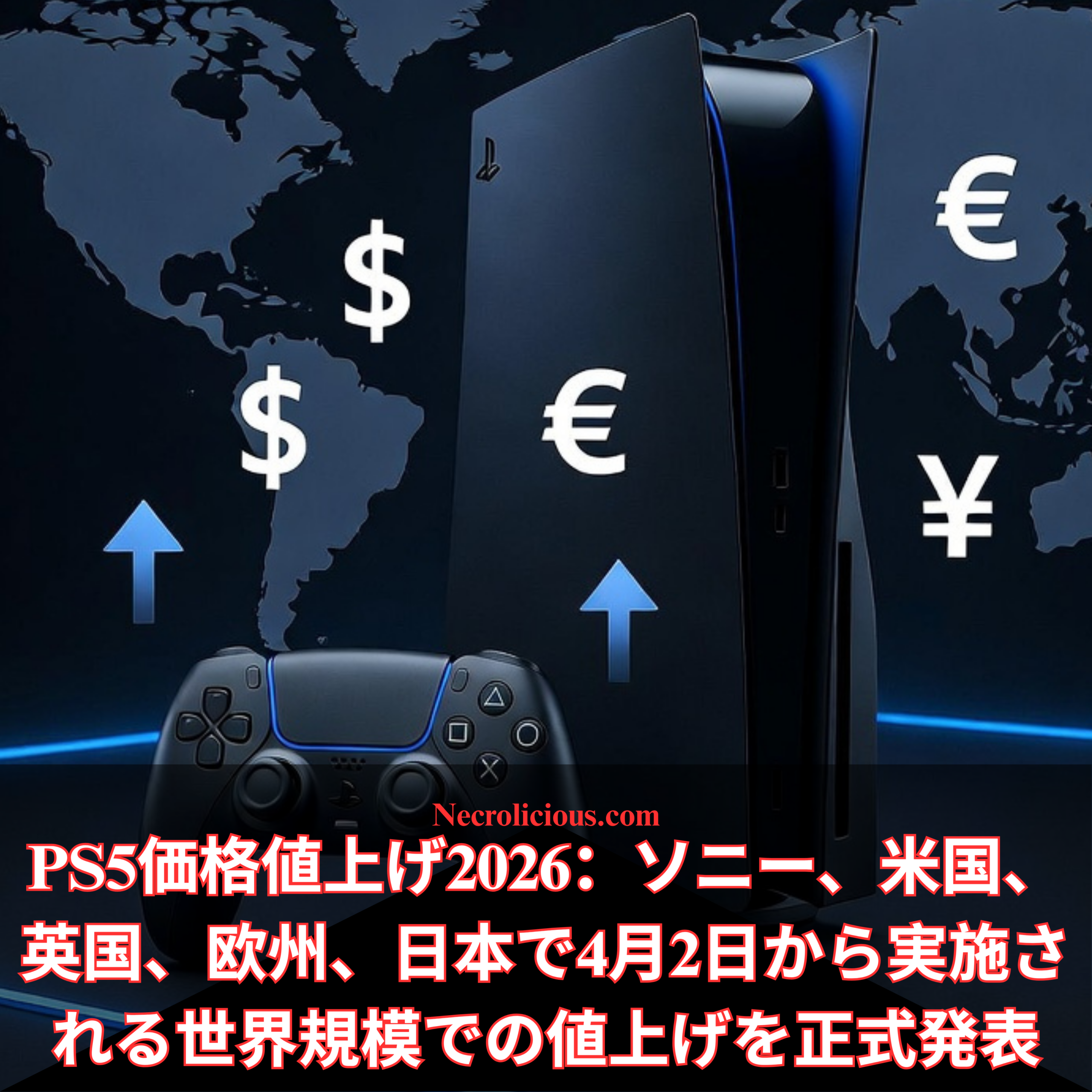
As I warned everyone last year, & again in January, the tech winter caused by ChatGPT’s sam altman is making electronic devices of all sorts more expensive. We’re not simply discussing next generation consoles, but current generation consoles are affected, too. As evidenced by the fact that Sony has officially announced a worldwide PS5 price increase that will take effect on April 2, 2026. The adjustment covers the standard disc edition, Digital Edition, PS5 Pro & PlayStation Portal remote player. This marks the second notable rise in roughly a year & stems from sustained global economic pressures including higher costs for components such as RAM & memory chips.
The change applies across all major markets with updated recommended retail prices now confirmed for the United States, United Kingdom, Europe & Japan. Consumers in other territories should consult local retailers for exact details.
Get your PlayStation 5 now before prices rise on April 2nd:
Note that Japan’s separate cheaper language-locked Digital Edition model sold only domestically remains unaffected by this increase.
PlayStation Portal Also Affected Globally
The handheld remote player sees a corresponding rise in every region.
United States: $249.99 (previously $199.99)
United Kingdom: £219.99 (previously £179.99)
Europe: €249.99 (previously €199.99)
Japan: ¥39,980 (previously ¥34,980)
Nintendo Switch Price Hike Update
Nintendo has not set any date for a console price increase on the Switch or Switch 2 in the West or Japan. While the company has acknowledged ongoing monitoring of component costs & market conditions, its president has stated it cannot comment on hypotheticals at this stage. No hardware price change is currently scheduled, but you can still buy one now to be safe.
The only confirmed upcoming Nintendo pricing adjustment concerns first-party Switch 2 games rather than the console itself. Starting in May 2026 with pre-orders for titles such as Yoshi & the Mysterious Book new Nintendo-published digital titles exclusive to Switch 2 will carry a lower MSRP than their physical versions. Physical game prices are not increasing. This policy applies across all regions including the West & Japan.
Shoppers planning a PS5 purchase may wish to review current stock & pricing before April 2, 2026 to secure the existing rates where still available. For the latest official confirmation always refer to Sony’s PlayStation Blog or authorised retailers in your location.
“I Did Not Pay My Internet Bill” Funny Broke Witch Goth Meme 100% Cotton Unisex Tee Buy on Printify
Unless otherwise noted, image assets above are NOT original content & are shared under fair use doctrine with NO claims to authorship or ownership. Contact necrolicious@necrolicious.com for credit or removal.
This post was sponsored by…ME! If you’d like to support, please buy my original meme merchandise or check out my affiliate links to get yourself some other cool things. Additional affiliate links may be contained in the above article. If you click on an affiliate link & sign up/make a purchase, I may earn a commission. This does not increase the price you pay for the product or service, so it helps support this website at no cost to you.
If you would like to support my work more directly, I accept voluntary cryptocurrency donations in BTC, ETH, XRP & XLM sent directly to necrolicious.x. necrolicious.x is an Unstoppable Domains name that resolves to the wallet addresses I have configured. Simply enter necrolicious.x as the recipient in a supported wallet (such as Trust Wallet, Blockchain.com or others that support Unstoppable Domains). Donation Disclaimer: All cryptocurrency donations sent to me are final, voluntary gifts & are non-refundable & irreversible. These donations are not tax-deductible since I am not a registered charitable organization, & no tax receipts will be issued. No memo or destination tag is required for XRP or XLM donations, as the domain resolves directly to a wallet address. By sending a donation you acknowledge & accept all associated risks, including cryptocurrency price volatility, network fees & potential loss of funds due to incorrect network selection or transaction errors. I am not responsible or liable for any loss related to your donation. No goods, services or other benefits are provided in exchange for donations. This is not financial, tax, legal or investment advice. Please consult a qualified professional regarding any implications of your donation.
2026年を迎え、テクノロジーファンの間ではAppleのiPhone 18の発売に関する憶測が飛び交っています。報道によると、期待されていた発売は今年中に行われない可能性があり、その原因としてChatGPTのサム・アルトマン氏によるDRAM(ダイナミック・ランダム・アクセス・メモリ)の深刻な不足が挙げられています。この記事では、この供給不足がAppleの発売スケジュールに及ぼす潜在的な影響を検証するとともに、Galaxy Z TriFold(ロール式スマートフォン)、AI搭載スマートグラスなど、2026年に発売予定の野心的な製品パイプラインを維持できるSamsungの能力と対比させています。
対照的に、SamsungはDRAM不足にも動じることなく、2026年には堅調なリリーススケジュールを組んでいます。同社は、先駆的なトリプルスクリーンスマートフォン「Galaxy Z TriFold」に加え、ロール式スマートフォンとAI搭載スマートグラスを発表する予定です。この回復力は、報道されている銀鉱山の生産量を先行購入することなど、Samsungの先見性のある戦略によるものと考えられます。この戦略により、Samsungは多額の費用を節約し、DRAM価格の上昇にもかかわらず重要な部品を確保することができたと報じられています。早期に供給を確保することで、Samsungは通常のリリースサイクルを維持し、競合他社に対する競争優位性を確立しています。
しかし、Galaxy Z TriFoldはニッチ製品として販売されており、韓国メディアThe Bellは、Samsungが1台あたり損失を出している可能性があると報じています。韓国で約2,500ポンドで販売されているTriFoldは、ロスリーダーとして販売されています。これは、目先の利益を追求するのではなく、市場での存在感を確立し、消費者のフィードバックを集めるための戦略です。この戦略は財政的には厳しいものの、Samsungのイノベーションへのコミットメントと、長期的な利益のために短期的な損失を吸収する意欲を強調しています。この点については、Android Authorityが最近の記事で詳しく取り上げています。
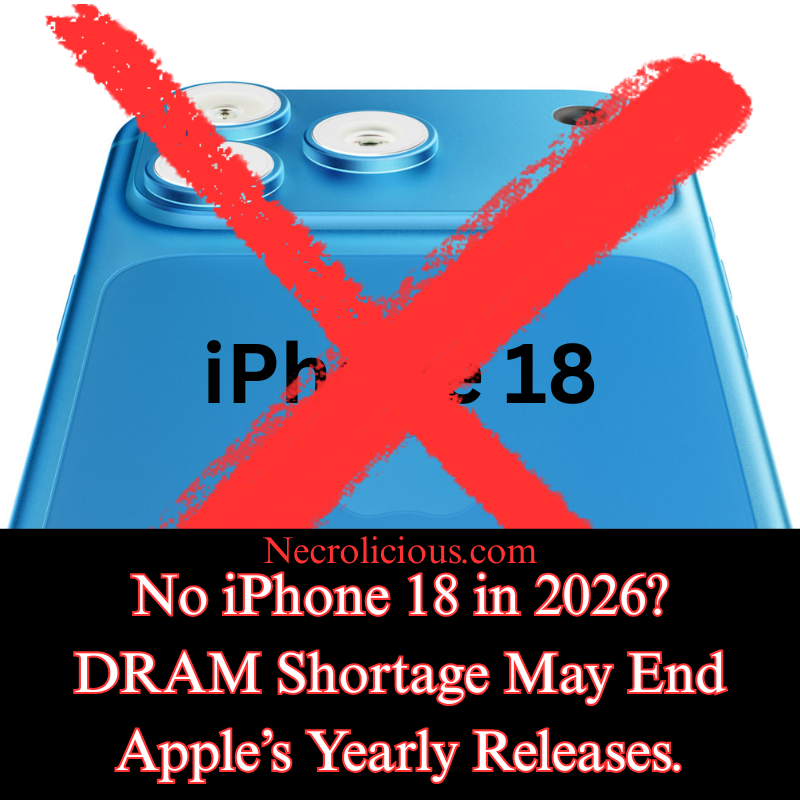
As 2026 begins, technology enthusiasts are abuzz with speculation about Apple’s forthcoming iPhone 18 release. Reports suggest that the anticipated launch may not occur this year, with a significant DRAM (Dynamic Random Access Memory) shortage caused by Sam Altman of ChatGPT identified as the likely cause. This article examines the potential impact of this supply constraint on Apple’s release schedule, while contrasting Samsung’s apparent ability to sustain its ambitious product pipeline, including the Galaxy Z TriFold, a rollable phone, & AI-powered smart glasses—all slated for release in 2026.
The DRAM Shortage: A Challenge for Apple’s iPhone 18
Recent analyses, including data from IntuitionLabs & IDC’s 2026 market overview, highlight a global DRAM shortage that escalated in 2025 by ChatGPT/OpenAI purchasing 40% of the world’s supply. This scarcity arises from manufacturers such as Samsung & SK hynix reallocating silicon wafer capacity to meet the surging demand for high-bandwidth memory (HBM) utilised in AI data centres. The price of 16Gb DDR5 chips reportedly rose from $6.84 to $27.20 in the fourth quarter of 2025 alone, exerting considerable pressure on smartphone production. Given Apple’s reliance on integrated LPDDR memory within its system-on-chip (SoC) designs, this shortage could disrupt the timely production of the iPhone 18.
Industry insiders propose that Apple may have postponed the base iPhone 18 launch from its traditional autumn slot to spring 2027, aligning with a strategic shift to stagger releases. This approach, detailed by MacRumors, aims to manage an expanding product lineup—including the iPhone 17e, 18 Pro, & a potential foldable model—while avoiding sales overlap & easing production pressures. If the DRAM shortage is indeed the driving factor, Apple’s decision reflects a pragmatic response to ensure quality & availability, marking a potential departure from its long-standing annual release cycle for the first time.
Samsung’s Unwavering Pipeline: A Tale of Strategic Planning
In contrast, Samsung appears undeterred by the DRAM shortage, with a robust release schedule for 2026. The company is set to unveil the Galaxy Z TriFold, a pioneering triple-screen smartphone, alongside a rollable phone & AI-enhanced smart glasses. This resilience may be attributed to Samsung’s forward-thinking strategy, including the reported advance purchase of silver mine output. This move has reportedly saved Samsung a substantial amount of money, enabling it to secure critical components despite the DRAM price increase. By locking in supplies early, Samsung has positioned itself to maintain its normal release cadence, showcasing a competitive edge over its rivals.
However, it is worth noting that the Galaxy Z TriFold is marketed as a niche product, with Korean outlet The Bell reporting that Samsung may be selling each unit at a loss. Priced at approximately £2,500 in South Korea, the TriFold serves as a loss leader, a tactic designed to establish market presence & gather consumer feedback rather than generate immediate profit. This strategy, while financially challenging, underscores Samsung’s commitment to innovation & its willingness to absorb short-term losses for long-term gains—a topic explored in greater depth by Android Authority in a recent article.
Comparative Insights & Future Implications
The divergent approaches of Apple & Samsung highlight differing priorities amid global supply constraints. Apple’s decision to potentially delay the iPhone 18 suggests a cautious stance, prioritising stability & customer satisfaction over adhering to a rigid timeline. Meanwhile, Samsung’s aggressive expansion into foldable, rollable, & wearable technologies demonstrates a bold investment in diversification, bolstered by strategic resource procurement.
For consumers, these developments signal a shifting landscape in the smartphone market. Apple’s extended wait for the iPhone 18 may disappoint fans accustomed to annual upgrades, yet it could result in a more refined product. Samsung’s multi-device rollout, conversely, offers immediate access to cutting-edge technology, albeit at a premium cost. As DRAM prices are projected to remain elevated until new fabrication plants come online in 2027–2028, both companies’ strategies will likely evolve, influencing pricing & innovation trajectories in the years ahead.
The speculated delay of the iPhone 18, driven by the 2025 DRAM shortage, underscores the complexities of modern tech manufacturing. Apple’s staggered release plan reflects a measured response to these challenges, while Samsung’s continued momentum—supported by strategic resource acquisitions—positions it as a formidable competitor. As the industry navigates this period of scarcity, consumers & analysts alike will observe closely to see how these giants adapt, with the outcomes shaping the future of mobile technology.
Unless otherwise noted, image assets above are NOT original content & are shared under fair use doctrine with NO claims to authorship or ownership. Contact necrolicious@necrolicious.com for credit or removal.
This post was sponsored by…ME! If you’d like to support, please buy my original meme merchandise or check out my affiliate links to get yourself some other cool things. Additional affiliate links may be contained in the above article. If you click on an affiliate link & sign up/make a purchase, I may earn a commission. This does not increase the price you pay for the product or service, so it helps support this website at no cost to you.
If you would like to support my work more directly, I accept voluntary cryptocurrency donations in BTC, ETH, XRP & XLM sent directly to necrolicious.x. necrolicious.x is an Unstoppable Domains name that resolves to the wallet addresses I have configured. Simply enter necrolicious.x as the recipient in a supported wallet (such as Trust Wallet, Blockchain.com or others that support Unstoppable Domains). Donation Disclaimer: All cryptocurrency donations sent to me are final, voluntary gifts & are non-refundable & irreversible. These donations are not tax-deductible since I am not a registered charitable organization, & no tax receipts will be issued. No memo or destination tag is required for XRP or XLM donations, as the domain resolves directly to a wallet address. By sending a donation you acknowledge & accept all associated risks, including cryptocurrency price volatility, network fees & potential loss of funds due to incorrect network selection or transaction errors. I am not responsible or liable for any loss related to your donation. No goods, services or other benefits are provided in exchange for donations. This is not financial, tax, legal or investment advice. Please consult a qualified professional regarding any implications of your donation.
Registers a unique ID on mobile devices to enable tracking based on geographical GPS location.
1 day
VISITOR_INFO1_LIVE
Tries to estimate the users' bandwidth on pages with integrated YouTube videos. Also used for marketing
179 days
PREF
This cookie stores your preferences and other information, in particular preferred language, how many search results you wish to be shown on your page, and whether or not you wish to have Google’s SafeSearch filter turned on.
10 years from set/ update
YSC
Registers a unique ID to keep statistics of what videos from YouTube the user has seen.
Session
DEVICE_INFO
Used to detect if the visitor has accepted the marketing category in the cookie banner. This cookie is necessary for GDPR-compliance of the website.
179 days
LOGIN_INFO
This cookie is used to play YouTube videos embedded on the website.