The cinematic landscape is currently electrified by the revelation that gothic auteur Tim Burton & Nobel laureate Kazuo Ishiguro are collaborating on a highly secretive, untitled feature film. This unexpected alliance merges two fiercely distinct creative minds into a single cinematic vision. Ishiguro personally verified the rumours on the red carpet during the world premiere of Klara & the Sun. He articulated that the screenplay is an entirely original concept conceived privately during a visit to Burton’s wonderfully eccentric residence. Crucially, the project was forged independently without the oversight of studio producers at its inception. For film enthusiasts & critics alike, this represents a triumphant return to unfiltered auteurship. While Burton has recently dominated streaming charts, wrapping production on the third season of Wednesday, this pivot towards a historically grounded, original narrative signals a compelling evolution in his directorial trajectory.
Exploring the Showa Era Setting
The narrative framework of this enigmatic project is firmly planted in post-World War II Japan, a temporal setting that situates the film squarely within the transformative Showa era. This period of Japanese history was defined by an arduous national reconstruction, seismic cultural shifts & the rapid modernisation of a fractured society. While it may prompt hastily drawn parallels to recent atmospheric horror titles — namely Silent Hill f, which has pushed Showa era Japan into mainstream consciousness— Ishiguro has definitively stated that the script is a completely original property rather than an adaptation. This ensures the film will carve its own unique thematic identity. The prospect of applying Burton’s signature expressionist visuals to the sombre, emotionally complex reality of a war-torn nation presents a fascinating dichotomy. It promises to intertwine the macabre with deep humanism, providing a profound canvas for visual & narrative experimentation that transcends typical genre boundaries.
Ishiguro’s involvement brings an unparalleled pedigree of emotional realism & historical introspection to the screenplay. Although primarily celebrated for literary masterpieces like Never Let Me Go, his deft screenwriting capabilities were recently showcased in the critically acclaimed drama Living. His personal heritage—having been born in Nagasaki before migrating to the United Kingdom—imbues the post-war Japanese setting with a resonant, authentic gravity.
Frequently Asked Questions
Is the new Tim Burton & Kazuo Ishiguro film based on a book?
No, Kazuo Ishiguro confirmed that the script is an entirely original story developed privately alongside Tim Burton.
When & where is the movie set?
The narrative is set in post-World War II Japan, an era historically known as the Showa period, characterised by massive societal rebuilding.
Is this project connected to the video game Silent Hill f?
There is no connection whatsoever; the film is a completely standalone & original cinematic work, apart from both pieces of media being set in Showa era Japan.
Unless otherwise noted, image assets above are NOT original content & are shared under fair use doctrine with NO claims to authorship or ownership. Contact necrolicious@necrolicious.com for credit or removal.
This post was sponsored by…ME! If you’d like to support, please buy my original meme merchandise or check out my affiliate links to get yourself some other cool things. Additional affiliate links may be contained in the above article. If you click on an affiliate link & sign up/make a purchase, I may earn a commission. This does not increase the price you pay for the product or service, so it helps support this website at no cost to you.
If you would like to support my work more directly, I accept voluntary cryptocurrency donations in BTC, ETH, XRP & XLM sent directly to necrolicious.x. necrolicious.x is an Unstoppable Domains name that resolves to the wallet addresses I have configured. Simply enter necrolicious.x as the recipient in a supported wallet (such as Trust Wallet, Blockchain.com or others that support Unstoppable Domains). Donation Disclaimer: All cryptocurrency donations sent to me are final, voluntary gifts & are non-refundable & irreversible. These donations are not tax-deductible since I am not a registered charitable organization, & no tax receipts will be issued. No memo or destination tag is required for XRP or XLM donations, as the domain resolves directly to a wallet address. By sending a donation you acknowledge & accept all associated risks, including cryptocurrency price volatility, network fees & potential loss of funds due to incorrect network selection or transaction errors. I am not responsible or liable for any loss related to your donation. No goods, services or other benefits are provided in exchange for donations. This is not financial, tax, legal or investment advice. Please consult a qualified professional regarding any implications of your donation.
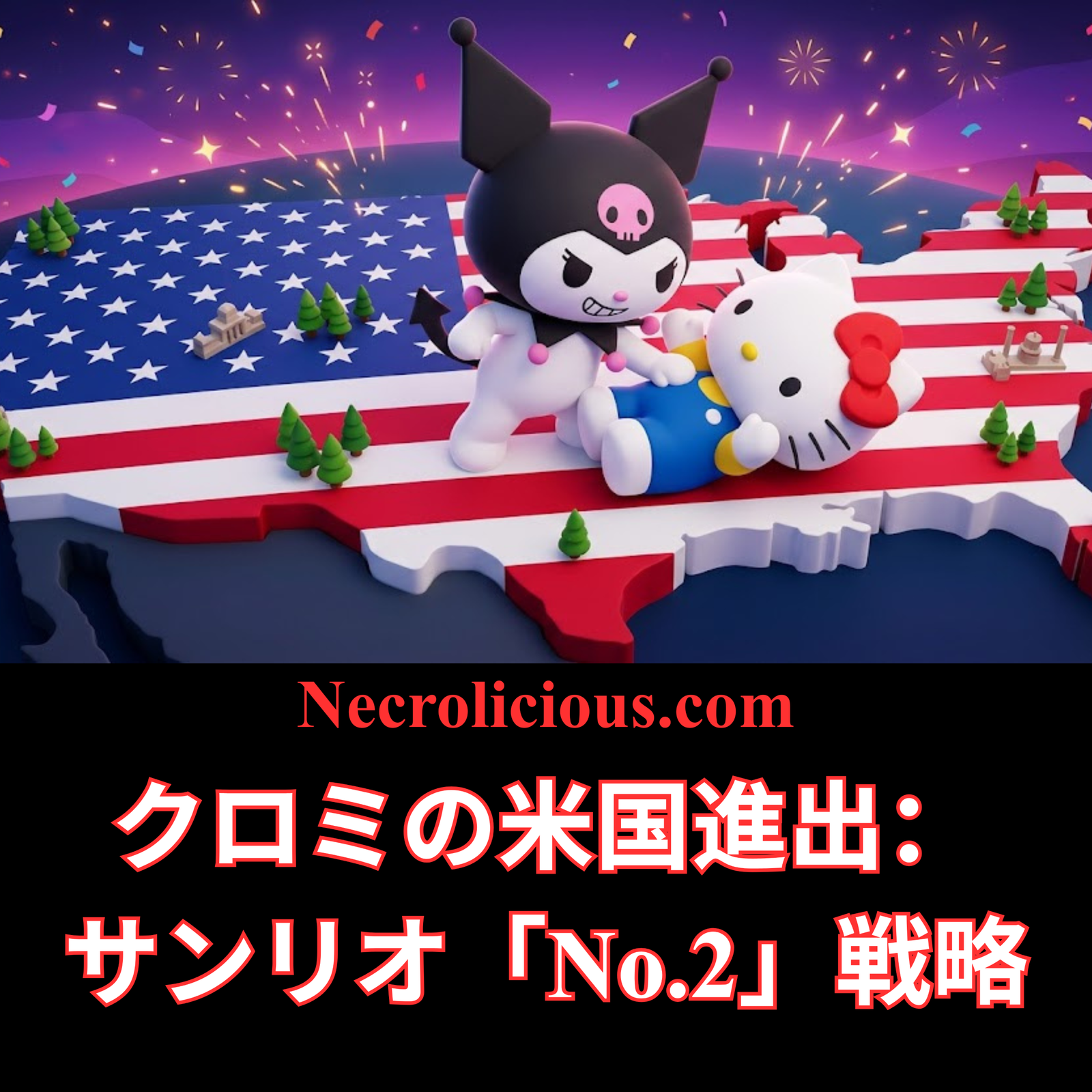
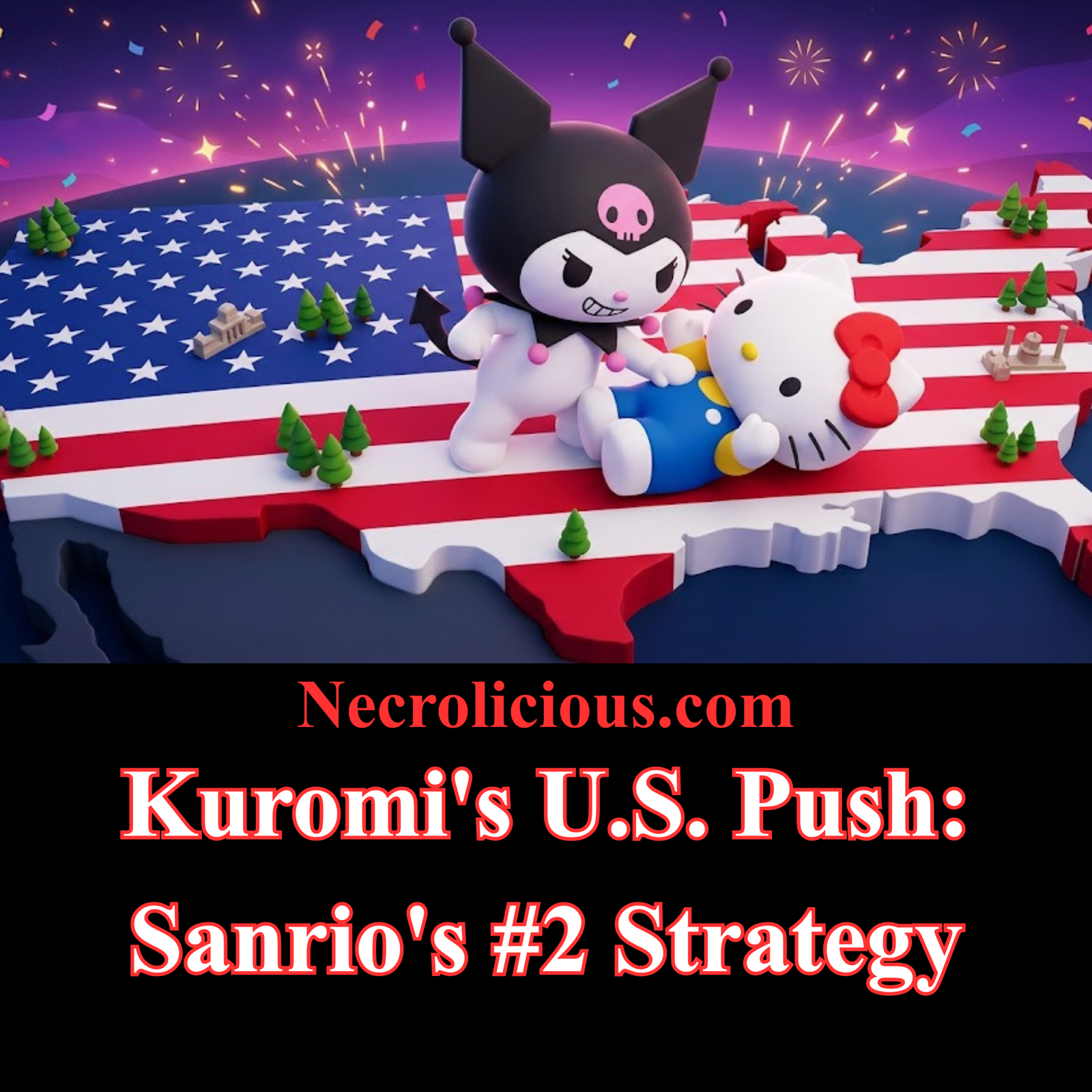
Walking through Shibuya or exploring the Galaxy Harajuku flagship store, it is impossible to ignore the shifting landscape of kawaii culture. Hello Kitty’s red bow no longer holds an undisputed monopoly. Instead, she increasingly shares premium retail space with a darker, more rebellious figure: Kuromi. As someone who closely tracks Japanese intellectual property trends on my site, I find this shift fascinating. But Sanrio’s aggressive push to elevate Kuromi in North America isn’t just about shifting aesthetics—it’s a calculated corporate strategy designed to stabilise the company following a massive financial scandal.
The Name: “Black Beauty,” Not “Black Body”
Before diving into the corporate drama, it is worth clarifying a common misconception about the character herself. Some casual observers mistakenly assume her name translates literally to “black body” (黒身, a term often used in culinary contexts to describe dark fish meat).
However, her name is written in the phonetic katakana alphabet (クロミ). Linguistically, it combines “Kuro” (黒), meaning black, with the feminine suffix “-mi” (美), which represents beauty. This “Black Beauty” nomenclature perfectly encapsulates her role as the edgy, rebellious foil to the pastel innocence of My Melody. This deliberate visual and conceptual dichotomy gives Sanrio access to a completely different consumer base—those looking for an alternative, slightly subversive aesthetic that still falls under the safe umbrella of a corporate mascot.
The Yoshi Saito Scandal: A Crisis in North America
Sanrio desperately needs Kuromi to succeed in the West, largely because of recent severe turbulence within its North American subsidiary.
In April 2026, Sanrio disclosed a major scandal involving Managing Executive Officer Yoshi Saito, who served as CEO of the regional branch. Following whistleblower allegations, a special investigation committee led by external attorneys concluded that Saito had received hundreds of millions of yen (reportedly up to ¥250 million) in improper, off-the-books compensation over several years. These payments allegedly included unauthorised Cost-of-Living Allowances drawn directly from the United States subsidiary.
Following the committee’s comprehensive report in late May 2026, Saito officially retired as a Director. The fallout forced Sanrio to postpone its earnings release and hold an unprecedented continuation session following its annual general shareholders’ meeting to address the governance failures. Against this backdrop of administrative upheaval, the North American division requires a highly profitable success story to reassure its investors. Elevating a rapidly growing property serves as both a strategic demographic expansion and a vital anchor for regional stability.
To move past the scandal and secure its financial future in the Americas (which reported a full-year contribution profit of roughly US$144 million), Sanrio has implemented a multi-point plan to permanently establish Kuromi as its secondary intellectual property.
Explicit Corporate Mandate: Sanrio’s FY2026 corporate report explicitly outlines a strategy to “develop Kuromi as the No.2 character following Hello Kitty,” supported by intensive marketing initiatives such as featured close-ups during Western Halloween events.
Capitalising on Organic Popularity: The foundation for this commercial pivot was built entirely on organic fan enthusiasm. In both the 2025 and 2026 Sanrio Character Rankings, Kuromi secured fourth place globally, decisively outranking Hello Kitty, who fell to fifth.
Expanding Media Presence: Sanrio is aggressively expanding her presence across various media platforms to reach older demographics. Her contemporary resurgence was solidified by the 2025 Netflix stop-motion animated series My Melody & Kuromi, which offered audiences a slightly darker, highly stylised narrative.
Western Print Media Expansion: Demonstrating a robust, long-term licensing strategy, IDW Publishing recently announced a dedicated one-shot comic book anthology titled Hello Kitty & Friends: Kuromi, slated for release on 27 January 2027.
A Modern Rebranding: Sanrio executives have openly acknowledged that the character required an ideological update. Head of Branding Naoko Susa stated that the company is shifting the corporate focus toward her “activities as an artist,” framing her as an independent creator rather than merely a mischievous rival to My Melody.
Ultimately, this targeted merchandise push and media expansion illustrates a comprehensive strategy to fortify Sanrio’s North American market share. While the executive compensation scandal undeniably cast a shadow over the regional subsidiary, the overwhelming cultural success of their resident “Black Beauty” provides a clear, highly profitable path forward.
Frequently Asked Questions
Why is Sanrio focusing so heavily on Kuromi in North America? Sanrio is intentionally diversifying its intellectual property portfolio to reduce its historical reliance on Hello Kitty. Following a major financial scandal within its North American subsidiary in early 2026, the company requires strong, reliable sales in the West to reassure investors. Kuromi’s surging popularity makes her the ideal candidate to lead this commercial expansion.
What exactly happened during the Yoshi Saito scandal? In April 2026, whistleblower reports revealed that Yoshi Saito, the CEO of Sanrio’s North American subsidiary, had received hundreds of millions of yen (reportedly up to ¥250 million) in improper, off-the-books compensation, including unapproved Cost-of-Living Allowances. Following an investigation by a special committee, Saito retired from his position as a Director in May 2026, prompting Sanrio to implement stricter corporate governance reforms.
Does Kuromi really mean “black body” in Japanese? While the noun kuromi (黒身) literally translates to “black body” or “dark meat” in certain culinary contexts, the character’s name is written in katakana (クロミ) and is actually a combination of “Kuro” (black) and the feminine name suffix “-mi” (beauty). Fans and official character guides typically translate her name as “Black Beauty.”
When does the new IDW comic book release? IDW Publishing is scheduled to release the one-shot anthology comic, Hello Kitty & Friends: Kuromi, on 27 January 2027. It will feature three distinct stories highlighting her activities, including planning a music festival.
How popular is Kuromi compared to Hello Kitty globally? According to the official Sanrio Character Rankings for both 2025 and 2026, Kuromi is currently more popular than Hello Kitty. Kuromi secured fourth place globally in both years, while Hello Kitty placed fifth.
Unless otherwise noted, image assets above are NOT original content & are shared under fair use doctrine with NO claims to authorship or ownership. Contact necrolicious@necrolicious.com for credit or removal.
This post was sponsored by…ME! If you’d like to support, please buy my original meme merchandise or check out my affiliate links to get yourself some other cool things. Additional affiliate links may be contained in the above article. If you click on an affiliate link & sign up/make a purchase, I may earn a commission. This does not increase the price you pay for the product or service, so it helps support this website at no cost to you.
If you would like to support my work more directly, I accept voluntary cryptocurrency donations in BTC, ETH, XRP & XLM sent directly to necrolicious.x. necrolicious.x is an Unstoppable Domains name that resolves to the wallet addresses I have configured. Simply enter necrolicious.x as the recipient in a supported wallet (such as Trust Wallet, Blockchain.com or others that support Unstoppable Domains). Donation Disclaimer: All cryptocurrency donations sent to me are final, voluntary gifts & are non-refundable & irreversible. These donations are not tax-deductible since I am not a registered charitable organization, & no tax receipts will be issued. No memo or destination tag is required for XRP or XLM donations, as the domain resolves directly to a wallet address. By sending a donation you acknowledge & accept all associated risks, including cryptocurrency price volatility, network fees & potential loss of funds due to incorrect network selection or transaction errors. I am not responsible or liable for any loss related to your donation. No goods, services or other benefits are provided in exchange for donations. This is not financial, tax, legal or investment advice. Please consult a qualified professional regarding any implications of your donation.
Reports emerging from financial outlets like Nikkei Asia reveal that Apple has abruptly instructed its manufacturing partners to slash component orders for the iPhone 18 Pro & Pro Max by 15% to 20% for October 2026. Predictably, corporate analysts are attempting to sanitise this crisis, framing the scale-backs as mere routine post-launch calibrations or harmless reactions to soft consumer demand following an exorbitant price hike. Do not be deceived by the corporate spin.
The reality is far uglier. Apple has rushed a fundamentally defective product line to market, charging exorbitant flagship prices while forcing loyal consumers to act as unpaid beta testers. Between catastrophic quality control failures on the factory floor, a fragile chassis that degrades within days & an operating system running rampant with critical bugs, Apple is not facing a simple sales dip; it is frantically shutting down production lines to contain a mounting hardware catastrophe.
If the standard slab iPhone 18 is already falling apart in buyers’ hands, anyone daring to purchase the experimental iPhone Duo is actively cruising for a bruising.
The Quality Control Crisis Apple Cannot Hide
When a company as ruthlessly efficient as Apple slams the brakes on its supply chain mere weeks after a launch, it points to severe structural panic. Halting assembly lines at Foxconn costs millions of dollars per hour. Apple is doing so because a frightening percentage of these units are unfit for retail shelves.
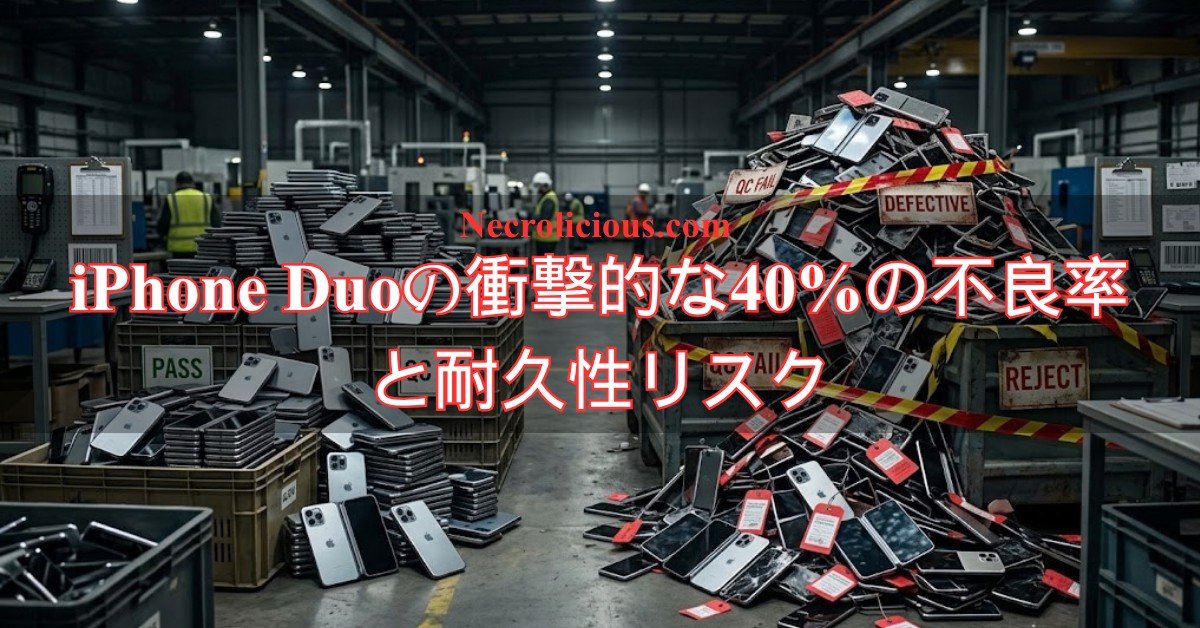
As I recently exposed, the dual-screen form factor is suffering from a shocking 40% failure rate to pass basic quality control on the iPhone Duo. Nearly half of the devices coming off the line are being sent directly to the scrap heap because experimental hinges fail, panels delaminate & tolerances disintegrate. Pushing forward with an untested design when you cannot even manufacture it reliably is the height of corporate arrogance.
The 20% component cuts for the Pro & Pro Max are Apple’s desperate attempt at damage control. Rather than fulfilling non-existent demand, Apple is retooling its factories to stem the financial bleeding of widespread manufacturing defects. The narrative of “calculated supply chain management” is a transparent facade masking assembly lines choked by defective hardware.
For years, Apple justified its extortionate price tags by boasting of unmatched industrial design & premium materials. With the iPhone 18 generation, that boast has collapsed. Apple discarded the robust titanium chassis of previous iterations in favour of a cheapened aluminium unibody, masquerading the downgrade behind claims of better thermal dissipation for its internal vapour chamber.
The consequences have been immediate & disgraceful:
Severe Cosmetic Degradation: The anodised aluminium finish chips & scratches under the gentlest everyday contact. Resting the device on a clean desk or placing it in an empty coat pocket is enough to strip paint from the raised camera plateau, leaving an expensive flagship looking battered within forty-eight hours.
Separating Back Panels: Due to rampant thermal buildup from the processor & wireless charging, the adhesive ring securing the rear glass softens under heat & the mechanical pull of MagSafe accessories. Brand-new phones are exhibiting lifting glass panels that compromise structural integrity & nullify water resistance.
Catastrophic Display Striping: Permanent pink, red & green vertical stripes are appearing across OLED panels worldwide. This is not a glitch; it is an irreparable hardware failure where the power drive to individual subpixel columns snaps permanently.
Apple’s official response has been to dismiss severe manufacturing flaws as standard “wear & tear.” Expecting consumers to swallow a $100 price hike for metal that scars & glass that unglues is nothing short of insulting.
iOS 27: A Broken Promise That “It Just Works”
Apple’s long-standing marketing mantra—that its devices “just work”—has become a punchline. The software ship is sinking just as quickly as the hardware. iOS 27 arrived in a profoundly broken state, transforming flagship handsets into glitch-ridden paperweights.
As detailed in my breakdown of the critical iOS 27 bugs turning Apple’s launch into a PR nightmare, basic everyday interactions are triggering catastrophic software panics:
The Under-Display Face ID Crash Loop: Apple relocated the infrared array beneath the glass to shrink the display cut-out, but the launch firmware cannot communicate with the hardware properly. A single failed biometric check within a locked application frequently causes the screen to freeze entirely before throwing the phone into a forced kernel reboot.
Interface Paralysis: Swiping down the Notification Centre & quickly invoking the Control Centre completely locks the touch digitiser, forcing users to wait for a timeout or execute a hard button combination.
The Widget Home-Screen Blackout: Simply rearranging app icons or dragging a widget across screen pages causes the springboard layout to tear violently or crash into a black display of death.
These are not obscure edge cases; they are fundamental operating system crashes occurring on display models right inside Apple Stores. Word-of-mouth has turned toxic because consumers are sick of paying four-figure sums for software that feels like an early developer alpha.
The Arrogant $100 Price Hike Backfires
To add insult to injury, Apple decided to hike prices across the board, pushing the entry price of the iPhone 18 Pro to $1,199 & the Pro Max to $1,299.
As I warned in Winter of 2025, when examining how DRAM shortages would drive up consumer tech prices, Apple has chosen to shift component inflation entirely onto its customers while systematically stripping back hardware durability.
Furthermore, Apple’s calculated decision to hold back the base iPhone 18 & the thinner iPhone Air until spring 2027 was an aggressive gambit to force everyone into buying the overpriced Pro models. That gambit has failed. Buyers see a transitional, compromised lineup plagued by defects & they are closing their wallets. The weak demand is a direct, deliberate rejection of Apple’s predatory pricing & declining standards.
Cruising for a Bruising: Do Not Touch the iPhone Duo
If Apple cannot even assemble a rigid, traditional glass-and-metal slab without displays failing, rear panels detaching & software crashing, what sane person would trust them with a dual-screen device?
The dual-screen iPhone Duo represents the absolute worst impulses of modern Apple: an experimental, high-margin gimmick pushed to store shelves before the engineering has matured. With a horrific 40% defect rate on the factory floor, Apple is essentially tossing a coin on whether every manufactured unit will survive assembly. If a handset struggles to survive the controlled environment of a cleanroom, it cannot be expected to survive your pocket.
Buying the iPhone Duo is an exercise in reckless optimism. You are paying thousands of dollars for experimental hinges that Apple refuses to discuss, complex dual panels prone to unfixable line defects & an operating system that cannot even handle basic widgets without crashing. Purchasing one is practically begging for buyer’s remorse. You are setting yourself up for an expensive, frustrating disaster. Keep your wallet firmly shut.
Frequently Asked Questions (FAQ)
Why is Apple cutting iPhone 18 production by 15% to 20%?
Apple is scaling back production because the iPhone 18 lineup is suffering from intense consumer rejection & severe manufacturing bottlenecks. Rather than a routine supply adjustment, Apple is halting assembly lines to contain the financial damage of defective units & address widespread hardware flaws.
Why is the iPhone Duo considered a terrible purchase?
The iPhone Duo is experiencing an unprecedented 40% failure rate during quality control checks at manufacturing plants. If nearly half of these devices cannot pass factory inspections, real-world durability will be disastrous. Buying this experimental dual-screen phone is a massive financial risk.
What are the primary hardware defects on the iPhone 18 Pro?
The aluminium frame scuffs & chips almost immediately, the rear glass panel detaches due to heat softening the internal adhesive & the OLED displays suffer from permanent vertical green & pink line failures caused by broken subpixel connections.
Is iOS 27 stable enough for daily use?
No. iOS 27 is plagued by severe bugs, including kernel-level reboot loops caused by under-display Face ID errors, touch-screen freezes when opening control panels & complete home-screen crashes when moving basic widgets.
Unless otherwise noted, image assets above are NOT original content & are shared under fair use doctrine with NO claims to authorship or ownership. Contact necrolicious@necrolicious.com for credit or removal.
This post was sponsored by…ME! If you’d like to support, please buy my original meme merchandise or check out my affiliate links to get yourself some other cool things. Additional affiliate links may be contained in the above article. If you click on an affiliate link & sign up/make a purchase, I may earn a commission. This does not increase the price you pay for the product or service, so it helps support this website at no cost to you.
If you would like to support my work more directly, I accept voluntary cryptocurrency donations in BTC, ETH, XRP & XLM sent directly to necrolicious.x. necrolicious.x is an Unstoppable Domains name that resolves to the wallet addresses I have configured. Simply enter necrolicious.x as the recipient in a supported wallet (such as Trust Wallet, Blockchain.com or others that support Unstoppable Domains). Donation Disclaimer: All cryptocurrency donations sent to me are final, voluntary gifts & are non-refundable & irreversible. These donations are not tax-deductible since I am not a registered charitable organization, & no tax receipts will be issued. No memo or destination tag is required for XRP or XLM donations, as the domain resolves directly to a wallet address. By sending a donation you acknowledge & accept all associated risks, including cryptocurrency price volatility, network fees & potential loss of funds due to incorrect network selection or transaction errors. I am not responsible or liable for any loss related to your donation. No goods, services or other benefits are provided in exchange for donations. This is not financial, tax, legal or investment advice. Please consult a qualified professional regarding any implications of your donation.
Apple is at it again, rushing another fundamentally flawed product to market while expecting consumers to pay a premium for the privilege of being beta testers. Reports have recently surfaced that the highly anticipated dual-screen iPhone Duo is facing catastrophic production issues, with a staggering 40% of manufactured devices failing to pass basic quality control. For a company that constantly touts its superior engineering and premium build quality, this massive failure rate is a glaring red flag. If nearly half of these highly expensive devices can’t even survive the factory floor, there is absolutely no reason anyone should trust them to survive daily life in the real world.
What is most concerning about this production nightmare is the complete lack of transparency regarding what is actually going wrong. While the 40% failure metric has made its way to the press, the specific defects responsible for this bottleneck remain a closely guarded secret. Are the experimental hinges failing? Are the dual screens breaking under pressure? Apple remains tight-lipped, effectively asking consumers to blindly hand over their money for a device that is demonstrably defective at its core. This silence speaks volumes, proving that the iPhone Duo is a half-baked experiment rather than a finished, reliable product.
Samsung Galaxy Z Fold8 Unlocked 512GB Graphite Buy on Amazon
Given this disastrous rollout, I strongly advise everyone to keep their wallets closed and absolutely avoid buying the iPhone Duo. Unfortunately, this is just the latest in a growing trend of Apple releasing severely compromised hardware. As I’ve previously documented, the iPhone 18 has been plagued with extreme durability issues, severely scratching and scuffing under even the lightest, most careful usage. Combine that hardware fragility with the unfixable green and pink lines randomly appearing across users’ screens and the absolute disaster that is iOS 27—which is actively glitching and bricking devices right inside Apple Stores—and the pattern is undeniable. Skip the iPhone Duo; Apple’s current hardware simply isn’t worth your money or your frustration.
Unless otherwise noted, image assets above are NOT original content & are shared under fair use doctrine with NO claims to authorship or ownership. Contact necrolicious@necrolicious.com for credit or removal.
This post was sponsored by…ME! If you’d like to support, please buy my original meme merchandise or check out my affiliate links to get yourself some other cool things. Additional affiliate links may be contained in the above article. If you click on an affiliate link & sign up/make a purchase, I may earn a commission. This does not increase the price you pay for the product or service, so it helps support this website at no cost to you.
If you would like to support my work more directly, I accept voluntary cryptocurrency donations in BTC, ETH, XRP & XLM sent directly to necrolicious.x. necrolicious.x is an Unstoppable Domains name that resolves to the wallet addresses I have configured. Simply enter necrolicious.x as the recipient in a supported wallet (such as Trust Wallet, Blockchain.com or others that support Unstoppable Domains). Donation Disclaimer: All cryptocurrency donations sent to me are final, voluntary gifts & are non-refundable & irreversible. These donations are not tax-deductible since I am not a registered charitable organization, & no tax receipts will be issued. No memo or destination tag is required for XRP or XLM donations, as the domain resolves directly to a wallet address. By sending a donation you acknowledge & accept all associated risks, including cryptocurrency price volatility, network fees & potential loss of funds due to incorrect network selection or transaction errors. I am not responsible or liable for any loss related to your donation. No goods, services or other benefits are provided in exchange for donations. This is not financial, tax, legal or investment advice. Please consult a qualified professional regarding any implications of your donation.
For anyone whose anatomy simply rejects standard earbuds, finding portable audio that stays in place can feel like an impossible challenge. Traditional in-ear models inevitably slide loose, while bulky over-ear headphones constantly shift off-balance. In crowded transit & busy city streets, this creates constant anxiety over watching a premium piece of hardware drop down a sewer grate or get crushed underfoot by a rushing passerby. Discovering clip-on earbuds was revolutionary for me. For the first time, audio on the go felt completely secure & weightless. Yet while inexpensive entry-level clip-ons proved the brilliance of the form factor, they carried severe practical trade-offs—lacking seamless device switching across phones and smartwatches, & requiring manual screen taps just to interact with voice assistants.
My wariness toward traditional earbuds peaked with the Galaxy Buds 3, which I got a free pair of when buying my Flip6. From the outset, the experience proved physically untenable. Even after receiving a full replacement set under warranty to resolve an initial popping defect, a far more disorienting symptom took hold: persistent headaches accompanied by an unmistakable “brain jiggling” sensation. These were not fleeting aches; the acoustic pressure and physical discomfort lingered for up to three days after a single listening session. Whether triggered by ear canal occlusion, acoustic seal pressure, or active noise cancellation fighting against my ear anatomy, the physiological mismatch was undeniable, leaving me no choice but to part ways with the hardware.
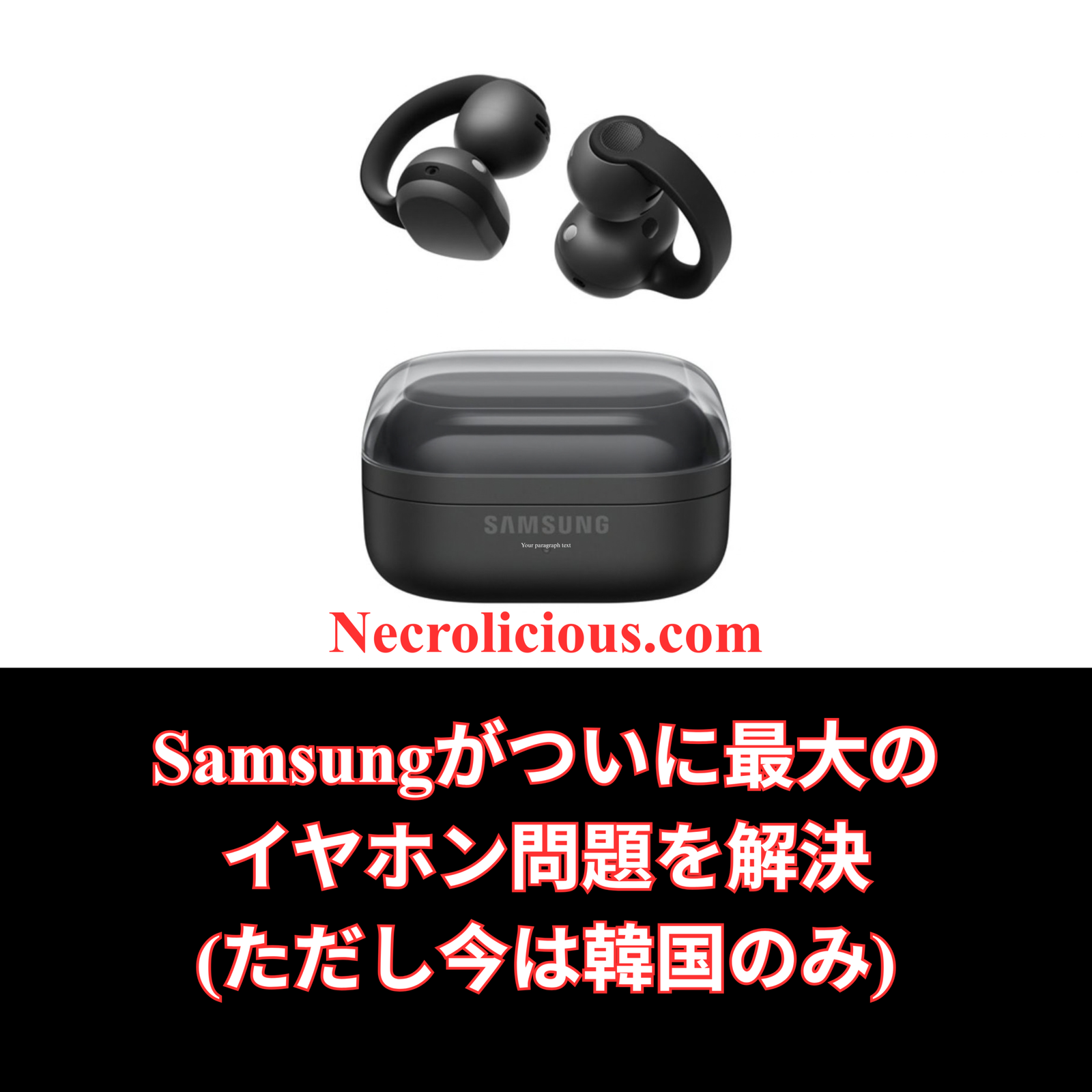
That rocky history is precisely why the announcement of the Galaxy Buds On—arriving unexpectedly right on the heels of the SmartTag 3—sparked immediate interest. By adopting an open-ear clip-on architecture & dropping ANC entirely, the Buds On eliminate the sealed-canal pressure chamber that triggers occlusion headaches. At the same time, they bring the full weight of a flagship ecosystem back to an open design. With the Snapdragon S7 Gen 1 platform handling sound processing, automatic audio switching between devices becomes effortless, and native hands-free voice invocation via Gemini Live finally bridges the gap between open-ear comfort and high-end smart features.
For now, the Buds On remain a South Korea exclusive, launching on October 27th, 2026 at 299,000 KRW (roughly ¥35,000) with a global release coming on a later date at an undisclosed price. While that marks a significant step up from cheap clip-ons, the promise of all-day physical stability paired with deep ecosystem integration makes the price point compelling. However, patience remains the smartest strategy. Rather than importing a pair early, waiting for the official Japanese release—& specifically ordering through a retailer like Amazon—provides essential peace of mind. Given past frustrations with manufacturer-direct warranty & repair processes on both earbuds & wearables, a dependable, no-hassle return window ensures that if my ears still disagree with the acoustic delivery, I am not stuck with an expensive device I cannot wear.
Unless otherwise noted, image assets above are NOT original content & are shared under fair use doctrine with NO claims to authorship or ownership. Contact necrolicious@necrolicious.com for credit or removal.
This post was sponsored by…ME! If you’d like to support, please buy my original meme merchandise or check out my affiliate links to get yourself some other cool things. Additional affiliate links may be contained in the above article. If you click on an affiliate link & sign up/make a purchase, I may earn a commission. This does not increase the price you pay for the product or service, so it helps support this website at no cost to you.
If you would like to support my work more directly, I accept voluntary cryptocurrency donations in BTC, ETH, XRP & XLM sent directly to necrolicious.x. necrolicious.x is an Unstoppable Domains name that resolves to the wallet addresses I have configured. Simply enter necrolicious.x as the recipient in a supported wallet (such as Trust Wallet, Blockchain.com or others that support Unstoppable Domains). Donation Disclaimer: All cryptocurrency donations sent to me are final, voluntary gifts & are non-refundable & irreversible. These donations are not tax-deductible since I am not a registered charitable organization, & no tax receipts will be issued. No memo or destination tag is required for XRP or XLM donations, as the domain resolves directly to a wallet address. By sending a donation you acknowledge & accept all associated risks, including cryptocurrency price volatility, network fees & potential loss of funds due to incorrect network selection or transaction errors. I am not responsible or liable for any loss related to your donation. No goods, services or other benefits are provided in exchange for donations. This is not financial, tax, legal or investment advice. Please consult a qualified professional regarding any implications of your donation.
Share this:
Cookie Consent
We use cookies to improve your experience on our site. By using our site, you consent to cookies.
Registers a unique ID on mobile devices to enable tracking based on geographical GPS location.
1 day
VISITOR_INFO1_LIVE
Tries to estimate the users' bandwidth on pages with integrated YouTube videos. Also used for marketing
179 days
PREF
This cookie stores your preferences and other information, in particular preferred language, how many search results you wish to be shown on your page, and whether or not you wish to have Google’s SafeSearch filter turned on.
10 years from set/ update
YSC
Registers a unique ID to keep statistics of what videos from YouTube the user has seen.
Session
DEVICE_INFO
Used to detect if the visitor has accepted the marketing category in the cookie banner. This cookie is necessary for GDPR-compliance of the website.
179 days
LOGIN_INFO
This cookie is used to play YouTube videos embedded on the website.