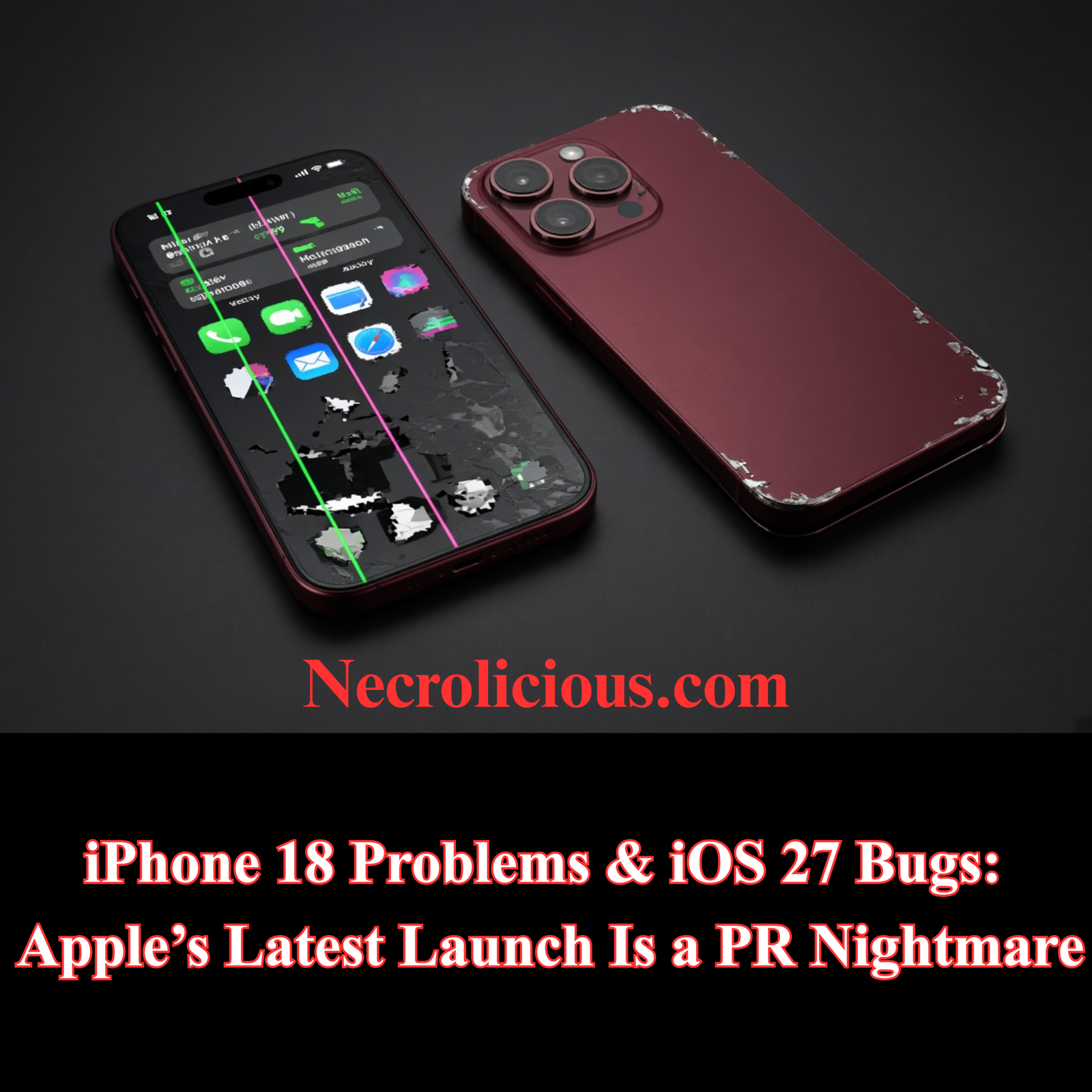
If you have just unboxed an iPhone 18 or are staring at the iOS 27 update prompt on an older handset, you want a straightforward answer. The new devices went on sale on 18 September 2026. Within days, social media was flooded with reports of freezes, coloured lines, Face ID reboots & aluminium frames that look visibly worn after just a weekend of use.
These complaints are not confined to a single expensive SKU. Reports cover the base iPhone 18, the Pro & the Pro Max. Throughout this article, “iPhone 18” refers to the entire 2026 lineup. Do not assume the Pro or Pro Max is the safe option; in several cases, these are the exact models buyers paid a premium for before filming their defects.
This is not a mere handful of unlucky review units. It is a launch-week accumulation of hardware compromises & unfinished software, all sold at a price point that assumes Apple still delivers a polished product. Having covered numerous autumn iPhone cycles, I recognise the usual release noise. This cycle is notably louder because the company is charging flagship prices for aluminium that easily scars, an operating system that can lock the home screen & a design language that was already showing its age on last year’s devices.
I previously argued that consumers should purchase capable devices before 2026 component inflation pushed prices up & quality sideways. That warning on Apple pricing & the memory squeeze now looks far less like speculation. The iPhone 18 is the exact product that warning described: dearer, softer & inherently unfinished.
The aluminium frame is the first tell
Apple has returned this generation to an aluminium unibody after two years of using titanium on the Pro line. Aluminium conducts heat efficiently & supports the internal vapour chamber design. However, it also marks easily. The anodised colour coating is prone to chipping. The raised camera plateau loses paint simply from resting on a desk or sharing a pocket with keys. Independent scratch tests continue to reveal the same disparity: the front glass is durable, but the metal frame is not.
Apple dismisses this as standard wear & tear. Owners transitioning from a caseless titanium handset rightly call it a visible downgrade within the first week. If your iPhone 17 or earlier is still functioning, you are not missing out on a tougher device. You are simply being asked to pay more for a finish that ages faster. This reality applies whether your box says 18, Pro or Pro Max.
The back-glass lip is a familiar problem
Even before the new handsets reached store shelves, owners of last year’s models were removing their cases & discovering the rear glass sitting slightly out of the frame. It is enough to catch on a nearby surface or even fingernail then actually fall out. The working theory points to a combination of heat from the processor, wireless charging & the pulling force of MagSafe accessories softening a thin adhesive ring.
The iPhone 18 continues to use a glass back bonded to an aluminium frame. While a larger vapour chamber might mitigate some of the heat, it does not fundamentally improve the joint. A brand-new unit featuring a raised, movable rear panel is defective out of the box. A generation that requires a warning label about magnets has not earned its premium price tag.
Green & pink lines denote a hardware failure
The most widely shared photos are the simplest to understand. They show a vertical pink or green stripe, & sometimes a red one, running down the display. A factory reset accomplishes nothing. On an OLED screen, this pattern typically indicates a damaged column on the panel. Apple’s green subpixels are arranged in vertical lines; if the drive to one column breaks, the stripe remains permanently.
While social media evidence should always be treated with caution—at least one viral image appears edited since the line passes behind status-bar icons, which a physical fault cannot do—the remaining videos are compelling enough. Some owners have already walked out of retail stores with replacement units. Apple has yet to identify a faulty batch or a specific supplier, but silence does not equate to a clean bill of health.
If a coloured line persists after a reset, photograph the screen & book a warranty appointment. Do not accept a software explanation for a dead column of pixels, & do not convince yourself that the higher-cost models are immune to the issue.
Face ID features a smaller island & messier logins
Apple relocated the infrared hardware beneath the display to reduce the size of the cut-out. Unfortunately, a failed Face ID check within a locked app could freeze the screen & force the phone to reboot. The specialist tech press successfully reproduced the error, & panic logs appeared in user analytics. This is not user error. It is a clear case of launch firmware failing to interface properly with new hardware.
There is a secondary, quieter complaint regarding more passcode prompts than users expected, which is often blamed on screen protectors. Even after the initial software patch, these leftover misses represent a genuine reliability issue. The reboot loop was a fundamental product defect, & paying for a Pro or Pro Max badge did not offer an escape.
iOS 27 launched on the iPhone 18 & disrupted everything else
This is the section that owners of older iPhones cannot afford to ignore. iOS 27 is the factory software for the new lineup, but it is also the public build that older supported models installed. When the home screen breaks, an iPhone 17 that only wanted software features inherits the exact same dead interface.
Two everyday gestures were responsible for the damage seen in the viral videos.
Notification Centre into Control Centre. Pull down from the top left, then immediately from the top right before the first panel finishes its animation. The touch interface stops responding. You cannot swipe between pages, & lock-screen shortcuts can become stuck. This bug affected more than just the new phones, prompting Apple to address it in the 27.0.1 release notes.
Moving a widget & tapping the page dots. Long-press the screen until the icons jiggle. Drag a widget with one finger, then tap the dots at the bottom or drop the widget onto another stack. The display either goes black or the layout tears completely. The only way to regain control is to force-restart the device. This specific sequence was still causing problems even after the 27.0.1 update.
While these bugs do not permanently brick the phone, they are infuriating in a different way. They reduce a flagship device to something that feels like beta software. It is highly advised not to rearrange widgets just to see if it crashes.
A PR nightmare caused by a broken brand promise
Apple’s central pitch has always been straightforward: you pay a premium, & you receive a device that simply works. Launch week entirely inverted that promise. Social media highlighted metal that scars, rear glass that can lift off & fall out, display panels suffering from coloured lines, Face ID modules that force reboots & home screens that die from moving a widget.
None of these issues emerged from thin air. The cosmetic flaws of aluminium were entirely predictable after last year. The adhesive concerns were already public knowledge when the iPhone 18 became available for pre-order. Furthermore, iOS 27 was not a quiet beta test limited to a single SKU; Apple pushed it out to its entire supported base.
This explains why the current public mood is significantly nastier than during a typical point-release week. Consumers are not merely frustrated by software bugs. They are angry because this extensive bug list appeared on a product priced as though it were meticulously finished.
Do not buy an iPhone 18, consider leaving the ecosystem
If you currently own an iPhone 17 or an earlier model, keep it. The new lineup does not offer a durability upgrade. Instead, it is a more expensive aluminium handset running software that required a hotfix in under two weeks. The Pro & Pro Max variants are not safe havens; they are frequently the exact models featured in the most troubling defect videos.
Rather than simply waiting for an update, give serious thought to leaving the Apple ecosystem entirely. Samsung represents the most logical first alternative, offering mature foldables, refined software & file-sharing capabilities that do not require everyone in your social circle to own a device with the same logo. Galaxy Quick Share can seamlessly communicate with iPhones. Which specific Galaxy model you choose is entirely up to you; the overarching recommendation is to find an exit ramp, not to endorse a specific SKU.
Even a competent budget Android device currently offers better value than a faulty object priced as luxury. You will not be paying titanium-era prices for aluminium-era blemishes, & you will certainly not be forced to debug a home screen that crashes over a widget. Overpaying for defective technology is a habit that this specific launch should finally break.
For some readers, the argument regarding quality is sufficient on its own. For others, a parallel boycott has been gaining momentum since the previous hardware cycle. This movement urges consumers to skip Apple because Israeli engineering facilities assisted in designing connectivity silicon used in recent models, most notably the in-house C1X modem & the N1 wireless chip credited to israeli R&D teams. That research footprint is entirely real. If you personally refuse to fund companies with deep Israeli tech ties, this serves as yet another reason to avoid the iPhone 18.
Whether you join the boycott for quality, for personal values or for suspicions of secretly embedded detonators, the choice is clear. israeli tech, scuffed frames, lifted glass, display lines & iOS 27 freezes…it all points to the exact same conclusion for this publication: do not reward Apple with another upgrade cycle.
This aligns perfectly with the logic of securing a solid device in 2025 before the DRAM squeeze & the wider price climb altered the market, making “new” synonymous with “lower quality at higher prices” The iPhone 18 is the physical manifestation of that exact forecast.
Apple’s attempts to contain the damage
Apple released iOS 27.0.1 in late September 2026. The patch notes address unexpected restarts caused by Face ID failures on the new hardware, a colour artefact present on certain 2x photos shot at f/1.48 & unresponsive touch controls occurring when the Notification Centre & Control Centre are opened simultaneously.
Additionally, some users suffering from lines on their screens have received replacement handsets under standard warranty procedures. However, Apple has not announced an official repair programme for the easily marked frames, a recall for the failing adhesive or a definitive fix for the widget crash within that specific point release. Cosmetic damage to the aluminium is still officially classified as normal wear.
This response amounts to a software patch alongside a few quiet hardware swaps. While it may have halted the influx of Face ID panic videos, it certainly did not make the launch look competent, nor did it refund the time buyers wasted force-restarting their brand-new phones.
If a standard slab phone can arrive in retail stores in this condition, it is wise not to romanticise the upcoming dual-screen iPhone Duo. Adding extra glass & a mechanical hinge will not magically fix rushed, impolite software. The industry is already crowding into the market for squat foldables. Apple arriving late with a messy, traditional bar phone serves as a grim preview. If this was supposed to be the straightforward device, the first fortnight of the Duo’s lifespan will likely be far worse.
Frequently Asked Questions
Should I buy an iPhone 18 right now?
No, not if you expect a finished product. This advice applies to the base model, the Pro & the Pro Max. While update 27.0.1 resolved the Face ID reboot & one specific freeze gesture, the widget crash, the soft aluminium frame & the screen line reports remain active issues. It is best to wait or spend your money outside of the Apple ecosystem.
Will iOS 27 disrupt my iPhone 17?
It certainly can. The freeze caused by opening the Notification Centre & Control Centre simultaneously was not limited to the new phones. Several reproductions of the widget crash also involved older models. Simply stating “I only updated the software” will not protect your device from these bugs.
Are the green screen lines just a software bug?
Not if they survive a factory reset. A persistent line indicates failing panel hardware. Book a warranty repair immediately, & do not wait around hoping the next iOS build will magically fix a physical defect.
Is the Pro or Pro Max a safer purchase?
Do not make that assumption. Several of the most concerning launch videos featured the more expensive models. View the “iPhone 18” label as a broad warning for the entire 2026 lineup.
Is Samsung the only alternative?
No, but it represents the clearest full-system off-ramp. You should compare foldables, standard slates & mid-range Android devices based on your own specific needs. The ultimate goal is to stop assuming that the next iPhone release will serve as an apology for the current one.
Should I skip the iPhone 18 & wait for the iPhone Duo?
No. A traditional bar phone that required an immediate hotfix, still crashes when you move a widget & wears down its paint in a matter of days is a terrible rehearsal for a company’s first foldable device. Expect a significantly harder launch, not a cleaner one.
Unless otherwise noted, image assets above are NOT original content & are shared under fair use doctrine with NO claims to authorship or ownership.
Contact necrolicious@necrolicious.com for credit or removal.
This post was sponsored by…ME! If you’d like to support, please buy my original meme merchandise or check out my affiliate links to get yourself some other cool things. Additional affiliate links may be contained in the above article. If you click on an affiliate link & sign up/make a purchase, I may earn a commission. This does not increase the price you pay for the product or service, so it helps support this website at no cost to you.
If you would like to support my work more directly, I accept voluntary cryptocurrency donations in BTC, ETH, XRP & XLM sent directly to necrolicious.x. necrolicious.x is an Unstoppable Domains name that resolves to the wallet addresses I have configured. Simply enter necrolicious.x as the recipient in a supported wallet (such as Trust Wallet, Blockchain.com or others that support Unstoppable Domains). Donation Disclaimer: All cryptocurrency donations sent to me are final, voluntary gifts & are non-refundable & irreversible. These donations are not tax-deductible since I am not a registered charitable organization, & no tax receipts will be issued. No memo or destination tag is required for XRP or XLM donations, as the domain resolves directly to a wallet address. By sending a donation you acknowledge & accept all associated risks, including cryptocurrency price volatility, network fees & potential loss of funds due to incorrect network selection or transaction errors. I am not responsible or liable for any loss related to your donation. No goods, services or other benefits are provided in exchange for donations. This is not financial, tax, legal or investment advice. Please consult a qualified professional regarding any implications of your donation.