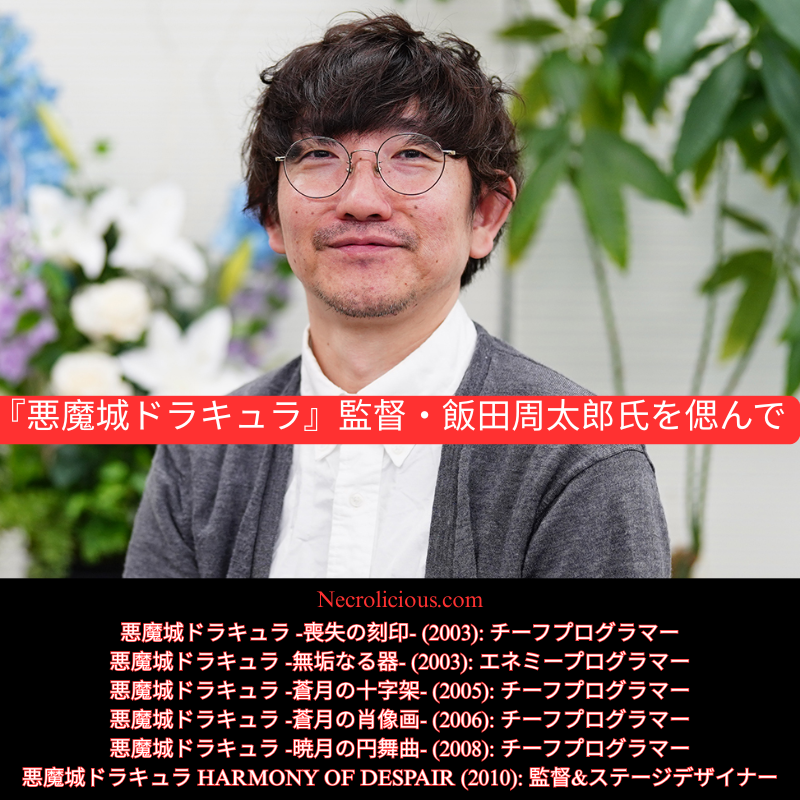
五十嵐氏がコナミを離れ、 『悪魔城ドラキュラ』の真の精神的後継作を追求するにあたり、彼は誰よりも信頼を寄せていた唯一の協力者、飯田氏に目を向けました。飯田氏は迷うことなくArtPlayに入社し、『Bloodstained: Ritual of the Night』のクリエイティブディレクターに就任しました。2019年にリリースされた本作は、イガヴァニアのフォーミュラである滑らかな戦闘、広大なマップ、そして紛れもない発見の感覚を忠実に再現したことが高く評価され、批評的にも商業的にも成功を収めました。
飯田氏は健康状態が悪化する中、続編『Bloodstained: The Scarlet Engagement』のクリエイティブディレクターとして深く関わり続けました。五十嵐氏は、飯田氏のビジョンと情熱を引き継ぎ、プロジェクトが最終段階にあることを発表しています。
飯田周太郎氏は献身の体現者だった。『ARIA of SORROW』における完璧なジャンプアークの創造から、 『Dawn of Sorrow』におけるソウルシステムの微調整まで、あらゆるプロジェクトに変わらぬ情熱で臨んだ。彼の仕事は、このジャンルがノスタルジアへと薄れゆく危機に瀕していた時代に、古典的名作「悪魔城ドラキュラ」の精神を息づかせることに大きく貢献した。
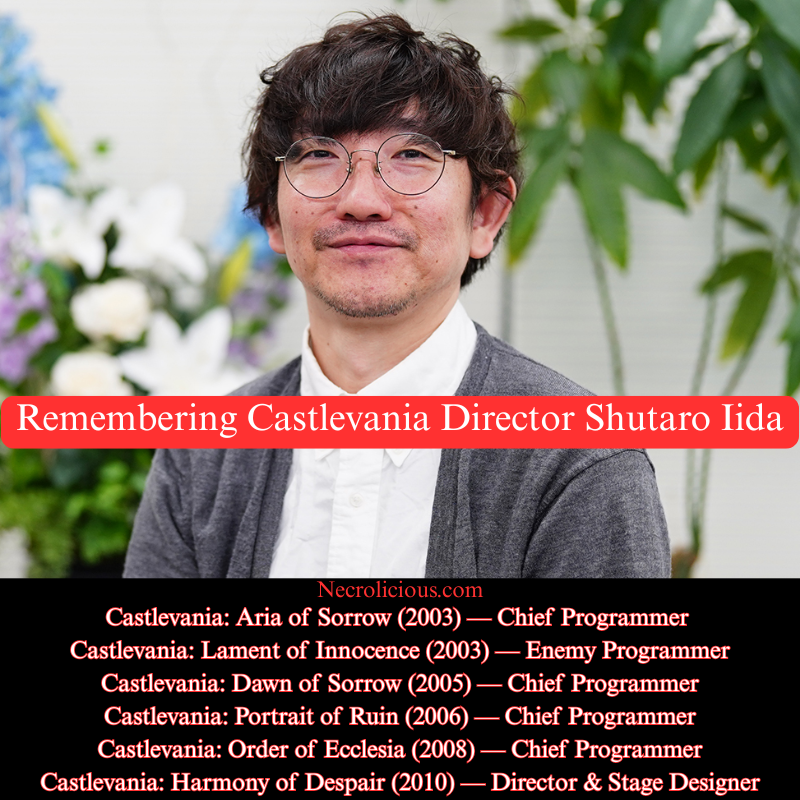
The world of 2D action-platformers has lost one of its most influential figures. On 10 February 2026, Shutaro Iida—known to fans as SHUTARO, the Curry Hermit, Curry Sage & Curry the Kid—passed away at the age of 52 following an 18-month battle with pancreatic cancer. The announcement, first shared by his family & then amplified in a moving tribute from his longtime collaborator Koji Igarashi, has prompted an outpouring of respect across the gaming community.
Iida was far more than a name in the credits. For those who grew up with the handheld Castlevania titles of the 2000s like me, he was the quiet force whose programming, design & meticulous balance turned ambitious concepts into enduring masterpieces. His partnership with Igarashi began on Castlevania: Symphony of the Night & endured for more than two decades, producing some of the most celebrated entries in the series.
The Architect of the Handheld Castlevania Era
Iida’s contributions to Castlevania are impossible to overstate. He served as chief programmer on several landmark titles, shaping everything from player movement to enemy behaviour & intricate level design. His credits include:
Castlevania: Aria of Sorrow (2003) — Chief Programmer (and System & Player Programmer, credited as “Curry the Kid”)
Castlevania: Lament of Innocence (2003) — Enemy Programmer
Castlevania: Dawn of Sorrow (2005) — Chief Programmer
Castlevania: Portrait of Ruin (2006) — Chief Programmer
Castlevania: Order of Ecclesia (2008) — Chief Programmer
Castlevania: Harmony of Despair (2010) — Director & Stage Designer
These were not mere technical roles. Igarashi has repeatedly credited Iida with the very essence of what made these games special. In a 2024 post reflecting on their collaboration, Igarashi wrote:
“In the works that I produced, especially the highly acclaimed ones, the programming, of course, as well as the game design & adjustments, were all done by SHUTARO’s hand. Without a doubt, it is thanks to him that I am here now.”
When the Castlevania Dominus Collection launched later that year, Igarashi urged fans to play the three titles directed by Iida—Dawn of Sorrow, Portrait of Ruin & Order of Ecclesia—as a gesture of support during his illness. “I’m playing through them now… they’re quite difficult, but so much fun,” he noted. “Let’s clear all three as a prayer for him to overcome his illness.”
Igarashi later described the entire DS-era Castlevania lineage & the original Bloodstained as “essentially produced with SHUTARO as director at the centre. They can truly be called his works.”
From Konami to ArtPlay: A Partnership That Lasted a Lifetime
When Igarashi left Konami to pursue a true spiritual successor to Castlevania, he turned to the one collaborator he trusted above all others. Iida joined ArtPlay without hesitation & became the creative director of Bloodstained: Ritual of the Night. The 2019 release was a critical & commercial triumph, praised for its faithful recreation of the Igavania formula—fluid combat, sprawling maps & that unmistakable sense of discovery.
Even as his health declined, Iida remained deeply involved with the sequel, Bloodstained: The Scarlet Engagement, serving as its creative director. Igarashi has confirmed the project is in its final stages, carrying Iida’s vision & passion forward.
Igarashi’s Tribute: A Testament to Two Decades of Shared Passion
In his official statement, Igarashi captured the depth of their bond with characteristic restraint & sincerity:
“I have worked with him since Castlevania: Symphony of the Night. It is no exaggeration to say that many of the titles praised as masterpieces would not have been possible without his contributions. His talent was truly exceptional… Before I knew it, he had been supporting me for over 20 years. He was someone who always thought about games & threw his whole life into development.”
He added a note of quiet relief amid the sorrow:
“The year-and-a-half battle that followed must have been unimaginably grueling. While his passing is deeply regrettable, there is also a sense of relief knowing he is now free from suffering. Having run at full speed until the very end, I hope he can now rest peacefully.”
A Legacy Etched in Pixels & Memory
Shutaro Iida was the embodiment of dedication. He approached every project with the same intensity, whether crafting the perfect jump arc in Aria of Sorrow or fine-tuning the soul system in Dawn of Sorrow. His work helped keep the spirit of classic Castlevania alive at a time when the genre risked fading into nostalgia.
To his family, his colleagues at ArtPlay & the countless players whose evenings were spent exploring his meticulously designed castles: our thoughts are with you.
And to Shutaro—thank you. For the hidden rooms, the perfectly timed dodges, the bosses that tested our resolve & the worlds that felt alive. Your castles stand eternal.
Rest in peace.
Unless otherwise noted, image assets above are NOT original content & are shared under fair use doctrine with NO claims to authorship or ownership. Contact necrolicious@necrolicious.com for credit or removal.
This post was sponsored by…ME! If you’d like to support, please buy my original meme merchandise or check out my affiliate links to get yourself some other cool things. Additional affiliate links may be contained in the above article. If you click on an affiliate link & sign up/make a purchase, I may earn a commission. This does not increase the price you pay for the product or service, so it helps support this website at no cost to you.
Unless otherwise noted, image assets above are NOT original content & are shared under fair use doctrine with NO claims to authorship or ownership. Contact necrolicious@necrolicious.com for credit or removal.
This post was sponsored by…ME! If you’d like to support, please buy my original meme merchandise or check out my affiliate links to get yourself some other cool things. Additional affiliate links may be contained in the above article. If you click on an affiliate link & sign up/make a purchase, I may earn a commission. This does not increase the price you pay for the product or service, so it helps support this website at no cost to you.
In the ever-evolving world of video game soundtracks, few composers command the reverence afforded to Michiru Yamane. Renowned for her orchestral masterpieces that underpin the gothic allure of the Castlevania series, Yamane has now unveiled plans for her latest CD album, Integration. This project, detailed in her YouTube video, promises a fresh take on nine select tracks from Castlevania, reimagined through vibrant band arrangements, complemented by four original pieces.
Yamane’s work has long defined the atmospheric depth of titles such as Castlevania: Symphony of the Night, where her compositions fuse classical elegance with dark, narrative-driven intensity. “Integration” extends this legacy, inviting listeners to explore how timeless melodies adapt to contemporary instrumentation while embracing personal creativity beyond the game’s confines.
The Musical Fusion: Instrumentation & Track Selection
At the heart of “Integration” lies a deliberate synthesis of familiarity & innovation. The album comprises 13 tracks in total: nine drawn from the Castlevania canon, each elevated by a full band ensemble. This setup features violin for lyrical leads, electric guitar for rhythmic bite, bass & drums to anchor the propulsion, piano for subtle introspection, & occasional vocals that lend an intimate, human touch.
These arrangements transform the series’ iconic motifs—think haunting harpsichord riffs or sweeping string passages—into dynamic, rock-infused symphonies. Yamane selected these pieces as “ultimate” representations of the franchise’s sonic breadth, ensuring they resonate with long-time fans while remaining accessible to newcomers curious about “Castlevania music arrangements”.
Beyond the series, the inclusion of four original compositions signals Yamane’s expansion into non-game territories. These tracks, free from narrative constraints, delve into her individual artistic voice, exploring themes of introspection & renewal. Together, they form a cohesive collection that honours Castlevania‘s gothic roots while charting new expressive ground.
Thematic Depth: Unity in an Age of Transition
The title “Integration” is no mere label; it encapsulates Yamane’s philosophical outlook on personal & societal evolution. On an individual level, it reflects a reconciliation of inner elements—those persistent inspirations & experiences that shape one’s creative core. Yamane describes this as mending “remnants” within the heart, a process of harmonising disparate influences into a unified whole.
This personal narrative extends to broader currents, mirroring the structural shifts reshaping modern society. Industries witness the interchange of obsolete methods with cutting-edge approaches, organisations restructure amid flux, & a palpable sense of disarray coexists with untapped potential. Yamane perceives this era as one of disclosure: concealed societal shortcomings emerge alongside suppressed advancements, such as transformative technologies now entering public awareness.
In her announcement, Yamane expresses quiet optimism, anticipating “good times” ahead for both individuals & collectives. As a musician, she channels this conviction into “Integration”, viewing the album as her own progression to the “next stage”. For those researching “video game composers on societal change”, Yamane’s insights offer a compelling intersection of art & contemporary reflection, positioning the album as a thoughtful companion to personal reinvention or cultural pivots.
From Concept to Completion: The Production Journey
The origins of “Integration” stretch across several years, with initial recordings predating even the previous annum. Refined audio sources had been prepared since last year, yet Yamane awaited the precise moment for fruition. That alignment arrived recently, with the assembly of liner notes, bespoke artwork, & evocative jacket illustrations.
Designer Kaho played a crucial role, synthesising these components into a visually arresting package that echoes the album’s thematic unity. The cover art appears to be by Ayami Kojima, the illustrator synonymous with Castlevania‘s visual mystique—dark, intricate designs that evoke shadowed elegance & narrative intrigue.
The announcement’s timing enhances its symbolism. Delivered in early February 2026, just beyond Risshun—the Japanese calendar’s “Stand of Spring”—it aligns with notions of renewal & resolute beginnings. This seasonal nod underscores Yamane’s intent: to “stand up” fresh creative intentions amid seasonal & metaphorical rebirth.
Release Details & How to Acquire “Integration”
Set for a spring 2026 launch, “Integration” will materialise as a physical CD, preserving the tactile appeal cherished by collectors of “limited edition Castlevania albums”. Yamane has pledged forthcoming updates on exact dates, sales channels, & purchasing methods, ensuring accessibility for global audiences. Those tracking “Michiru Yamane CD release” can monitor her official YouTube channel for timely notifications.
In an age dominated by streaming, this emphasis on physical media reaffirms Yamane’s commitment to the album’s artefact-like quality. The liner notes promise deeper context on inspirations & arrangements, while the artwork invites prolonged admiration, making “Integration” a desirable addition to any soundtrack aficionado’s shelf.
Why “Integration” Matters for Castlevania Fans & Beyond
For devotees of Castlevania soundtracks, “Integration” delivers revitalised classics that honour the series’ legacy while injecting modern vitality. The band format amplifies the emotional range, turning solitary listens into immersive experiences suited for late-night reflections or communal gatherings. Concurrently, the original tracks unveil facets of Yamane’s oeuvre untethered to gameplay, appealing to explorers of “instrumental rock with orchestral elements”.
This release arrives at a juncture when video game music enjoys unprecedented acclaim, with composers like Yamane bridging gaming heritage & standalone artistry. It invites contemplation on integration itself—how disparate threads weave into enduring tapestries—resonating with listeners navigating their own transitions.
As Yamane concludes her video with a gentle exhortation to anticipate the album, the invitation extends to all: partake in this sonic dialogue. Whether your interest lies in “best Castlevania tracks rearranged” or the broader tapestry of Japanese game composers, “Integration” stands poised to enrich playlists & provoke thought.
What aspect of Yamane’s work draws you most—the gothic orchestration, the thematic layers, or the innovative arrangements? Share your perspectives in the comments below, & subscribe for ongoing coverage of video game music releases & artist spotlights. Until the spring unveiling, revisit her classics to build the anticipation.
Unless otherwise noted, image assets above are NOT original content & are shared under fair use doctrine with NO claims to authorship or ownership. Contact necrolicious@necrolicious.com for credit or removal.
This post was sponsored by…ME! If you’d like to support, please buy my original meme merchandise or check out my affiliate links to get yourself some other cool things. Additional affiliate links may be contained in the above article. If you click on an affiliate link & sign up/make a purchase, I may earn a commission. This does not increase the price you pay for the product or service, so it helps support this website at no cost to you.
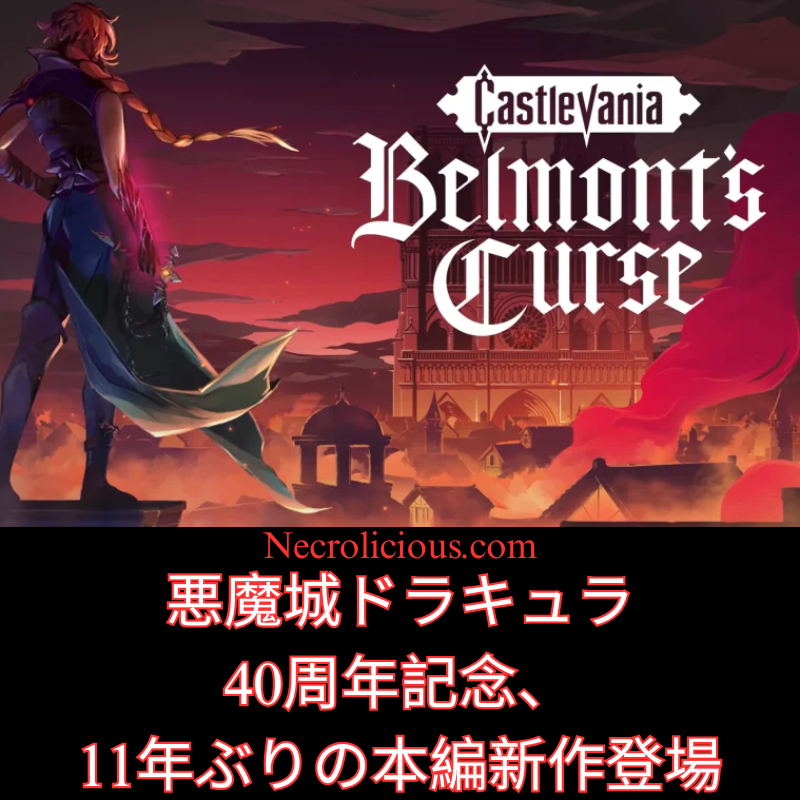
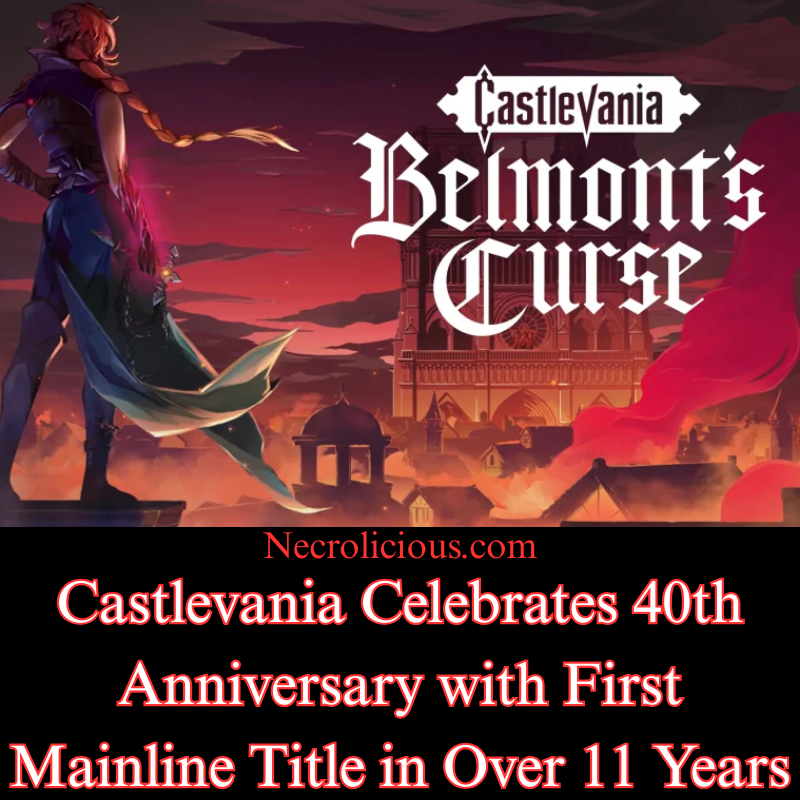
Konami has announced Castlevania: Belmont’s Curse, a brand new entry in the iconic Castlevania series. Scheduled for release in 2026, this 2D action-exploration game launches as the first project in the series’ 40th anniversary celebrations, which commemorate the original title’s debut in 1986.
The reveal took place during Sony’s State of Play livestream on 12 February 2026. Producer Tsutomu Taniguchi presented the project on stage, accompanied by a cinematic trailer that captured the gothic intensity fans have awaited for years.
Story & Setting
Castlevania: Belmont’s Curse acts as a direct sequel to Castlevania: Legacy of Darkness & unfolds 23 years later in 1499, at the centre of Paris, France. Players take control of Trevor Belmont’s young female successor, a new Belmont heir, who must wield the legendary Vampire Killer whip & a range of other weapons to confront demons that have overrun the city’s streets & raised Dracula’s castle amid a full-scale demonic outbreak.
The plot revolves around a mysterious “crimson curse” that leaves the fate of Paris – & potentially the wider world – suspended between despair & hope as flames consume the historic capital.
Gameplay Features
The title emphasises whip-based combat, enabling the protagonist to swing through environments like a trapeze for fluid mobility & strategic positioning. It offers a vast arsenal of weapons & abilities, alongside environmental puzzles, traps, hidden secrets & layered exploration typical of the Metroidvania genre.
A refreshed gothic art style merges the series’ traditional dark tones with vibrant colours, delivering a visually striking experience that respects its heritage while incorporating contemporary design sensibilities.
Development & Team
Konami oversees development in partnership with Evil Empire, the studio known for Dead Cells, with advisory support from Motion Twin. No director has been named at this stage, but the collaboration points to a focus on precise, polished action & exploration mechanics.
Producer Tsutomu Taniguchi has confirmed the project as the opening act in a broader slate of anniversary initiatives.
A Long-Awaited Return to Mainline Castlevania
Nearly 12 years (11 years, 11 months & 20 days to be exact) have passed since the last mainline Castlevania release, Castlevania: Lords of Shadow 2, which arrived in February 2014. In the intervening period the series has featured ports, collections & non-core projects such as the mobile MMO Grimoire of Souls, yet Belmont’s Curse marks the first original core entry in that time.
This substantial gap has amplified anticipation for a return to the classic 2D formula that defined the franchise.
More 40th Anniversary Plans?
Castlevania: Belmont’s Curse initiates Konami’s commemorative efforts for the series’ 40th year. Official portals carry an “Overture” message stating: “This is the beginning of numerous new products around Castlevania. Look forward to the return of the magnificent ‘nightmare’ lurking in the darkness.”
Further projects remain unannounced, but the studio has indicated a range of developments throughout 2026.
Pre-Order Details & Specials
Pre-orders became available on 13 February 2026, the day after the announcement. Digital Standard Edition copies are priced at approximately $39.99 & can be reserved on the PlayStation Store & Xbox Store, where some regions offer early-access discounts & minor reservation bonuses.
Physical editions are listed on some online retailers, but no deluxe editions, collector’s items or significant content bonuses have been confirmed, though additional details may surface closer to launch.
Platforms & Release Date
Castlevania: Belmont’s Curse will launch on PlayStation 5, Xbox Series X|S, Nintendo Switch & Steam in 2026.
Fans can view the official reveal trailer on YouTube & add the game to wishlists on the relevant digital storefronts to stay updated. As the first major title in what promises to be a landmark year for the series, Belmont’s Curse offers a compelling return to the Belmont legacy & the gothic world that has captivated players for four decades.
Unless otherwise noted, image assets above are NOT original content & are shared under fair use doctrine with NO claims to authorship or ownership. Contact necrolicious@necrolicious.com for credit or removal.
This post was sponsored by…ME! If you’d like to support, please buy my original meme merchandise or check out my affiliate links to get yourself some other cool things. Additional affiliate links may be contained in the above article. If you click on an affiliate link & sign up/make a purchase, I may earn a commission. This does not increase the price you pay for the product or service, so it helps support this website at no cost to you.
You’ve likely noticed the recent surge in X account takeovers. High-profile profiles everyday users & organisations have fallen victim to phishing campaigns, fake DMs from trusted contacts & other deceptive tactics. Attackers exploit these breaches to post cryptocurrency scams or lock owners out entirely—often resulting in financial losses, reputational harm or prolonged recovery efforts.
This trend underscores a critical truth: passwords, however strong, alone are insufficient in today’s hacking landscape.
Two-factor authentication (2FA) provides an essential additional layer of protection. It requires a second verification step beyond your password—typically a time-based code from an authenticator app, a physical security key or a text message—ensuring that, even if credentials are compromised, unauthorised access is still blocked.
Many social media platforms, such as X, support multiple 2FA methods, including authenticator apps security keys & text messages.
Why enabling 2FA matters urgently:
Phishing attacks frequently trick users into revealing passwords via fake links or spoofed messages. 2FA halts these attempts.
Credential stuffing—using leaked passwords from other breaches—fails when a second factor is required.
Account compromise can cascade: attackers impersonate you target followers or extract sensitive information. 2FA dramatically reduces this risk.
Personally, I recommend physical security keys (such as these) for your most important accounts, due to their robust phishing resistance & cryptographic security. These hardware devices are highly effective against remote attacks since they require physical human touch to unlock & grant access to an account. You can even set it so that there’s an extra layer of security on top of that by requiring the key itself be unlocked by Yubico’s proprietary Yubico Authenticator first. However, while advanced, these dedicated security keys cost about 10,000 JPY or more, depending on the model & features, which may be too expensive for some people. Furthermore, it is recommended to not only have 1 but, at a minimum, 2 security keys–to act as a main & a backup to prevent permanent lockouts from your accounts.
For those seeking a free starting point, app-based 2FA remains highly secure & accessible. Applications such as Authy generate codes offline & resist common bypass methods like SIM swapping (far better than SMS alone).
How to Set Up 2FA
Set up takes just minutes. Here’s how for X (steps may vary slightly by device):
Select your preferred method (security key recommended, but authenticator apps can also be used).
Follow the prompts: scan the QR code with your authenticator app or register a security key by following the touch prompts on screen.
Save the provided backup codes securely. Store them airgapped (offline, in writing, in a secure place you won’t forget), not on your device.
The process is relatively identical everywhere. Repeat it across all accounts that support 2FA—prioritise E-mail & financial services, not just social platforms.
Best practices
2FA is great, but strong passwords still matter. Use a password manager to generate & save long strings of random letters, numbers & symbols. The days of using pets’ names, birthdays, etc. are over.
Prefer hardware keys or authenticator apps over SMS, since text messages are vulnerable to interception.
Generate & store backup codes or set up multiple methods to avoid lockouts.
Regularly review connected devices & sessions in account settings.
In an era of persistent phishing & account compromise threats, enabling 2FA everywhere possible is one of the most effective steps you can take to safeguard your digital presence.
Do it today—your accounts followers & peace of mind will benefit.