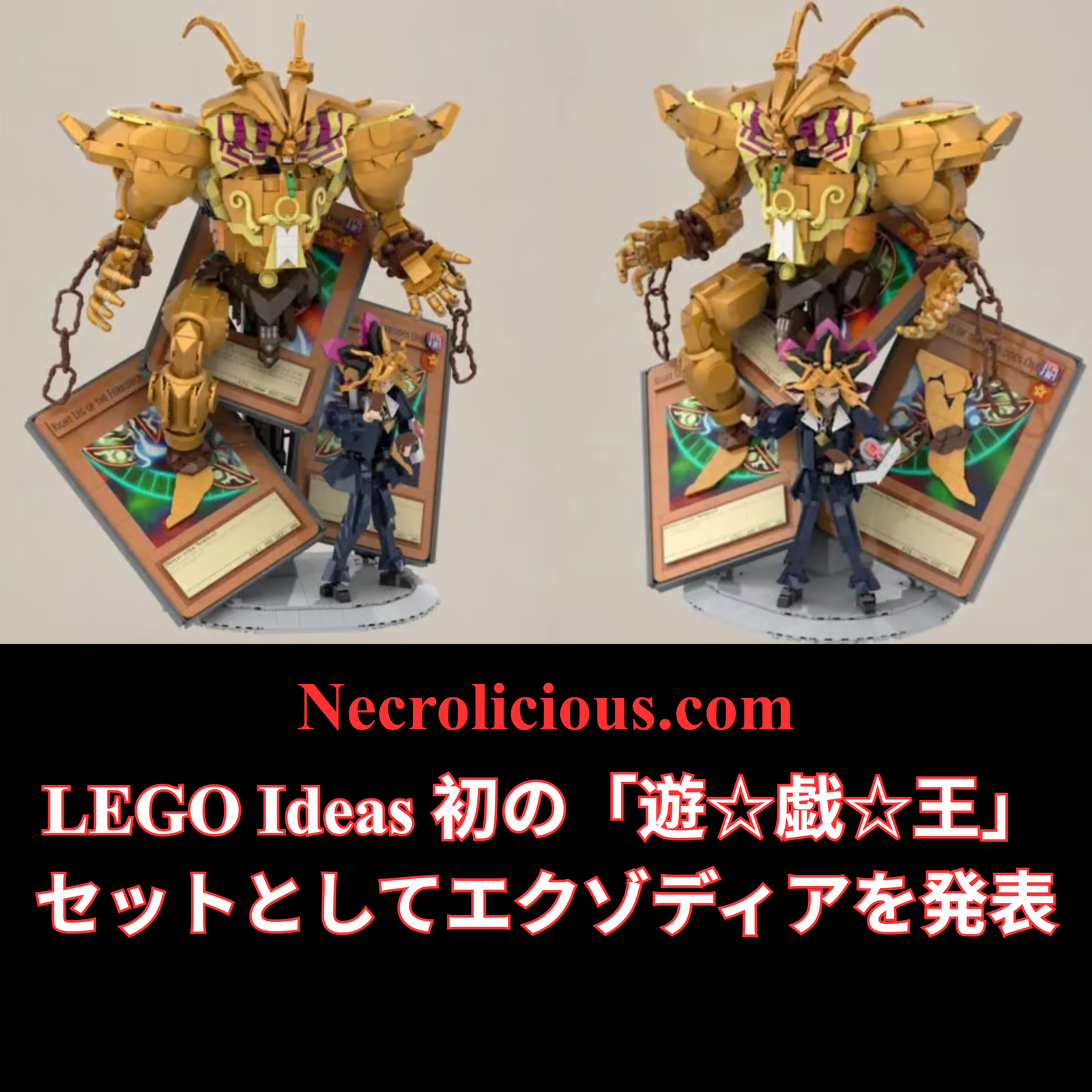
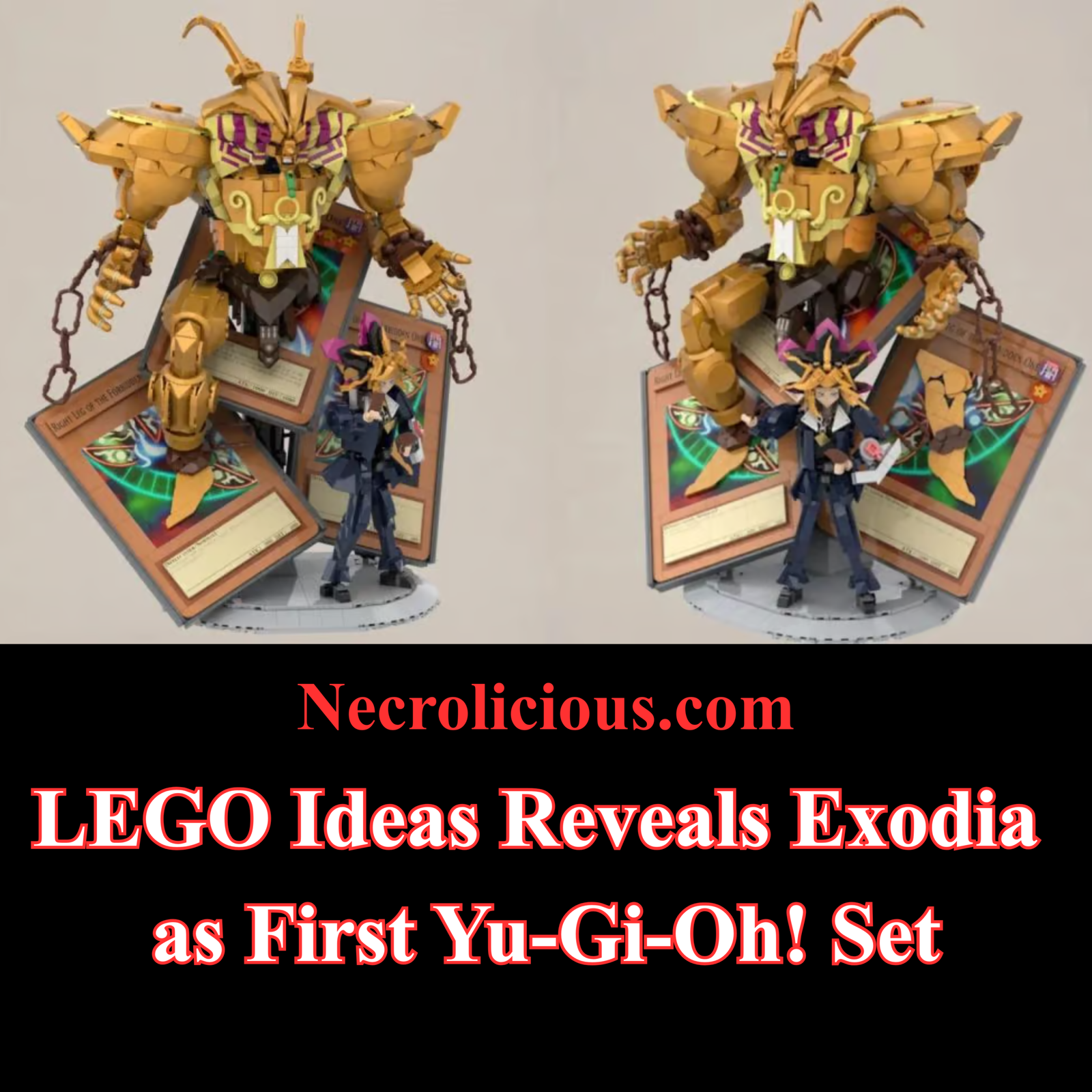
The intersection of premium brick-building & competitive trading card games has long been a dream for dedicated collectors. That dream is now taking physical form. Following a highly competitive public vote, a fan-made LEGO Exodia model has officially won the company’s recent design contest. This victory ensures the legendary monster will be transformed into the first-ever official LEGO Yu-Gi-Oh! set, marking a significant milestone for both the Danish toy manufacturer & the iconic Japanese franchise.
The official announcement, confirmed via the official Yu-Gi-Oh! account on X, revealed the results of the ‘It’s Time to Duel!’ LEGO Ideas challenge. After allowing fans to vote between five remarkable finalists, the winning model emerged as a stunning tribute to the anime’s foundational lore. Titled The Heart of the Cards: Exodia, the build was masterfully crafted by LEGO Ideas user Step_on_a_Brick. The design captures a pivotal narrative moment, depicting series protagonist Yami Yugi summoning Exodia the Forbidden One to secure an impossible victory.
For enthusiasts of both hobbies, this collaboration represents more than just a new product. It signals a mature recognition of anime’s enduring cultural footprint & the increasing overlap between premium collectible markets.
From Fan Concept to Official Retail Reality
The journey to this historic release began in February 2026 when LEGO first announced its dedicated Yu-Gi-Oh! contest. The brief invited builders worldwide to submit imaginative creations inspired specifically by the Duelist Kingdom & Battle City arcs of the original television series. These early story arcs are widely considered the golden era of the franchise, introducing the core characters, iconic monsters & dramatic stakes that would define the brand for decades.
The competition parameters were strict but encouraged immense creativity. Entries were required to contain between 400 & 2,000 pieces. This specific range ensured that submissions would be substantial enough to capture the necessary intricate details while remaining viable for eventual mass-market production.
The response from the community was overwhelming. LEGO ultimately received 264 valid submissions. A panel of professional designers narrowed this massive pool down to five exceptional finalists before handing the final decision over to a public community vote. The winning design secured its victory by offering a perfect blend of character representation, dynamic action & structural ingenuity.
The Mechanics of the Winning Build
The Heart of the Cards: Exodia is a masterclass in translating two-dimensional artwork into three-dimensional space. The build distinguishes itself through several key design choices:
The Dimensional Shift: The model depicts the legendary monster literally emerging from enlarged, brick-built Yu-Gi-Oh! cards. This creates a striking visual effect where Exodia appears to physically tear through the boundary between a flat image & a massive, fully articulated figure.
Character Integration: Unlike some submissions that focused solely on monsters, this design puts the creature front & centre alongside a detailed, brick-built version of Yami Yugi.
Iconic Symbolism: The set pays homage to the literal mechanics of the trading card game, where gathering the five distinct pieces of Exodia results in an automatic victory. The visual of the golden chains breaking translates perfectly to the medium of LEGO bricks.
The Cultural Weight of Exodia the Forbidden One
To understand why this specific monster resonated so deeply with the voting public, one must look at the history of the Yu-Gi-Oh! Official Card Game (OCG). Introduced in the late 1990s, the game revolutionised the tabletop industry. Exodia the Forbidden One is not merely a powerful card; it represents the ultimate alternate win condition. A player can immediately win a duel by gathering all five pieces of Exodia (the head, both arms & both legs) in their hand, bypassing the opponent’s life points entirely.
As an active observer of Tokyo’s vibrant trading card scene & the developer behind the Gothest multimedia trading card project, I have witnessed first-hand how properties like Yu-Gi-Oh! continue to dominate retail spaces across districts like Akihabara & Shinjuku. The Japanese trading card market has evolved significantly over the past decade, shifting from casual hobby spaces into high-end retail environments resembling boutique asset trading.
In this context, Exodia holds an almost mythical status among collectors. The character’s narrative debut in the anime’s first episode—where Yugi defeats the seemingly invincible Seto Kaiba—solidified the concept of “the heart of the cards” in global pop culture. It taught an entire generation of viewers that strategy, patience & a bit of faith could overcome overwhelming odds. Translating this specific cultural touchstone into a premium LEGO model is a brilliant move that taps directly into deep-seated millennial nostalgia.
The Power of the LEGO Ideas Ecosystem
The LEGO Ideas platform has fundamentally changed how toy manufacturers interact with their most dedicated consumers. Rather than relying solely on internal market research, LEGO empowers its community to dictate demand.
For the creator, Step_on_a_Brick, the rewards are both prestigious & financially significant. According to the official rules of the program, the victorious designer will be fully credited in the set’s official instruction booklet. More importantly, they will receive 1% of the product’s net sales as royalties. In the context of a globally recognised intellectual property like Yu-Gi-Oh!, this represents a potentially life-altering payout for a fan creator.
The process from here involves LEGO’s in-house professional designers taking the fan concept & adapting it into a finalised retail product. This step ensures the model meets the company’s rigorous safety, stability & structural standards. Consequently, the final design may undergo slight modifications before it hits store shelves. Details such as the final retail price, the exact piece count & the official launch date remain unannounced, though historical timelines suggest a release could occur within the next 12 to 18 months.
Fan Reception: Triumphs & Missed Opportunities
The broader Yu-Gi-Oh! community largely welcomed Exodia’s victory, viewing it as the most comprehensive representation of the brand. Discussions across platforms like Reddit highlighted the strategic brilliance of the design. As one vocal user noted, it was the best choice for brand representation because it successfully incorporated the central monster, the iconic cards & the main protagonist into a single cohesive display piece.
However, no fan vote is without its dissenting voices. A vocal segment of the community expressed disappointment regarding two main factors:
The Lack of Minifigures: The winning build opts for a larger brick-built figure of Yugi rather than standard minifigures. For traditional LEGO collectors, minifigures are often the main draw of licensed sets.
The Absence of Rivalry: Some fans questioned how the franchise’s inaugural set could arrive without featuring Seto Kaiba or his signature monster, the Blue-Eyes White Dragon. Given the immense popularity of the Blue-Eyes archetype, its exclusion left some enthusiasts hoping for future expansions to the line.
These critiques offer valuable insight into collector priorities. They highlight the delicate balancing act required when merging two distinct fandoms. While Exodia perfectly captures the narrative climax of the series, the demand for minifigures & rival characters indicates a strong market appetite for a broader, ongoing line of Yu-Gi-Oh! sets.
The Expanding Anime Footprint in Western Toys
This upcoming release is not an isolated incident; it is part of a calculated strategy. LEGO is steadily expanding its reach into the anime sector, capitalising on a global surge in the medium’s popularity. The company has already successfully launched products tied to global juggernauts like Pokémon & One Piece, while industry reports suggest a massive multi-set rollout for Dragon Ball Z is currently in development.
This trend is mirrored across the broader collectibles industry. We are increasingly seeing Western toy brands entering the Japanese market by securing licenses for contemporary & classic anime titles. From McFarlane Toys exploring properties like Bleach to Burger King launching exclusive Hello Kitty collaborations, the integration of Japanese pop culture into mainstream Western consumer goods has reached unprecedented levels.
For Yu-Gi-Oh!, an official LEGO set cements its status alongside the most influential entertainment properties in the world. As we await further details on pricing & availability, collectors have ample time to prepare their display shelves. If the final retail product captures even a fraction of the magic demonstrated by Step_on_a_Brick’s original submission, this set will undoubtedly be a mandatory purchase for fans of the heart of the cards.
Frequently Asked Questions (FAQ)
When will the official LEGO Yu-Gi-Oh! Exodia set be released?
An official release date has not yet been announced. Following a LEGO Ideas contest victory, it typically takes the company’s internal design team between 12 to 18 months to finalise the retail product, engineer the build for stability & prepare global distribution.
Will the final set look exactly like the fan-made submission?
Not necessarily. LEGO’s professional designers will adapt Step_on_a_Brick’s concept to ensure it meets strict commercial standards for safety, piece availability & structural integrity. While the core concept of Exodia emerging from the cards will remain, the exact piece count & visual execution may be refined.
Does the creator get paid for winning the contest?
Yes. Step_on_a_Brick will receive 1% of the net sales as royalties for the lifespan of the product, alongside official design credit printed in the set’s instruction booklet.
Are standard LEGO minifigures included in this set?
Based on the winning fan design, the set features a brick-built version of Yami Yugi rather than a traditional, small minifigure. Whether LEGO decides to add an exclusive minifigure during the final redesign process remains to be seen.
Will there be more Yu-Gi-Oh! LEGO sets featuring characters like Kaiba or Blue-Eyes White Dragon?
Currently, only the Exodia set has been officially confirmed through the LEGO Ideas platform. However, if this inaugural set performs exceptionally well at retail, it is highly likely that LEGO could pursue a broader licensing agreement to produce additional characters & monsters in the future.
Unless otherwise noted, image assets above are NOT original content & are shared under fair use doctrine with NO claims to authorship or ownership. Contact necrolicious@necrolicious.com for credit or removal.
This post was sponsored by…ME! If you’d like to support, please buy my original meme merchandise or check out my affiliate links to get yourself some other cool things. Additional affiliate links may be contained in the above article. If you click on an affiliate link & sign up/make a purchase, I may earn a commission. This does not increase the price you pay for the product or service, so it helps support this website at no cost to you.
If you would like to support my work more directly, I accept voluntary cryptocurrency donations in BTC, ETH, XRP & XLM sent directly to necrolicious.x. necrolicious.x is an Unstoppable Domains name that resolves to the wallet addresses I have configured. Simply enter necrolicious.x as the recipient in a supported wallet (such as Trust Wallet, Blockchain.com or others that support Unstoppable Domains). Donation Disclaimer: All cryptocurrency donations sent to me are final, voluntary gifts & are non-refundable & irreversible. These donations are not tax-deductible since I am not a registered charitable organization, & no tax receipts will be issued. No memo or destination tag is required for XRP or XLM donations, as the domain resolves directly to a wallet address. By sending a donation you acknowledge & accept all associated risks, including cryptocurrency price volatility, network fees & potential loss of funds due to incorrect network selection or transaction errors. I am not responsible or liable for any loss related to your donation. No goods, services or other benefits are provided in exchange for donations. This is not financial, tax, legal or investment advice. Please consult a qualified professional regarding any implications of your donation.
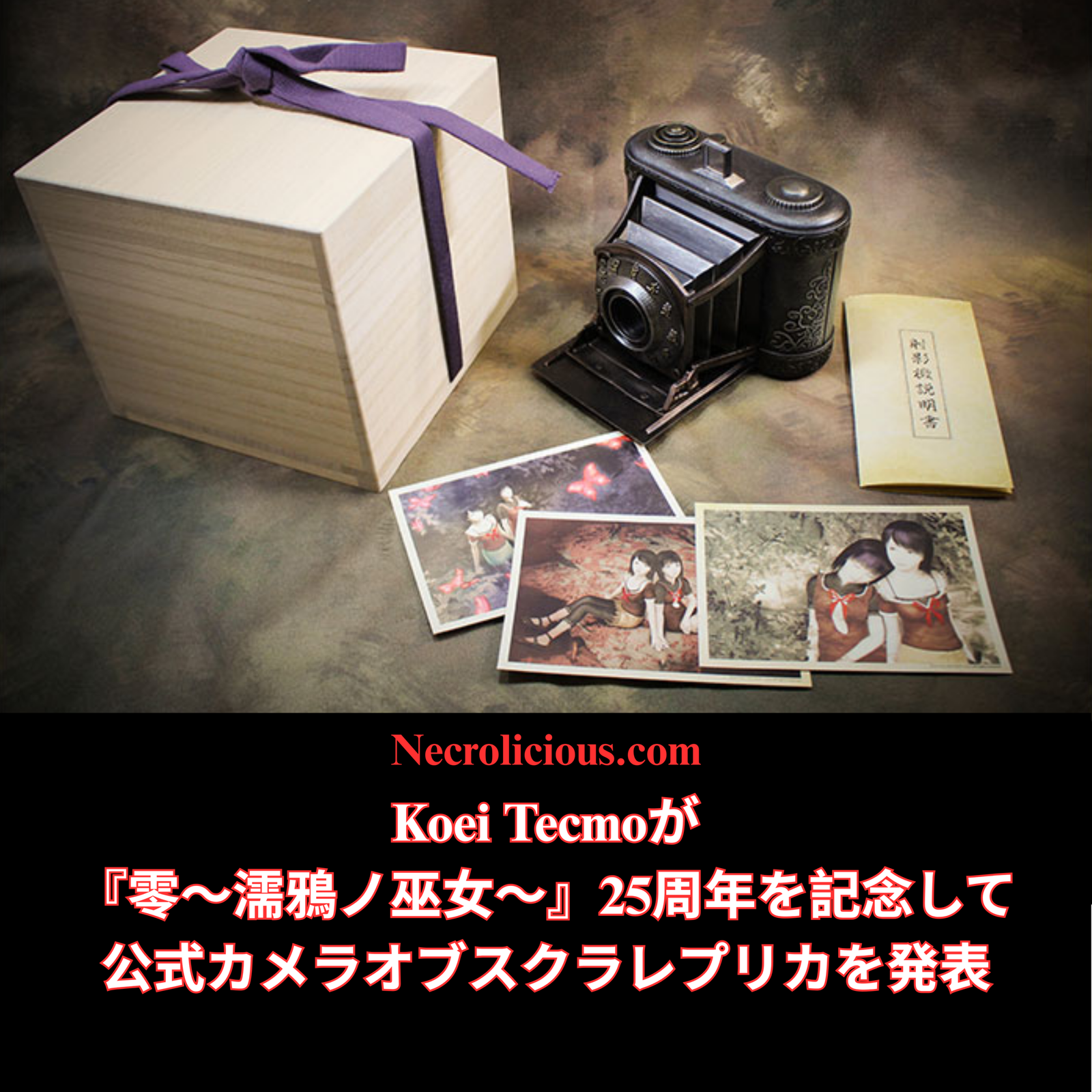
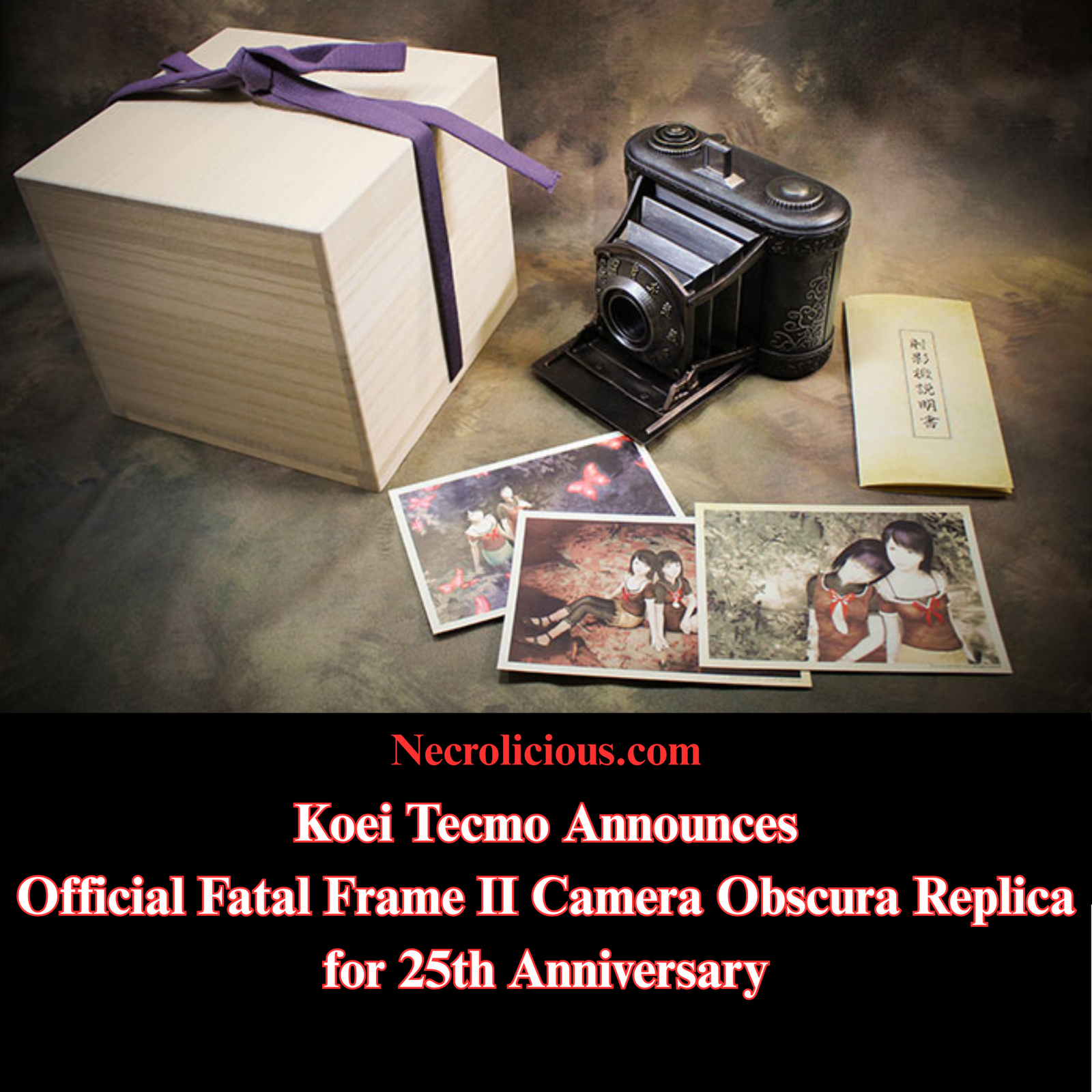
Long-time players of the series first encountered the Camera Obscura as a digital instrument of last resort. In 2003’s original Fatal Frame II: Crimson Butterfly, that antique camera was the only defence against restless spirits in a forgotten mountain village. Twenty-three years later the same object has been rendered in physical form as a high-end collector’s piece. The official 「零」25周年記念 『零 ~紅い蝶~』 射影機プロップレプリカ スペシャルセット now sits on the Koei Tecmo shop, priced at ¥79,800 including tax.
This article examines the replica’s specifications, production terms, historical context & practical considerations for collectors. It draws on official shop listings, contemporary reporting from Famitsu & 4Gamer, plus first-hand familiarity with the franchise’s evolution from PlayStation 2 origins through the 2026 remake.
What the Special Set Actually Contains
The set is sold as a single made-to-order package housed in a paulownia wood box. It comprises three principal items plus the box itself.
Camera Obscura prop replica: composite resin & acrylic construction, measuring H120 mm × W135 mm × D110 mm & weighing approximately 705 g.
Dr Asou’s Camera Manual: a specially produced tri-fold booklet that unfolds to roughly H157 mm × W223 mm.
Antique photo-style card set: three cards depicting Mio & Mayu, each H89 mm × W127 mm.
Paulownia box: inner dimensions H130 mm × W152 mm × D152 mm.
Official product photography shows an aged metallic finish, engraved detailing around the lens housing & a viewfinder arrangement that matches the in-game model when held at chest height. The replica is explicitly non-functional. There are no moving parts, no film compartment & no optical capability. The included manual describes fictional in-game effects rather than real photographic operation.
Pre-orders opened on 11 September 2026 & close at 23:59 JST on 23 November 2026. Convenience-store payment ends earlier, on 14 November. Shipment is planned for March 2027, though the listing notes the date remains subject to change. Orders cannot be cancelled, amended or combined with other items in the same cart. Production may be cancelled entirely if the minimum order quantity is not reached.
Historical & Cultural Context of the Camera Obscura
The Camera Obscura occupies a unique place in Japanese horror design. Created in-universe by Dr Kunihiko Asou in the late nineteenth century, the device uses specially treated film to capture & pacify spirits. Its first appearance in the 2001 original Fatal Frame established a mechanic that distinguished the series from Western survival-horror contemporaries. Players must allow ghosts to approach closely before triggering a shot, turning vulnerability into the core tension.
Crimson Butterfly refined that system & introduced the twin sisters Mio & Mayu Amakura. The 2026 remake by Team NINJA updated graphics, audio & controls while retaining the original camera loop. The replica therefore arrives at a moment of renewed visibility for the franchise. Series creator Makoto Shibata has described the remake as approaching the scope of a new title rather than a simple visual upgrade.
The 25th-anniversary timing is precise. The first game launched in December 2001. By late 2026 the series has existed for a full quarter-century, spanning multiple hardware generations & a shift from Tecmo to Koei Tecmo. Physical replicas of this fidelity remain rare in Japanese game merchandising, which more commonly favours acrylic stands, clear files & scale figures. The decision to produce a weighted, display-ready Camera Obscura signals an attempt to treat the object as an artefact rather than disposable fan goods.
For comparison, Japan’s broader collectibles market has seen similar premiumisation. High-value trading cards now trade as assets, prompting regulatory discussion. The replica occupies a parallel space: limited production, high unit price & cultural specificity. See our earlier examination of Japan’s high-value collectibles market for the wider commercial pattern.
Practical Considerations for Prospective Buyers
At ¥79,800 the set sits well above typical game merchandise. Overseas buyers face additional import duty, shipping insurance & currency conversion. The item ships only from the Japanese official shop & cannot be bundled. Delivery in March 2027 means a six-month wait after the pre-order window closes.
The replica’s 705 g weight gives it substantial presence on a shelf, yet its dimensions remain compact enough for a standard display cabinet. Because it is a prototype-based product, minor variations between the photographed sample & the final unit are possible. The shop listing states images are for reference only.
Collectors who already own the 2026 remake may find the physical object complements the digital experience. Holding a tangible Camera Obscura after years of virtual use creates a tactile connection that software cannot replicate. That said, the piece remains a static display item. Anyone expecting a working camera or interactive features will be disappointed.
Production risk should not be ignored. Made-to-order items of this type have been cancelled in other Koei Tecmo lines when demand fell short. Buyers should treat the pre-order as a commitment rather than a reservation that can be withdrawn.
Design Fidelity & First-Hand Assessment
Having followed the series since the original PlayStation 2 release, the replica’s proportions appear faithful. The lens barrel, viewfinder frame & decorative engraving align with both the 2003 model & the 2026 remake’s updated textures. The aged finish avoids the overly glossy look common in cheaper resin products. When photographed in low light the surface reads as oxidised metal rather than painted plastic.
The accompanying cards of Mio & Mayu adopt an antique photographic style consistent with the game’s early-twentieth-century setting. They function as both decorative inserts & narrative reminders of the twins’ central role. Dr Asou’s manual adds a layer of in-universe documentation that collectors of the series’ lore will appreciate.
Compared with other official horror-game props, the set occupies a middle ground between mass-market figures & museum-grade replicas. It is more substantial than typical acrylic goods yet less expensive than fully licensed film-prop reproductions. For dedicated fans the value lies in the combination of accuracy, limited availability & the anniversary context.
The Camera Obscura’s design also invites comparison with real-world analogue cameras of the period. Its bellows-style front & square body echo late-Victorian plate cameras, an intentional historical reference that reinforces the series’ blend of folklore & early photography. Readers interested in how Japanese horror draws on both domestic ghost traditions & Western undead motifs may find additional context in our piece on Japanese & Western undead folklore.
Broader Implications for the Franchise
The replica’s release coincides with Koei Tecmo’s documented workforce expansion & the commercial performance of the 2026 remake. While no new mainline title has been announced, the company has previously experimented with camera-based formats, including a 2004 mobile title. Speculation about future augmented-reality applications remains just that—speculation. Our earlier analysis of Koei Tecmo’s potential Fatal Frame AR experiments outlines the technical & commercial factors involved.
Physical media itself continues to hold cultural weight in Japan even as digital distribution grows. The replica can be read as part of that preference for tangible objects. See our reporting on physical media culture in Japanese gaming for the contrasting attitudes between Japanese & Western audiences.
Whether the set becomes a one-off anniversary item or the first of a line of high-end props will depend on sales figures that will not be public for many months. For now it stands as a carefully produced artefact aimed at the core audience that has supported the series across twenty-five years.
FAQ
Is the Camera Obscura replica a working camera? No. It contains no moving parts, no film & no optical function. It is a display replica only.
What is the exact pre-order period? 11 September 2026 to 23 November 2026 at 23:59 JST. Convenience-store payments close on 14 November 2026.
Can the order be cancelled? No. Once placed the order cannot be cancelled, changed or combined with other products.
Will the replica ship outside Japan? The official shop ships internationally, but buyers are responsible for all import duties, taxes & customs clearance.
How accurate is the size compared with the in-game model? Official photographs show a handheld scale consistent with the game. The replica measures 120 × 135 × 110 mm & weighs 705 g.
Unless otherwise noted, image assets above are NOT original content & are shared under fair use doctrine with NO claims to authorship or ownership. Contact necrolicious@necrolicious.com for credit or removal.
This post was sponsored by…ME! If you’d like to support, please buy my original meme merchandise or check out my affiliate links to get yourself some other cool things. Additional affiliate links may be contained in the above article. If you click on an affiliate link & sign up/make a purchase, I may earn a commission. This does not increase the price you pay for the product or service, so it helps support this website at no cost to you.
If you would like to support my work more directly, I accept voluntary cryptocurrency donations in BTC, ETH, XRP & XLM sent directly to necrolicious.x. necrolicious.x is an Unstoppable Domains name that resolves to the wallet addresses I have configured. Simply enter necrolicious.x as the recipient in a supported wallet (such as Trust Wallet, Blockchain.com or others that support Unstoppable Domains). Donation Disclaimer: All cryptocurrency donations sent to me are final, voluntary gifts & are non-refundable & irreversible. These donations are not tax-deductible since I am not a registered charitable organization, & no tax receipts will be issued. No memo or destination tag is required for XRP or XLM donations, as the domain resolves directly to a wallet address. By sending a donation you acknowledge & accept all associated risks, including cryptocurrency price volatility, network fees & potential loss of funds due to incorrect network selection or transaction errors. I am not responsible or liable for any loss related to your donation. No goods, services or other benefits are provided in exchange for donations. This is not financial, tax, legal or investment advice. Please consult a qualified professional regarding any implications of your donation.
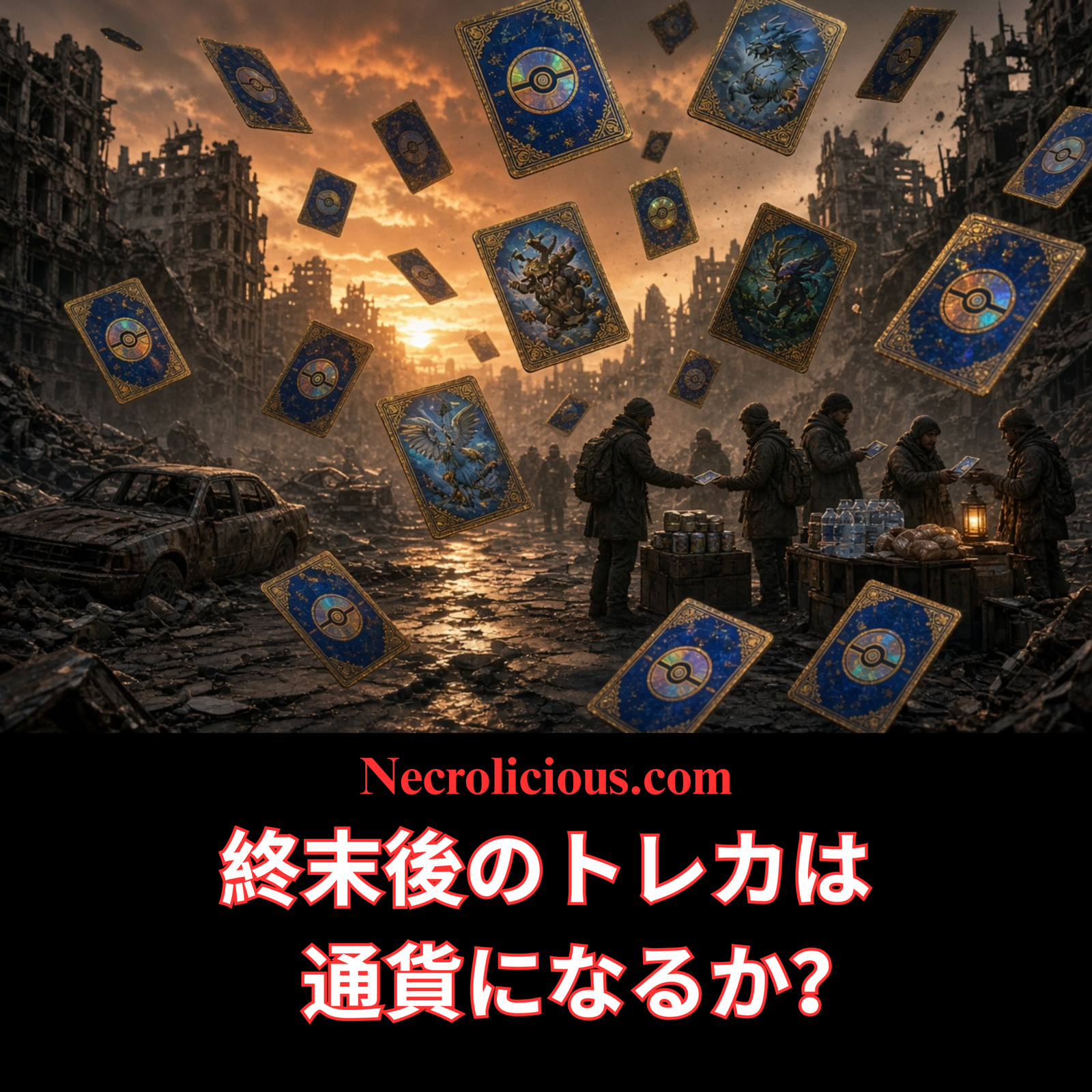
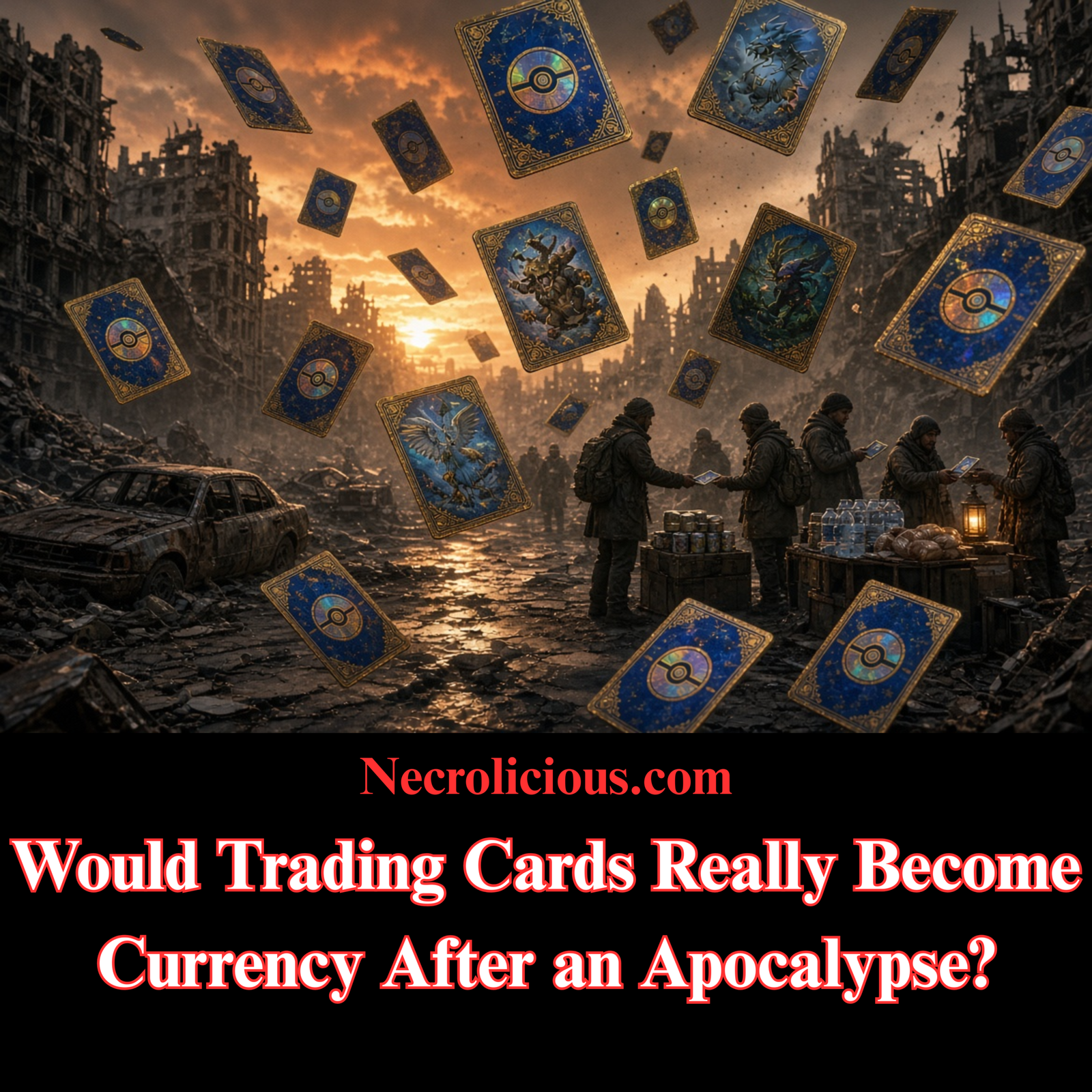
A venture capitalist told The Hollywood Reporter that if civilisation collapsed tomorrow, Pokémon cards would be the next day’s global currency. The line travelled quickly through gaming press because it sounds vivid. It also collapses two different ideas into one claim.
Cards can hold collector value after a shock. That is not the same as working as money at a till. This piece separates those functions, checks what Peter Levin actually said, then tests the grocery-store problem & the counterfeit problem that already exists while institutions are still standing.
What Levin Said — & What He Did Not Say
Peter Levin is founder of Griffin Gaming Partners, which manages over $1.6 billion in gaming assets. Levin himself is a trading card collector who claims to hold more than 500,000 cards. In the September 2026 interview he called Pokémon “a global phenomenon” & added that he was “absolutely convinced that if the world suffered an apocalypse tomorrow, the following day the global currency would be Pokémon cards.” He tied the remark to reported investment performance, including the claim that Pokémon cards have beaten the S&P 500 by about 3,000%.
That currency line was specific to Pokémon. Later in the same conversation he discussed other trading card games as market stories, not as post-collapse cash. He said Pokémon had created an “umbrella” under which Yu-Gi-Oh, Digimon & One Piece could expand. He described One Piece as growing faster than any card game in history, including Pokémon. He called Magic: The Gathering a Hasbro business approaching $2 billion a year.
Coverage that treats the apocalypse remark as a general TCG forecast overstates the quote. The colourful prediction attached to one franchise. The rest was industry commentary.
Store of Value Is Not the Same as Money
Economics textbooks still use a simple test. Money should store value, serve as a unit of account & work as a medium of exchange. Collectibles often manage the first task inside a specialist market. They usually fail the other two.
A first-edition holographic Charizard can sit in a safe as a scarce object people still recognise. That does not tell a shopkeeper how to price bread, milk & batteries in card units by lunchtime. The card’s price depends on set, language, print run, surface wear, centering & whether a grader once assigned a number. Those variables make a poor yardstick.
Anyone who has sorted bulk boxes knows the texture of this problem. Commons arrive by the thousand. Chase cards arrive as exceptions. The pile does not behave like identical coins. One scratched holofoil is not interchangeable with another copy that looks similar in a dim aisle. Condition is not a rounding error. It is the product.
Historical parallels are useful here. Rare stamps, art & numismatic coins have preserved wealth for some holders during inflation or political stress. They have rarely become the thing you spend for supper. Uniform bullion, cigarettes, fuel & food have done that work because they can be counted quickly & used up. Cards sit closer to art than to specie.
Japan’s own market already shows how far collectable paper can travel as an asset class without becoming cash. The domestic trading card sector’s expansion, theft risk & regulatory attention are documented in Japan’s $2.1B Trading Card Boom Sparks Regulation. Scarcity, grading & crime followed the prices. Tills did not start quoting Charizard.
Why the Grocery Checkout Does Not Work
Picture the practical sequence. A customer offers a slabbed card for a basket of staples. Staff must authenticate it, grade it by eye, convert it into a local price & make change. None of those steps is cheap when the lights are unreliable & the queue is hungry.
Divisibility is the next failure. You cannot cut a high-value card into tenths without destroying the premium. You cannot treat a pack of bulk Energy cards as tidy small change when nobody agrees they are worth a tin of fish. Liquidity concentrates at the top. The bottom of the print run is wallpaper.
Durability works against circulation. Money is meant to be handled. Pokémon cardboard is meant to stay flat. A week in a pocket would erase the finish that supports resale. Graded slabs delay that damage until someone cracks them, swaps the contents or copies the label.
The realistic collapse use is narrower. Two people who already collect might settle a large trade: a known rare for fuel, medicine or transport. That is barter among specialists. It is not a payment rail. Commons from mass retail would be nearly worthless as money. The scarce pieces would be too lumpy, too fragile & too disputed to circulate as daily cash.
Forgery would not arrive after the collapse. It is already the tax on this hobby.
Professional Sports Authenticator reported intercepting more than $200 million in fraudulent collectibles in 2025 & called the figure conservative. Counterfeit submissions rose as a share of the queue. Fake Pokémon cards submitted to PSA jumped 125% year over year. Trading card games accounted for more than half of the counterfeits the company recorded, with Pokémon leading the category. Altered cards rose as well. Those numbers capture only what reached a grading desk. Raw fakes on marketplaces sit outside that count.
The pattern is rational. High resale prices attract printers. Modern cards are paper, ink & foil. The tools to imitate them have improved. Community checks — light tests, texture, back-pattern comparison — still catch many poor copies. They do not scale to a panicked crowd making five-second decisions.
Remove the current defences & the problem worsens. No lab queue. No online population comparing print lines. No customs seizures. No civil courts for a bad trade. Demand for anything that “looks official” would rise just as verification collapsed. Trust would shrink to face-to-face circles. Outside those circles, cards would be treated as colourful paper.
Slabs would last a little longer as tokens of prior authentication. Then labels get copied. Inners get swapped. Alteration, already rising on Pokémon according to PSA, becomes easier when nobody can send the object back to a reference archive.
Crime has already followed value in ordinary times, from shop raids to reports of organised buying for overseas resale. A collapse would not civilise that incentive. It would strip away the remaining friction.
What Would Survive in Practice
Levin’s remark works as a comment on brand recognition. Pokémon is widely known across age groups & borders. Recognition can support a residual collector bid. Recognition is not acceptance at retail.
If cards kept purchasing power, it would likely look like this:
Rare, widely recognised pieces used for occasional high-value settlement among people who can inspect them
Sealed product treated as a bulky store of value, not as small change
Graded slabs trusted only while the holder’s reputation lasts
Commons & damaged copies discarded or reused as scrap
Other games Levin mentioned would follow the same logic. One Piece’s growth rate & Magic: The Gathering’s revenue matter to publishers today. They do not solve fungibility after institutions fail. Licensed crossovers & limited collabs can intensify collecting without creating a currency. Even a light promotional hook such as Yu-Gi-Oh’s Cup Noodle Instant Fusion collaboration shows how brands travel through everyday products while remaining merchandising, not money.
Long-running Japanese game intellectual property holds cultural weight for the same reason Pokémon does: memory, characters & repeat contact. That weight still does not turn a printed card into a unit of account. Durable franchises can outlast platforms, as seen when service titles close & older catalogues retain fans, including coverage such as Castlevania: Grimoire of Souls Ends Service on Apple Arcade. Survival of an IP is not the same as monetary function.
Practical Takeaways for Collectors
Treat the apocalypse line as rhetoric, then use the underlying market facts.
Separate hobby value from spendability. A card can be scarce & still be a poor medium of exchange.
Authentication skill matters more than slogans. Learn backs, texture & light behaviour on cards you actually own.
Storage protects the only premium that exists. Circulation destroys it.
Diversify scarce objects if the goal is shock insurance. Uniform goods & skills clear local markets faster than unique cardboard.
Watch fraud data from graders as a leading indicator. Rising fake rates tell you where the money already is.
From handling cards as a collector & from building a small trading-card project, the tactile lesson is consistent. People will overpay for a story they recognise. They will not pause a food queue to debate print quality. Those instincts can coexist. They should not be merged into a single forecast.
FAQ
Did Peter Levin say Yu-Gi-Oh, One Piece & Magic: The Gathering would be apocalypse currency? No. The currency sentence named Pokémon only. The other titles appeared later as growth examples.
Could Pokémon cards keep any value after a collapse? Yes, inside a narrow circle of people who already collect & can inspect authenticity. That is residual demand, not a payment system.
Why not use common cards as small change? Commons are plentiful, easy to copy & weakly desired. They fail as a unit of account once nobody agrees they buy a fixed basket of goods.
Is counterfeiting already serious? Yes. PSA’s 2025 fraud reporting put intercepted fake & altered collectibles above $200 million, with Pokémon fakes up 125% year over year among submissions.
What historically works better as emergency exchange? Items that are uniform, consumed & easy to count: food, fuel, ammunition in some settings, labour & widely recognised bullion. Unique collectables settle occasional large trades at best.
Unless otherwise noted, image assets above are NOT original content & are shared under fair use doctrine with NO claims to authorship or ownership. Contact necrolicious@necrolicious.com for credit or removal.
This post was sponsored by…ME! If you’d like to support, please buy my original meme merchandise or check out my affiliate links to get yourself some other cool things. Additional affiliate links may be contained in the above article. If you click on an affiliate link & sign up/make a purchase, I may earn a commission. This does not increase the price you pay for the product or service, so it helps support this website at no cost to you.
If you would like to support my work more directly, I accept voluntary cryptocurrency donations in BTC, ETH, XRP & XLM sent directly to necrolicious.x. necrolicious.x is an Unstoppable Domains name that resolves to the wallet addresses I have configured. Simply enter necrolicious.x as the recipient in a supported wallet (such as Trust Wallet, Blockchain.com or others that support Unstoppable Domains). Donation Disclaimer: All cryptocurrency donations sent to me are final, voluntary gifts & are non-refundable & irreversible. These donations are not tax-deductible since I am not a registered charitable organization, & no tax receipts will be issued. No memo or destination tag is required for XRP or XLM donations, as the domain resolves directly to a wallet address. By sending a donation you acknowledge & accept all associated risks, including cryptocurrency price volatility, network fees & potential loss of funds due to incorrect network selection or transaction errors. I am not responsible or liable for any loss related to your donation. No goods, services or other benefits are provided in exchange for donations. This is not financial, tax, legal or investment advice. Please consult a qualified professional regarding any implications of your donation.
この前提はImmortalにとって新しいものではない。このタイトルは、無料プレイのアクションRPGがライセンスされたダークな世界観をどこまで追求できるかを数年にわたって検証してきた。Spawnは、その流れにおける最新の外部IPである。また、多くのプレイヤーが忘れている古いマーケティング実験、つまり2022年にCradle of FilthのフロントマンであるDani Filthを起用したヨーロッパキャンペーンと並んで位置づけられる。この記事では、公式の日程、過去のコラボレーション、あのメタル広告、そしてプレイヤーがすでに抱いている実用的な疑問点をまとめている。
公式発表と主要日程
This collaboration could only be made in hell. Spawn is coming to Diablo Immortal on September 29th.
Attending Blizzcon? You won’t want to miss out on the Diablo Immortal panel with the legendary Todd McFarlane on September 13th. pic.twitter.com/GEao1NWcbW
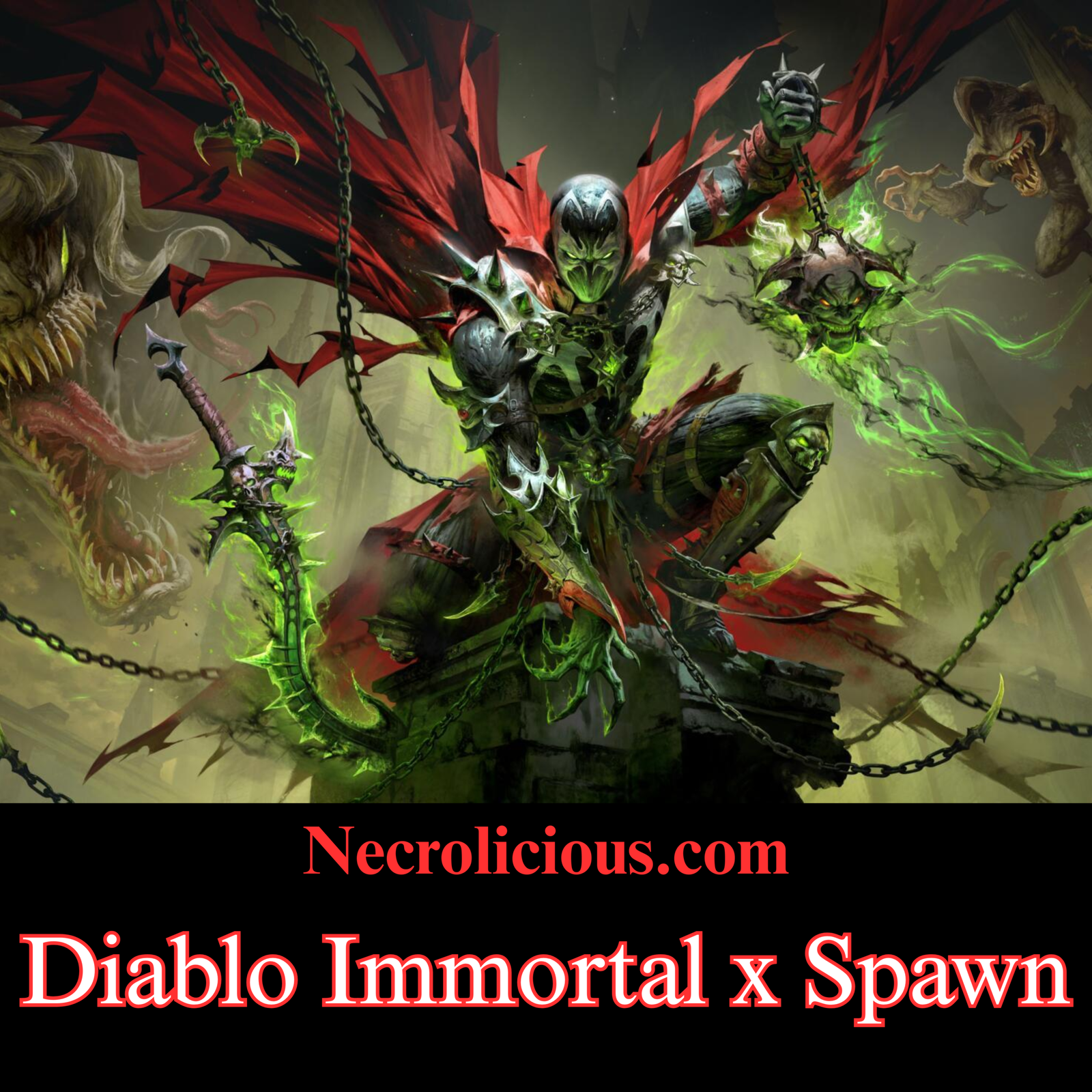
Official channels confirmed on 8 September 2026 that Todd McFarlane’s Spawn will enter Sanctuary on 29 September. The announcement was paired with striking key art: a Hellspawn figure in spiked armour, red cape, chains & green necrotic fire, framed by snarling demons. The pitch is simple. Two visions of hell are being placed in the same game.
That premise is not new for Immortal. The title has spent several years testing how far a free-to-play action RPG can push licensed darkness. Spawn is the latest external property in that line. It also sits beside an older marketing experiment that many players have forgotten: a 2022 European campaign that put Cradle of Filth frontman Dani Filth on camera. This article gathers the official dates, the earlier collaborations, that metal advertisement & the practical questions players are already asking.
The Official Announcement & Key Dates
This collaboration could only be made in hell. Spawn is coming to Diablo Immortal on September 29th.
Attending Blizzcon? You won’t want to miss out on the Diablo Immortal panel with the legendary Todd McFarlane on September 13th. pic.twitter.com/GEao1NWcbW
Social media posts used a short line: “Let hell come.” The body text stated that Diablo Immortal x Spawn arrives on 29 September. Some regional reports list 30 September AEST. Treat 29 September as the headline date unless your server cluster publishes a local maintenance window that shifts it by a few hours.
A companion trailer features McFarlane himself. He described the work as meshing “my hell” with Diablo’s hell & called the pairing a match made in hell. He also confirmed attendance at BlizzCon on 13 September for a Diablo Immortal panel. That session is scheduled to include a live drawing in which he reinterprets Diablo characters through Spawn’s visual language, plus a question period & a signing for attendees.
As of 9 September 2026, Blizzard has not published a full loot table. Players should expect the same structure used in recent Immortal events: a limited mode or boss, a Legendary Gem, weapon or armour cosmetics, a familiar skin & a paid Phantom Market bundle. That pattern is consistent. It is not yet confirmed item by item for Spawn.
How Immortal Built a Pattern of Dark Crossovers
Immortal’s first major non-Blizzard collaboration was Berserk in May 2025. That event, titled Struggler’s Path, ran roughly 1–30 May. It added a Nosferatu Zodd encounter, an Eclipse-themed rewrite of Survivor’s Bane, the Crimson Behelit Legendary Gem, Dragon Slayer weapon cosmetics & a Golem familiar. The Golden Age arc supplied the narrative spine. The Eclipse sequence remains the closest Immortal has come to staging another property’s signature catastrophe inside its own systems.
DOOM: The Dark Ages followed in April 2026. Slayer’s Reign ran from mid-April to 13 May. Survivor’s Bane became Slayer’s Bane. Players received six Slayer-inspired skills, Imps on the field, a Cyberdemon boss, The Crucible Legendary Gem, Praetor armour looks & Cacodemon or mount familiars. Official write-ups later grouped Berserk & DOOM as Immortal’s previous “dark worldview” partners when Spawn was revealed. That grouping is accurate. Both properties share hell, demons & a lone warrior who has already been to the other side.
Other collaborations were larger in marketing terms yet looser in tone:
World of Warcraft’s 20th-anniversary event in November 2024 brought a Lich King encounter & Frostmourne cosmetics.
Hearthstone’s Heroes of the Hearth event in July–August 2025 added collectible cards that altered combat & a tavern-styled trial mode.
StarCraft’s Battle for Beyond event in May–June 2026 dropped Zerg & Protoss into Sanctuary with Infested Rifts, Tal’darim bosses & Kerrigan-adjacent cosmetics.
StarCraft is the outlier. Alien infestation can be grotesque. It is not gothic hell in the Spawn sense. Berserk & DOOM remain the useful comparisons.
Readers who follow licensed dark-fantasy objects will recognise the same collector logic that appears when McFarlane’s own lines expand. Our earlier look at McFarlane Toys’ Q-Figs launch & its Japan-market impact sits in that adjacent space: Spawn as a visual brand that travels across toys, comics & now a live-service ARPG.
What Is Confirmed versus What Players Are Inferring
Confirmed:
In-game start date of 29 September 2026.
McFarlane’s BlizzCon appearance on 13 September with live drawing, discussion & signing.
Official key art that already shows class-agnostic Spawn iconography: chains, necrotic green, red cape, infernal architecture.
A reveal trailer & a broader Dev Update that also covers the Made to Suffer patch on 17 September.
Not confirmed in public notes at the time of writing:
Whether Spawn is a full playable skin set for every class or a smaller bundle.
Whether there is a named boss drawn from Spawn lore (Malebolgia is the obvious candidate; nothing official names him).
Exact gem effects, familiar names or event duration.
Whether any rewards persist after the event window.
Immortal’s recent external events have usually lasted three to four weeks. A late-September start would place the close around late October if that template holds. Do not spend currency on that assumption until the patch notes appear.
A recurring criticism on the announcement post was familiar: why Spawn here rather than in Diablo IV. That complaint is not new. Coverage of the DOOM event made the same comparison. Immortal’s versions of Berserk & DOOM included rewritten modes & bosses. Diablo IV often received cosmetics first. Whether that gap is a design choice or a production constraint is a separate argument. For players who already live in Immortal, the useful question is narrower: will Spawn’s event include a mode worth running on a free account, or is the spectacle reserved for the shop?
Licensed gothic games keep testing that line. When the Stoker estate endorsed a dedicated title, the story was about permission & fidelity rather than a battle pass. Our report on the first video game to carry an explicit blessing from Bram Stoker’s family is a reminder that some dark IPs still treat adaptation as a literary contract. Spawn in Immortal is the opposite model: a live-service drop with a creator on a convention stage.
Practical Takeaways for 13 September & 29 September
Watch the BlizzCon panel if you care about art direction. McFarlane’s live drawings are the first chance to see how Diablo silhouettes survive his line work.
Log in on 29 September for the usual login track. Recent collabs placed a gem, a weapon cosmetic & crests on the free side of the calendar.
Keep platinum & real-money budgets closed until the Phantom Market preview is public. Immortal’s premium bundles for Berserk & DOOM were priced for collectors, not for completionists on a budget.
If you play on multiple regions, confirm the AEST versus PDT cut. The 29 versus 30 September discrepancy is a timezone issue, not two different launches.
Metal & hellish action games have crossed paths before. The Limp Bizkit trailer that accompanied the Netflix Devil May Cry series is another example of a loud rock brand stapled to demon-hunting fiction. Those pairings work when the image is honest. They sour when the image is only a shop window. Spawn’s test will be whether McFarlane’s hell is playable or merely wearable.
FAQ
When does the Diablo Immortal Spawn collaboration start? 29 September 2026, with some Oceania listings showing 30 September AEST.
Is Todd McFarlane involved beyond the trailer? Yes. He is scheduled for the Diablo Immortal BlizzCon panel on 13 September, including a live drawing session.
Has Immortal done similar crossovers before? Yes. The closest are Berserk in May 2025 & DOOM: The Dark Ages in April 2026. Both added modes, gems & cosmetics rather than shop items alone.
Did Dani Filth appear in a Diablo Immortal advertisement? Yes. In August 2022 he featured in a Music For Nations campaign with Bury Tomorrow & Witch Fever. That was marketing, not an in-game event.
Will Spawn also come to Diablo IV? Nothing in the September 2026 announcement confirms a Diablo IV version.
Do I need to spend money to see the collaboration? Login rewards & a free event track have accompanied recent Immortal crossovers. Premium armour, familiars & extra cosmetics have sat in paid bundles. Wait for the 29 September notes before treating either list as final.
Unless otherwise noted, image assets above are NOT original content & are shared under fair use doctrine with NO claims to authorship or ownership. Contact necrolicious@necrolicious.com for credit or removal.
This post was sponsored by…ME! If you’d like to support, please buy my original meme merchandise or check out my affiliate links to get yourself some other cool things. Additional affiliate links may be contained in the above article. If you click on an affiliate link & sign up/make a purchase, I may earn a commission. This does not increase the price you pay for the product or service, so it helps support this website at no cost to you.
If you would like to support my work more directly, I accept voluntary cryptocurrency donations in BTC, ETH, XRP & XLM sent directly to necrolicious.x. necrolicious.x is an Unstoppable Domains name that resolves to the wallet addresses I have configured. Simply enter necrolicious.x as the recipient in a supported wallet (such as Trust Wallet, Blockchain.com or others that support Unstoppable Domains). Donation Disclaimer: All cryptocurrency donations sent to me are final, voluntary gifts & are non-refundable & irreversible. These donations are not tax-deductible since I am not a registered charitable organization, & no tax receipts will be issued. No memo or destination tag is required for XRP or XLM donations, as the domain resolves directly to a wallet address. By sending a donation you acknowledge & accept all associated risks, including cryptocurrency price volatility, network fees & potential loss of funds due to incorrect network selection or transaction errors. I am not responsible or liable for any loss related to your donation. No goods, services or other benefits are provided in exchange for donations. This is not financial, tax, legal or investment advice. Please consult a qualified professional regarding any implications of your donation.
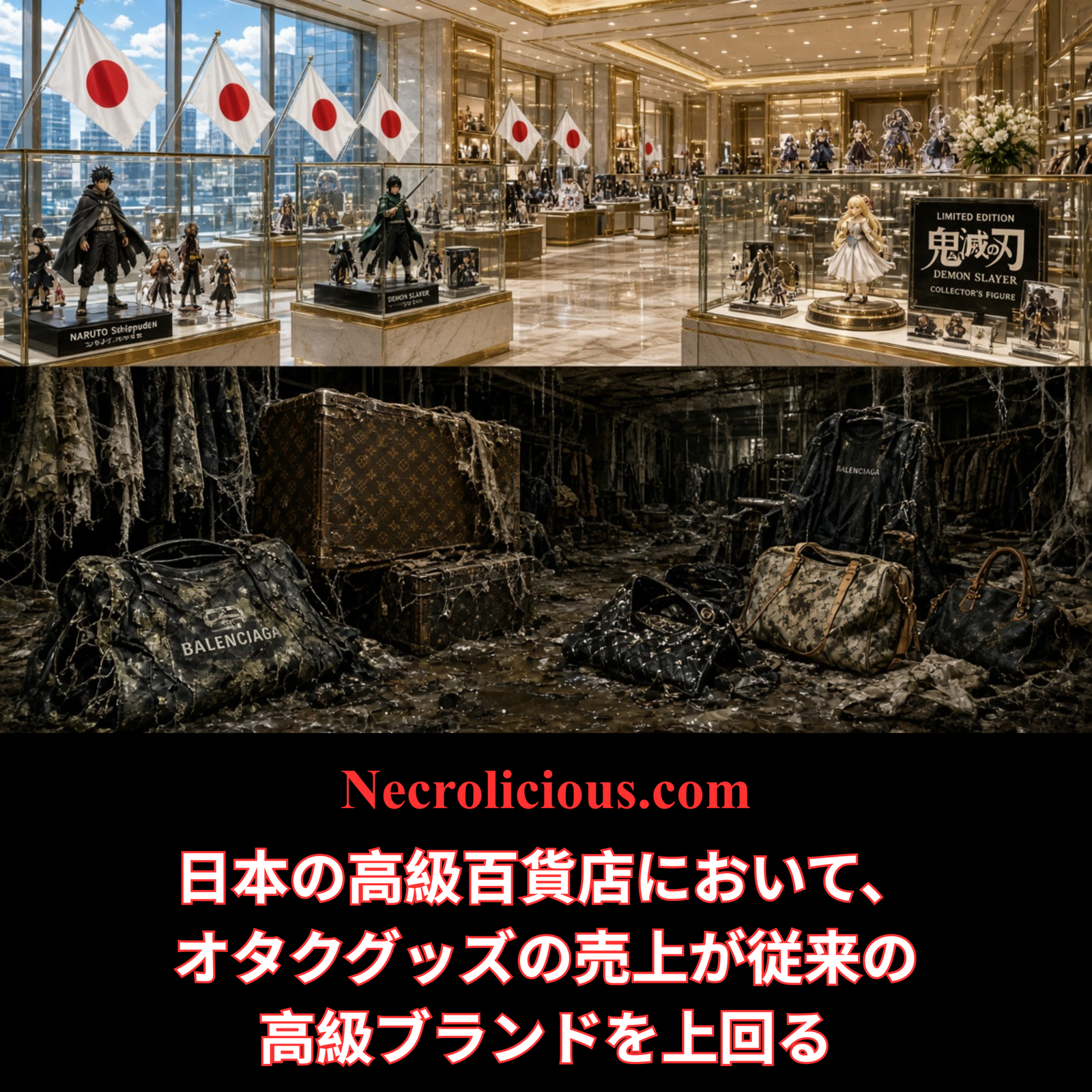
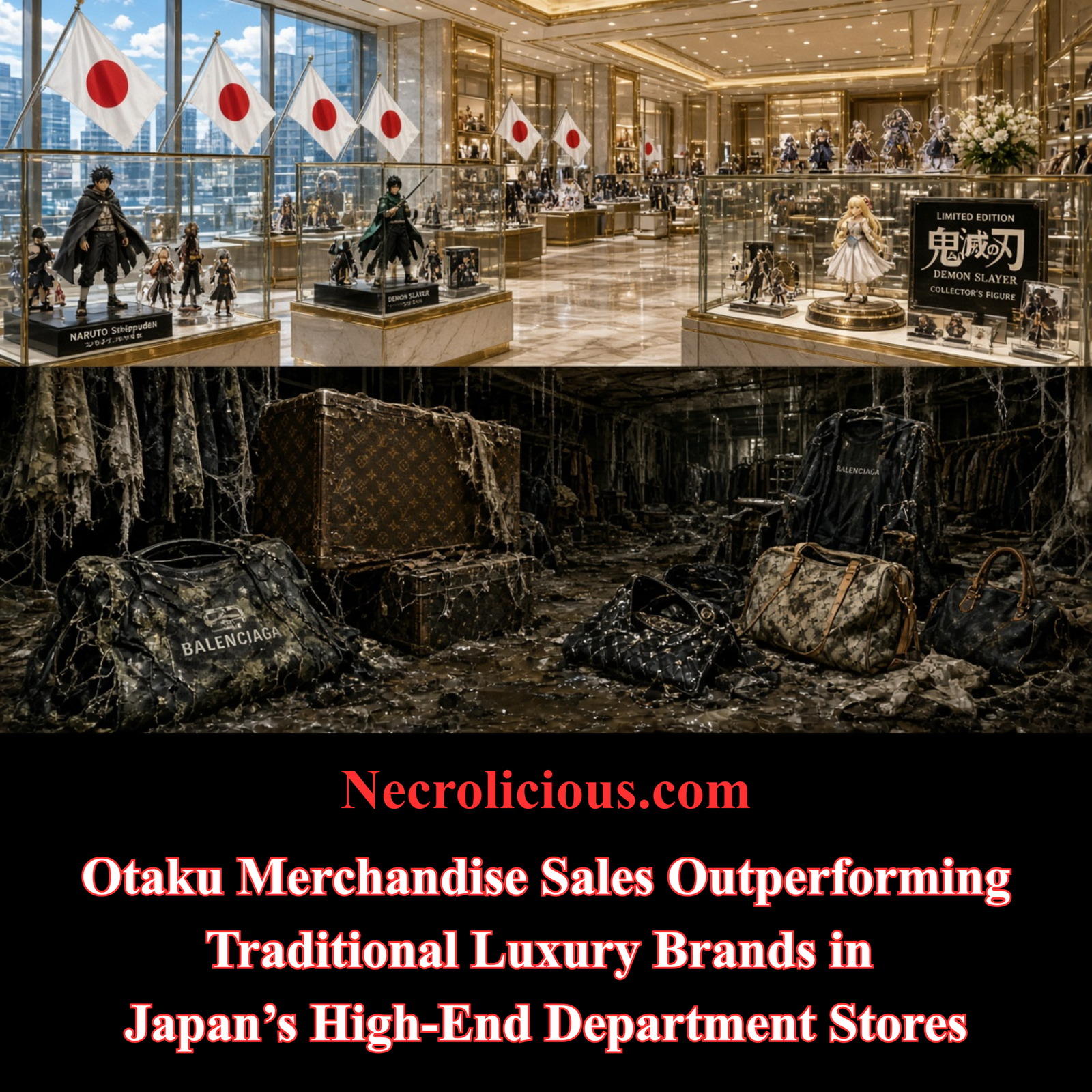
Japan’s high-end department stores spent decades prioritising overseas luxury labels. Floors once devoted almost exclusively to Louis Vuitton, Balenciaga & similar imports are now steadily allocating space to otaku products such as anime figures, manga exhibition exclusives & game-related goods. The transition is driven by two clear commercial realities: many domestic customers find the cost of foreign luxury items increasingly difficult to justify, while foreign tourists actively seek merchandise that is distinctly Japanese. The result is measurable sales performance for character goods inside settings that previously relied on high-ticket European brands alone.
This examination focuses on how those otaku products are actually selling within luxury retail environments. It draws on store announcements, exhibition results & direct observation of customer behaviour at locations including Matsuya Ginza, Nihonbashi Mitsukoshi, Fukuoka Mitsukoshi & regional outlets such as Tokiwa.
The Long Dominance of Foreign Luxury Brands
Following the collapse of the bubble economy, Japanese department stores shifted toward an extreme high-end model. Prime ground-floor & first-floor space was leased to international maisons because those brands delivered elevated average transaction values & attracted a concentrated affluent clientele. The approach produced visual uniformity across major cities yet gradually alienated middle-income domestic shoppers. As wages stagnated & the yen weakened, the price of imported luxury goods moved further beyond the reach of ordinary Japanese consumers. At the same time, inbound visitors began to express stronger interest in items unavailable in their home markets. Character merchandise derived from anime, manga & games met both pressures simultaneously.
Sales Evidence Inside Prestige Locations
Although operators do not publish direct comparisons between a Louis Vuitton counter & an adjacent Animate display, available performance indicators show otaku goods generating robust volume & spend.
Matsuya Ginza provides the clearest data. Its rotating anime & manga exhibitions—covering titles such as Oshi no Ko, The Apothecary Diaries, Urusei Yatsura & Dandadan—consistently produce elevated customer expenditure. At a major Tamagotchi exhibition earlier in 2026, average spend on merchandise exceeded ¥10,000, with some individual purchases reaching ¥100,000. Limited acrylic stands, clear files, collaboration café items & exclusive apparel frequently require purchase limits or sell out within days. These results occur inside a store whose lower floors continue to feature traditional luxury brands, demonstrating that character goods can deliver complementary, high-velocity sales in the same prestige environment.
The temporary Jump Shop at Tokiwa department store in Oita, operating from 21 August to 6 September 2026, follows the same pattern. Original-illustration products for One Piece, Sakamoto Days, Kagurabachi & related series, together with daily purchase-bonus stickers, record rapid sell-through during the limited window. The shop occupies conventional department-store space that historically emphasised higher-priced categories, yet the accessible price points & scarcity of limited stock drive frequent transactions.
Fukuoka Mitsukoshi’s planned Animate store, opening 24 October 2026 inside the LACHIC specialty zone, is expected to become the largest of its type in Kyushu. Chain-wide patterns indicate that figures, Nendoroids, keychains & store-exclusive bonuses linked to airing series form the backbone of strong sales. When placed inside a high-end department store, the combination of location prestige & moderate pricing expands the customer base beyond the narrow segment that shops solely for Balenciaga or Louis Vuitton.
Why Otaku Goods Are Selling Strongly Where Luxury Has Softened
Two demand-side factors explain the sales momentum. Domestic shoppers, facing higher effective prices for imported luxury after prolonged wage stagnation & currency movements, increasingly favour merchandise they can purchase more frequently without financial strain. Otaku items satisfy collector & emotional needs at price points far below those of European maisons. Concurrently, foreign tourists prioritise products that feel uniquely Japanese. Limited-edition character goods, exhibition exclusives & Jump Shop originals cannot be readily obtained outside Japan, giving them a scarcity advantage that globally distributed luxury labels lack.
Operationally the advantages are equally clear. Luxury concessions demand extensive fit-outs & often impose strict adjacency conditions. Otaku pop-ups & exhibitions can occupy rotating event space or vacant specialty zones with far lower cost & fewer conflicts. The resulting higher unit velocity—multiple modest purchases rather than occasional high-ticket ones—produces healthy till totals even when individual prices remain accessible.
Balanced analysis acknowledges that ultra-high-net-worth clients & certain tourist cohorts continue to support traditional luxury floors. Otaku sales remain tied to the popularity cycles of specific series. Yet the consistent sell-through of limited stock at Matsuya Ginza & similar venues demonstrates that character merchandise is not merely filling residual space; it is generating the rapid turnover that pure luxury leasing has found harder to sustain in recent years.
Categories Delivering the Strongest Results
Inside these high-end stores the merchandise that moves fastest shares several traits:
Exhibition- or shop-exclusive items that create immediate scarcity
Acrylic stands, clear files & keychains tied to currently featured titles
Mid-to-high-ticket figures & plush from established franchises
Purchase-bonus goods that encourage larger baskets
Practical Implications for Shoppers & Retail Observers
From repeated visits to both classic luxury floors & newer otaku installations, several practical points emerge. Aligning a visit with an announced exhibition maximises the opportunity to obtain limited stock before sell-outs occur. High-end locations frequently impose purchase restrictions precisely because demand is intense. The presence of character goods also alters the overall atmosphere, making the store more welcoming to families & younger visitors who might previously have felt excluded by exclusively luxury displays.
For retail analysts the evidence indicates a hybrid model. High-end department stores are not discarding Louis Vuitton or Balenciaga; they are reducing sole reliance on those brands by introducing higher-velocity categories that capture both domestic affordability needs & inbound desire for distinctive Japanese merchandise. The sales results—particularly the elevated unit spends recorded at Matsuya Ginza exhibitions—confirm the commercial viability of this approach.
Future Trajectory
Additional Animate openings & rotating intellectual-property exhibitions are anticipated. As long as anime & manga retain international cultural weight, the derived merchandise will continue to justify space once reserved almost exclusively for European maisons. Current performance data show that otaku goods are delivering the combination of volume, customer excitement & dual-market appeal that traditional luxury floors have struggled to maintain alone in the mid-2020s.
FAQ
Are otaku products replacing luxury brands on the same floors? They occupy complementary spaces—event halls, specialty zones & temporary concessions—yet generate sales volume that offsets softer periods for traditional high-end categories.
Which items record the strongest sales inside these luxury stores? Exhibition exclusives, limited Jump Shop original-illustration goods & acrylic stands linked to currently featured or airing series consistently achieve the fastest sell-through.
Do domestic or foreign customers account for more of the otaku sales? Both contribute significantly. Domestic buyers respond to accessible pricing after finding foreign luxury less attainable; foreign tourists prioritise uniquely Japanese character merchandise.
Is the trend confined to Tokyo flagships? No. Regional examples including the Tokiwa Jump Shop & the forthcoming Fukuoka Mitsukoshi Animate illustrate adoption beyond the capital.
Unless otherwise noted, image assets above are NOT original content & are shared under fair use doctrine with NO claims to authorship or ownership. Contact necrolicious@necrolicious.com for credit or removal.
This post was sponsored by…ME! If you’d like to support, please buy my original meme merchandise or check out my affiliate links to get yourself some other cool things. Additional affiliate links may be contained in the above article. If you click on an affiliate link & sign up/make a purchase, I may earn a commission. This does not increase the price you pay for the product or service, so it helps support this website at no cost to you.
If you would like to support my work more directly, I accept voluntary cryptocurrency donations in BTC, ETH, XRP & XLM sent directly to necrolicious.x. necrolicious.x is an Unstoppable Domains name that resolves to the wallet addresses I have configured. Simply enter necrolicious.x as the recipient in a supported wallet (such as Trust Wallet, Blockchain.com or others that support Unstoppable Domains). Donation Disclaimer: All cryptocurrency donations sent to me are final, voluntary gifts & are non-refundable & irreversible. These donations are not tax-deductible since I am not a registered charitable organization, & no tax receipts will be issued. No memo or destination tag is required for XRP or XLM donations, as the domain resolves directly to a wallet address. By sending a donation you acknowledge & accept all associated risks, including cryptocurrency price volatility, network fees & potential loss of funds due to incorrect network selection or transaction errors. I am not responsible or liable for any loss related to your donation. No goods, services or other benefits are provided in exchange for donations. This is not financial, tax, legal or investment advice. Please consult a qualified professional regarding any implications of your donation.
Share this:
Cookie Consent
We use cookies to improve your experience on our site. By using our site, you consent to cookies.
Registers a unique ID on mobile devices to enable tracking based on geographical GPS location.
1 day
VISITOR_INFO1_LIVE
Tries to estimate the users' bandwidth on pages with integrated YouTube videos. Also used for marketing
179 days
PREF
This cookie stores your preferences and other information, in particular preferred language, how many search results you wish to be shown on your page, and whether or not you wish to have Google’s SafeSearch filter turned on.
10 years from set/ update
YSC
Registers a unique ID to keep statistics of what videos from YouTube the user has seen.
Session
DEVICE_INFO
Used to detect if the visitor has accepted the marketing category in the cookie banner. This cookie is necessary for GDPR-compliance of the website.
179 days
LOGIN_INFO
This cookie is used to play YouTube videos embedded on the website.