Samsung showcased its Brain Health feature at CES, aiming to use data from Galaxy Watches, Rings & smartphones to detect subtle early signs of cognitive decline potentially linked to dementia. While this represents an ambitious extension of wearable health monitoring, questions remain about its real-world accuracy, potential for errors & broader implications for privacy & user wellbeing.
How the Brain Health Feature Operates
The tool passively analyses sensor data, including:
Gait patterns (walking stability)
Voice changes (e.g., speech pace during interactions)
Sleep quality & disruptions
Typing rhythm & daily patterns
AI compares these against a personalised baseline & flags deviations associated with early cognitive changes. Notifications are intended to be supportive, urging medical consultation & suggesting brain-training exercises via the Samsung Health app. Caregivers may also receive alerts.
Samsung stresses that this is not a diagnostic tool—merely a prompt for professional assessment. In-house development is complete, with ongoing clinical validation trials in collaboration with medical partners. Public availability remains uncertain, potentially starting as a beta in select regions later in 2026 or beyond.
Potential Benefits & the Focus on Dementia
Dementia impacts over 55 million people globally, with early indicators like gait instability, voice alterations & sleep issues potentially appearing years ahead. Research on wearables supports these as viable digital biomarkers, with studies showing promising accuracy in distinguishing mild cognitive impairment from normal ageing.
Early flagging could enable lifestyle interventions or treatments to slow progression in reversible stages. Samsung targets older adults, building on established physical health tracking to address neurological concerns.
However, overlaps with other forms of mental illness such as schizophrenia exist. Furthermore, schizophrenia slightly elevates later dementia risk. However, Samsung’s age-focused patterns are unlikely to detect schizophrenia in younger users, potentially leading to missed or mismatched alerts.
Dementia Versus Schizophrenia: Key Distinctions & Limited Overlaps
Aspect
Dementia
Schizophrenia
Nature
Progressive neurodegenerative condition
Chronic psychiatric disorder
Typical Onset
65+ years
Late teens to early 30s
Core Symptoms
Memory loss, confusion, impaired judgement
Hallucinations, delusions, disorganised thinking
Progression
Worsens irreversibly over time
Fluctuates; manageable with treatment
Causes
Brain cell loss (e.g., Alzheimer’s, strokes)
Genetic, neurochemical & environmental factors
Accuracy Concerns & Risks of Errors
While foundational research on gait, voice & sleep biomarkers shows potential (e.g., accuracies up to 90% in controlled studies), consumer AI applications face challenges. False positives—flagging normal variations (stress, illness, ageing) as decline—could cause undue anxiety. False negatives might delay genuine concerns.
Broader AI dementia tools highlight overdiagnosis risks, especially in older adults where symptoms overlap with normal ageing. Critics note that without full validation results, trusting device alerts for sensitive health decisions remains premature. Extreme outcomes, like unwarranted institutionalisation from misinterpreted data, are unlikely but underscore the need for caution—alerts are advisory only.
Privacy Implications
Constant monitoring of intimate behaviours (voice, movement, sleep) intensifies privacy debates. Samsung commits to on-device processing & Knox security, avoiding cloud uploads for these metrics.
Yet concerns persist: potential device syncing, future integrations or breaches could expose highly personal data. Opt-in controls are essential, but the sensitivity of cognitive insights demands rigorous oversight.
Final Reflections
Samsung’s Brain Health highlights wearables’ evolving role in preventative care, yet its effectiveness hinges on forthcoming trial data proving reliability while minimising harms. For a condition as complex as dementia, technology should complement—not replace—professional evaluation.
Would you allow your devices to monitor for cognitive indicators if it might enable earlier intervention, or does the risk of inaccuracy & privacy intrusion outweigh the benefits? Share your thoughts in the comments.
Unless otherwise noted, image assets above are NOT original content & are shared under fair use doctrine with NO claims to authorship or ownership. Contact necrolicious@necrolicious.com for credit or removal.
This post was sponsored by…ME! If you’d like to support, please buy my original meme merch from Necrolicious.store or check out my affiliate links to get yourself some other cool things. Additional affiliate links may be contained in the above article. If you click on an affiliate link & sign up/make a purchase, I may earn a commission. This does not increase the price you pay for the product or service, so it helps support this website at no cost to you.
2026年を迎え、テクノロジーファンの間ではAppleのiPhone 18の発売に関する憶測が飛び交っています。報道によると、期待されていた発売は今年中に行われない可能性があり、その原因としてChatGPTのサム・アルトマン氏によるDRAM(ダイナミック・ランダム・アクセス・メモリ)の深刻な不足が挙げられています。この記事では、この供給不足がAppleの発売スケジュールに及ぼす潜在的な影響を検証するとともに、Galaxy Z TriFold(ロール式スマートフォン)、AI搭載スマートグラスなど、2026年に発売予定の野心的な製品パイプラインを維持できるSamsungの能力と対比させています。
対照的に、SamsungはDRAM不足にも動じることなく、2026年には堅調なリリーススケジュールを組んでいます。同社は、先駆的なトリプルスクリーンスマートフォン「Galaxy Z TriFold」に加え、ロール式スマートフォンとAI搭載スマートグラスを発表する予定です。この回復力は、報道されている銀鉱山の生産量を先行購入することなど、Samsungの先見性のある戦略によるものと考えられます。この戦略により、Samsungは多額の費用を節約し、DRAM価格の上昇にもかかわらず重要な部品を確保することができたと報じられています。早期に供給を確保することで、Samsungは通常のリリースサイクルを維持し、競合他社に対する競争優位性を確立しています。
しかし、Galaxy Z TriFoldはニッチ製品として販売されており、韓国メディアThe Bellは、Samsungが1台あたり損失を出している可能性があると報じています。韓国で約2,500ポンドで販売されているTriFoldは、ロスリーダーとして販売されています。これは、目先の利益を追求するのではなく、市場での存在感を確立し、消費者のフィードバックを集めるための戦略です。この戦略は財政的には厳しいものの、Samsungのイノベーションへのコミットメントと、長期的な利益のために短期的な損失を吸収する意欲を強調しています。この点については、Android Authorityが最近の記事で詳しく取り上げています。
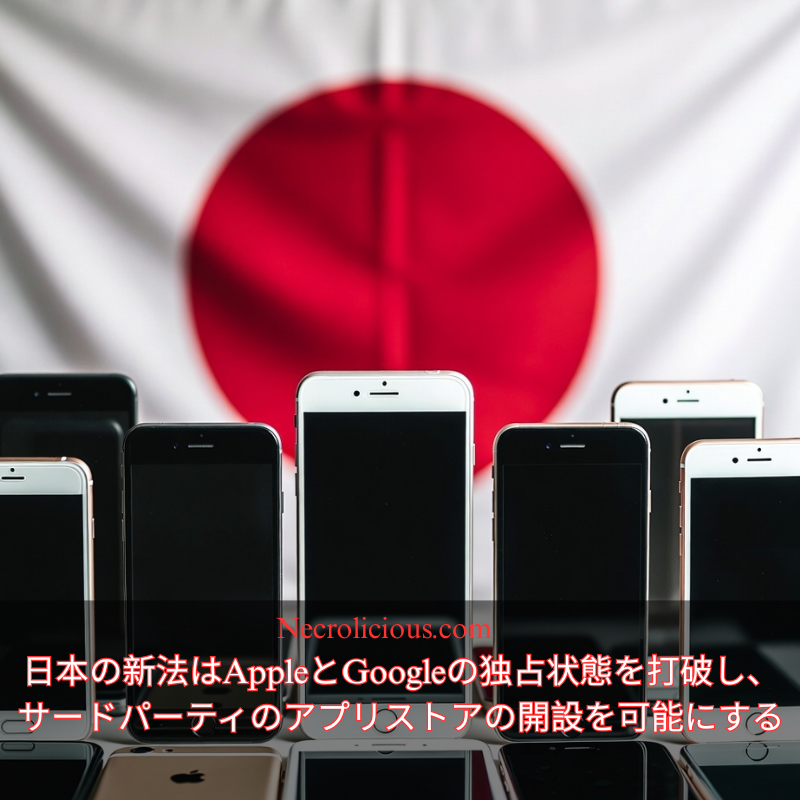
In a significant move to foster competition in the digital marketplace, Japan’s Fair Trade Commission has announced that a landmark law will take effect on 18 December 2025. This legislation targets the longstanding dominance of global tech giants such as Apple & Google over smartphone ecosystems, aiming to empower consumers with enhanced options for app stores, web browsers & search engines. As the nation continues to solidify its position as a leader in mobile technology innovation, this development signals a proactive stance on regulating Big Tech while balancing the need for user security.
Breaking the Monopoly: What the Law Entails
At its core, the new regulations prohibit companies like Apple & Google from restricting access to third-party app stores on iOS & Android devices sold in Japan. Previously, users were largely confined to the official App Store for iPhones or the Google Play Store for Android phones, limiting choices & potentially stifling innovation from smaller developers. Under the updated framework, these firms must permit alternative distribution channels, opening the door for independent app marketplaces to thrive.
Beyond app stores, the law extends its reach to default services. For the first time, new smartphone users — & those updating their operating systems — will encounter prompts offering multiple selections for web browsers & search engines. This means an end to the automatic preselection of Safari or Chrome as defaults, or Google Search as the primary engine, providing greater flexibility tailored to individual preferences.
The Fair Trade Commission emphasises that these changes are designed to “improve convenience by encouraging new market entrants.” By levelling the playing field, the authority anticipates a surge in diverse offerings, from localised apps optimised for Japan’s unique digital landscape to innovative tools that cater to specific user needs, such as enhanced privacy features or seamless integration with domestic services.
The Broader Implications for Consumers & the Tech Sector
For everyday smartphone users in Japan, the immediate benefits could include access to a wider array of applications without the barriers imposed by proprietary ecosystems. Developers, too, stand to gain: reduced reliance on dominant platforms may lower commission fees — often as high as 30% — allowing for more affordable apps & faster iteration on user feedback. In a market where mobile penetration exceeds 90%, this could accelerate the adoption of cutting-edge technologies, including AI-driven tools & augmented reality experiences that align with Japan’s forward-thinking tech culture.
However, the transition is not without challenges. Public comments submitted to the Fair Trade Commission have highlighted legitimate concerns over user security. Critics argue that third-party app stores might introduce vulnerabilities, such as unvetted software or inconsistent data protection standards, potentially exposing users to malware or privacy breaches. The commission acknowledges these risks & has committed to ongoing monitoring, with provisions for swift enforcement against non-compliant entities. To mitigate these issues, the law includes safeguards requiring all app distributors to adhere to rigorous certification processes, ensuring that security remains paramount.
This balanced approach reflects Japan’s regulatory philosophy: promoting fair competition without compromising the trust that underpins its world-class digital infrastructure. As one of Asia’s largest economies, Japan’s actions could serve as a model for other nations grappling with similar antitrust dilemmas in the smartphone sector.
A Step Towards a More Inclusive Digital Future
The enactment of this law on 18 December marks a pivotal moment in Japan’s efforts to democratise access to technology. By challenging the status quo, it not only enhances consumer choice but also invigorates the local tech ecosystem, fostering innovation that benefits developers, businesses & users alike. While security concerns warrant vigilant oversight, the potential rewards — a more dynamic, user-centric mobile landscape — are substantial.
As the implementation unfolds, stakeholders will watch closely to assess its real-world impact. For now, this legislation underscores Japan’s commitment to an open & equitable digital economy, one where choice drives progress.
Unless otherwise noted, image assets above are NOT original content & are shared under fair use doctrine with NO claims to authorship or ownership. Contact necrolicious@necrolicious.com for credit or removal.
This post was sponsored by…ME! If you’d like to support, please buy my original meme merch from Necrolicious.store or check out my affiliate links to get yourself some other cool things. Additional affiliate links may be contained in the above article. If you click on an affiliate link & sign up/make a purchase, I may earn a commission. This does not increase the price you pay for the product or service, so it helps support this website at no cost to you.
It’s nearly 2026, but my 2019 Samsung Galaxy S10 remains in daily use. Why? It was part of the final mainline Galaxy S lineup to ever include a microSD card slot. For me & countless other Android enthusiasts, this single feature represented genuine freedom: expandable storage that could be upgraded or replaced for pennies compared to the ever-escalating cost of built-in memory. When Samsung dropped the slot with the Galaxy S20 in 2020 & every flagship since, many of us felt the industry was simply copying Apple’s long-standing refusal to offer expandable storage on any iPhone. We warned that removing this incalculably beneficial feature would be bad for business – & now, in late 2025, it appears that prediction is proving more correct than ever. Soaring DRAM prices are pushing manufacturers to the limit, & the latest supply-chain intelligence strongly suggests that microSD card slots are being seriously reconsidered for future flagship devices. The feature we refused to surrender may be on the verge of a full-scale return.
In an era where smartphone storage demands continue to escalate, the prospect of expandable memory options returning to flagship devices has sparked considerable interest among consumers & industry observers alike. Recent reports suggest that surging prices for DRAM – the core component in device memory – may compel leading manufacturers to reinstate the microSD card slot, a feature absent from premium handsets for over six years. This potential revival could alleviate the financial burden on buyers facing ever-higher costs for internal storage upgrades, offering a more flexible & cost-effective alternative.
The Surge in DRAM Prices: A Catalyst for Change
Dynamic Random Access Memory (DRAM) forms the backbone of smartphone storage, enabling the seamless multitasking & high-resolution media handling that modern users expect. However, global supply constraints have driven DRAM prices to unprecedented levels, with shortages projected to endure until at least the fourth quarter of 2027. Analysts note that prices for 12GB LPDDR5X components – essential for contemporary flagships – have more than doubled, climbing from $33 at the year’s outset to $70 per unit.
This escalation stems from broader semiconductor challenges, including production bottlenecks & heightened demand from data centres & AI applications. Even established players like Samsung have prioritised profitability over internal supply chains, reportedly declining bulk memory requests from their own mobile division in favour of quarterly contracts. As a result, manufacturers face mounting pressure to maintain competitive pricing without eroding margins, prompting a reevaluation of longstanding design choices.
With DRAM costs showing no signs of abating through 2026, reinstating microSD slots emerges as a pragmatic response for manufacturers. By enabling consumers to purchase entry-level storage models & augment them with high-capacity cards, brands can mitigate the need for across-the-board price hikes. This strategy not only preserves shipment volumes but also appeals to value-driven buyers, fostering loyalty in a saturated market.
Emerging standards like microSD Express further bolster the case, promising read & write speeds exceeding 800 MB/s – on par with internal SSDs. Samsung’s own 512 GB P9 Express card, available for around $75, exemplifies this evolution, delivering rapid transfers without the performance bottlenecks of older formats. Chinese supply chain whispers indicate that new flagships slated for the latter half of 2026 could integrate these slots.
Such a revival would democratise access to ample storage, empowering photographers, videographers, & power users to sidestep the escalating cost of built-in memory.
Looking Ahead: A More Inclusive Storage Landscape
Your trusty Galaxy S10 might soon stop being the last of its kind. As smartphone innovation accelerates, the rumoured return of microSD slots signals a potential recalibration towards consumer-centric design. The flexibility many of us miss may soon enhance the devices of tomorrow.
Unless otherwise noted, image assets above are NOT original content & are shared under fair use doctrine with NO claims to authorship or ownership. Contact necrolicious@necrolicious.com for credit or removal.
This post was sponsored by…ME! If you’d like to support, please buy my original meme merch from Necrolicious.store or check out my affiliate links to get yourself some other cool things. Additional affiliate links may be contained in the above article. If you click on an affiliate link & sign up/make a purchase, I may earn a commission. This does not increase the price you pay for the product or service, so it helps support this website at no cost to you.
ついこの間まで、俺は「DJI Mic を受信機なしで使う方法」を記事&動画で紹介していました。 ところがここ数週間、特にYouTubeで多くのクリエイターが「DJIがこっそり出した“秘密のモバイル受信機”」に大騒ぎしています。スマホ撮影向けに静かに発売されたこのアイテム、頻繁に完売しており、メルカリなどで法外な転売価格で取引されている状況です。