ファイナルファンタジーVIIファンは長年、ティファ・ロックハートの温かなバー「セブンスヘブン」に入ることを夢見てきた。この夢が現実となるのが、東京都心で開催される期間限定イベント「未来のレモンサワーバー with FINAL FANTASY VII REBIRTH」である。公式名称「レモンズヘブン」として、六本木ヒルズの屋外スペースO-Yane Plaza(グランドルーフプラザ)を、愛すべきアバランチの隠れ家そのままに再現する。
問題となっているデバイスには、Galaxy Z Foldシリーズ(Fold 3以降)、Z Flipシリーズ(Flip 3以降)、そして最近発売されたGalaxy Z TriFoldが含まれる。Leptonは、10年以上前に開発した独自の「Lepton Flex」プロトタイプや、2013年に遡るSamsungとの予備的な協議を挙げ、自らを初期のパイオニアと位置付けている。
Samsung enthusiasts woke up to headlines last week about a fresh US patent infringement suit that requests a full ban on the company’s popular foldable lineup. Filed just days ago in Texas, the case has sparked concern among owners of Galaxy Z Flip models, Z Fold devices & the emerging TriFold series. As a dedicated Samsung user myself with several iterations of the Flip series, standard flagships & a Galaxy Watch 8 Classic, I understand the worry. Living in Japan means a US market restriction would not disrupt my daily use, yet the broader ripples on revenue, future development & pricing deserve close attention.
This article draws directly from the court complaint, market data & legal precedents to deliver a balanced, in-depth look. We explore the claims, the realistic odds of any ban, potential business effects & practical takeaways for content creators, vloggers, gamers & anime fans who rely on these devices. Far from generic reporting, the analysis here positions foldable technology within the wider context of mobile innovation that powers everything from tech drop videos to on-the-go anime marathons.
On 23 April 2026, Lepton Computing LLC filed suit against Samsung Electronics Co., Ltd. & its US subsidiary Samsung Electronics America in the US District Court for the Eastern District of Texas (Case No. 2:26-cv-00338). The complaint accuses Samsung of infringing nine patents covering core foldable smartphone technology.
These patents address:
Flexible display devices & their bending mechanics
Hinge designs that manage tight radii & internal component placement
Display protection layers
Software features such as seamless app continuity when switching between folded & unfolded states
Strategic arrangement of sensors, cameras, magnets & speakers within the compact folding chassis
The accused devices include the Galaxy Z Fold series from the Fold 3 onward, the Z Flip series from the Flip 3 onward & the newly launched Galaxy Z TriFold. Lepton positions itself as an early pioneer, citing its own “Lepton Flex” prototype developed more than a decade ago & preliminary discussions with Samsung dating back to 2013.
In addition to monetary damages & reasonable royalties, Lepton seeks a permanent injunction. That is the “ban” making headlines: a court order halting importation, sale & offering for sale of the infringing foldables in the United States.
The case remains in its earliest stage. Samsung has not yet filed a response, & no rulings on validity, infringement or remedies exist. As reported by SammyFans & cross-referenced with the public docket, this filing marks the opening salvo rather than an imminent market disruption.
Lepton Computing’s Background & the Nature of the Claim
Lepton Computing LLC operates as a non-practicing entity focused on licensing intellectual property rather than mass-producing consumer devices. While the firm highlights its historical prototype, there is no evidence of current commercial foldable sales competing directly with Samsung’s ecosystem. This distinction matters under US patent law.
Samsung, by contrast, has invested billions in foldable research, manufacturing scale & ecosystem integration. The company commands roughly 60 percent of the global foldable market & continues aggressive 2026 refreshes aimed at thinner profiles, improved durability & enhanced software.
Patent suits of this type are common in the smartphone sector. They frequently resolve through settlement, cross-licensing or narrowed claims long before any injunction takes effect. Lepton’s action fits the classic assertion pattern: leveraging early patents to secure value from a category Samsung effectively commercialised for mainstream consumers.
Revenue, R&D & Potential Global Ramifications
A successful US injunction would remove Samsung foldables from one of the premium markets where they command high average selling prices. North America accounts for approximately 19-22 percent of global foldable revenue, with strong year-on-year growth recorded in 2025. Samsung’s mobile division posted record contributions from the Z Fold 7 & related models, helping drive overall profitability.
Yet Samsung’s total 2025 revenue exceeded KRW 333 trillion, supported by diversified operations in semiconductors, displays & wearables. Foldables remain a high-margin but still emerging segment within hundreds of millions of annual smartphone shipments. A US-specific restriction would represent a meaningful but not existential hit—likely in the low-single-digit billions of dollars annually depending on exact volumes.
For loyal users like myself, the concern centres on future innovation. Reduced revenue in any major market can constrain R&D budgets for next-generation hinges, under-display cameras & AI-driven software features. Global pricing adjustments, however, appear improbable. Samsung’s Asian manufacturing footprint delivers massive economies of scale. Competition from Motorola, Huawei & anticipated entrants keeps pricing aggressive worldwide. Historical precedent shows single-market pressures rarely translate into broad increases for regions such as Japan, Europe or emerging markets.
How Likely Is a Full Ban? Legal Realities & Precedents
The probability of a permanent injunction matching Lepton’s request sits below 5-10 percent. US courts have followed the Supreme Court’s 2006 eBay v. MercExchange decision, which requires plaintiffs to satisfy four strict factors before halting sales:
Irreparable harm not compensable by money alone
Inadequacy of damages as a remedy
Balance of hardships favouring the injunction
Public interest served by the ban
Non-practicing entities rarely clear this bar. Courts routinely conclude that royalties or damages suffice when the plaintiff does not compete head-to-head in the market. Public interest strongly disfavours removing popular consumer products such as foldables, which millions use for productivity, entertainment & creative work.
Samsung will almost certainly challenge validity through inter partes review at the US Patent & Trademark Office & present design-around options or its own extensive patent portfolio. Even if infringement is established on certain claims, judges hesitate to enjoin complex multi-patent devices over a subset of features. Smartphone patent litigation history—most notably the prolonged Apple-Samsung wars—shows repeated settlements rather than market bans.
Industry analysts tracking the filing have echoed this view: Samsung is well-positioned to resolve the matter without disrupting supply chains or consumer access.
Practical Takeaways for Content Creators, Vloggers, Gamers & Anime Fans
Foldable devices have quietly become indispensable tools beyond basic calling. For vloggers & tech-drop creators, the flexible form factor enables unique shooting angles, quick transitions between selfie & rear cameras & compact portability for on-location work. Gamers benefit from the expanded screen real estate when unfolded, delivering immersive mobile titles with minimal bezel distraction & seamless multitasking for guides or live streams.
Anime enthusiasts appreciate the ability to fold for one-handed reading of manga panels or prop the device for hands-free viewing during commutes. Even participants in niche cultural events—whether anime conventions or themed gatherings—rely on foldables for discreet navigation, social posting & battery endurance that outlasts traditional slabs.
Should the case drag on, the most probable outcome remains continued availability with possible licensing adjustments absorbed into Samsung’s pricing. Fans & creators can therefore plan purchases confidently. Those seeking alternatives might explore Motorola’s Razr line, though Samsung’s software polish & ecosystem integration (including Watch 8 Classic pairing) remain unmatched for many.
Historical & Cultural Context of Foldable Innovation
Foldable concepts date back decades in research labs, yet Samsung turned prototypes into consumer reality with the original Galaxy Fold in 2019. The journey reflects broader mobile evolution: from clamshell designs of the early 2000s to today’s ultra-thin, durable hinges that support crease-minimising displays & IP-rated protection.
In the cultural sphere, foldables align with modern lifestyles valuing versatility—whether for gamers juggling apps during esports sessions or anime fans curating digital collections on larger canvases. This context underscores why courts weigh public interest heavily: removing such devices would interrupt not merely commerce but creative & entertainment workflows embedded in daily routines.
Samsung’s commitment to the category, evidenced by consistent year-on-year shipment growth targets of 35 percent for 2026, signals long-term confidence. One regional legal challenge is unlikely to derail that trajectory.
Final Thoughts: Measured Optimism for Samsung Fans
The Lepton Computing suit introduces uncertainty, yet the legal, commercial & practical realities point toward resolution without a US ban. Samsung foldables will almost certainly remain available globally, supporting the innovation cycle that benefits users everywhere. For those of us who have invested in the ecosystem—multiple Flips, flagships & wearables—the technology’s value endures.
Stay informed as the case progresses, but rest assured that the foldable revolution Samsung pioneered continues unabated.
FAQ
What exactly does the lawsuit ask for? Lepton seeks damages, royalties & a permanent injunction halting US sales of specified Samsung foldable phones.
Will my existing Galaxy Z Flip or Fold stop working? No. The suit targets future sales & importation only; owned devices remain fully functional regardless of outcome.
How soon could a ban occur? Realistically never. The case could take 12-24 months or more to reach any injunction hearing, & precedents strongly favour settlement over market removal.
Could this raise prices outside the US? Unlikely. Samsung’s scale & competitive pressures make broad global increases improbable.
Where can I follow official updates? Monitor the US District Court docket for Case No. 2:26-cv-00338 & Necrolicious.com covering Samsung announcements.
Necrolicious “Totally Sane” Crazy Punk Deathrock Mohawk Skull Meme 100% Cotton Unisex Tee Buy on Printify
Unless otherwise noted, image assets above are NOT original content & are shared under fair use doctrine with NO claims to authorship or ownership. Contact necrolicious@necrolicious.com for credit or removal.
This post was sponsored by…ME! If you’d like to support, please buy my original meme merchandise or check out my affiliate links to get yourself some other cool things. Additional affiliate links may be contained in the above article. If you click on an affiliate link & sign up/make a purchase, I may earn a commission. This does not increase the price you pay for the product or service, so it helps support this website at no cost to you.
If you would like to support my work more directly, I accept voluntary cryptocurrency donations in BTC, ETH, XRP & XLM sent directly to necrolicious.x. necrolicious.x is an Unstoppable Domains name that resolves to the wallet addresses I have configured. Simply enter necrolicious.x as the recipient in a supported wallet (such as Trust Wallet, Blockchain.com or others that support Unstoppable Domains). Donation Disclaimer: All cryptocurrency donations sent to me are final, voluntary gifts & are non-refundable & irreversible. These donations are not tax-deductible since I am not a registered charitable organization, & no tax receipts will be issued. No memo or destination tag is required for XRP or XLM donations, as the domain resolves directly to a wallet address. By sending a donation you acknowledge & accept all associated risks, including cryptocurrency price volatility, network fees & potential loss of funds due to incorrect network selection or transaction errors. I am not responsible or liable for any loss related to your donation. No goods, services or other benefits are provided in exchange for donations. This is not financial, tax, legal or investment advice. Please consult a qualified professional regarding any implications of your donation.
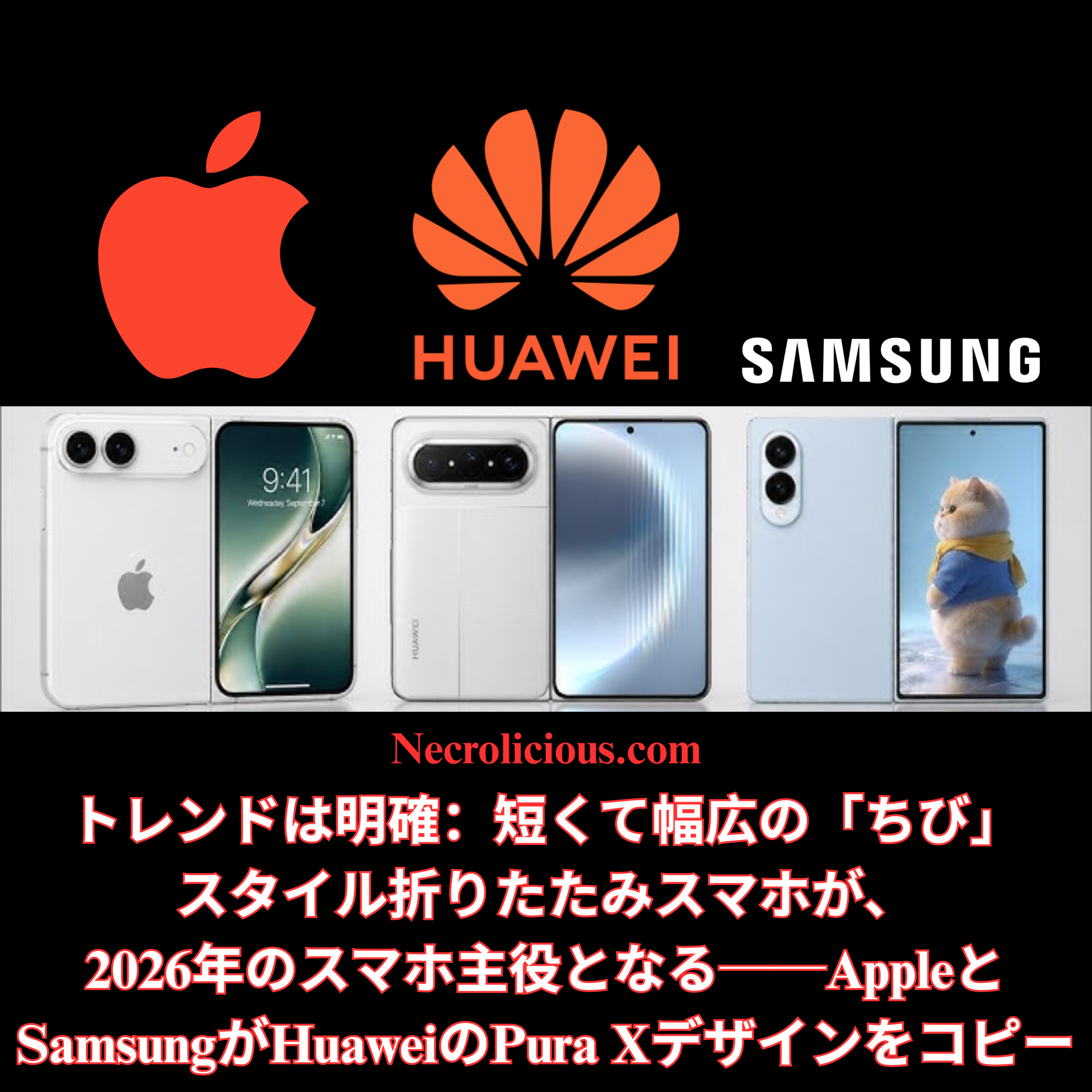
デザイン言語はPura X Maxと非常によく似ているため、直接比較したくなるかもしれないが、Appleのやり方はいつものようにエコシステムへの依存を強調するだろう。この分野を追っている愛好家にとって、iPhone Foldは独自の発明というよりは、より短く幅広の折りたたみ式スマートフォンのフォーマットの正当性を証明するものとなる。言うまでもなく、他の業界大手が何年も前に発表した「イノベーション」をAppleが再び称賛する機会を与えてくれるだろう。皆さんはそうするのが好きですよね?
If you are searching for the next evolution in foldable phones, particularly the shift toward shorter, wider proportions that feel compact in the hand yet expansive when opened, the conversation starts with Huawei. The Pura X did not merely join the foldable market — it redefined the category by introducing a passport-like form factor that prioritises one-handed usability & tablet-style productivity. Samsung & Apple have since aligned their roadmaps with similar designs, prompting a clear question: is this convergence coincidence or a direct response to Huawei’s early success?
As a long-time observer of foldable technology who has followed the category since the original Samsung Galaxy Fold in 2019, I have witnessed the progression from tall, narrow book-style devices to more balanced proportions. The shorter, wider foldable phone trend addresses real user pain points — pocketability, ergonomic handling & immersive viewing — while opening new possibilities for content creators, vloggers, gamers & anime fans. This article draws on official announcements, detailed leaks & hands-on impressions of dummy units to deliver an authoritative overview grounded in technical realities rather than speculation.
The Evolution of “Chibi” Foldable Phone Form Factors
Foldable phones first reached consumers in 2019 with Samsung’s Galaxy Fold, a device defined by its tall, narrow profile when closed & a lengthy inner display when opened. That design prioritised phone-like familiarity but sacrificed one-handed comfort & square-aspect multitasking. Google’s Pixel Fold in 2023 introduced slightly wider proportions, hinting at the potential of a more tablet-like experience, yet it remained an outlier.
Huawei accelerated the shift. In March 2025 the company released the Pura X, a clamshell-style wide foldable with broader dimensions that felt distinctly more square. This is widely recognised as the first commercially available shorter, wider passport-style foldable.
This design draws subtle historical parallels to earlier portable media devices, such as the wide-aspect portable DVD players popular in the early 2000s or even the balanced ergonomics of classic Nintendo handhelds favoured by gamers. In today’s context, it aligns perfectly with anime culture’s preference for immersive, letterbox-free viewing & the demands of mobile gaming collabs that require split-screen functionality.
Huawei Pura X Max: Technical Specifications & Market Impact
I was initially very interested in checking out the Pura X over a year ago, but while Huawei is outright banned in the U.S. even in Japan Huawei devices are hard to come by. I can’t comment much on it beyond that because I actually never ended up finding one to have a hands-on experience with at any of the main Electronics retailers in Tokyo so I basically forgot about it.
However, it is back & the latest iteration of the Pura, the X Max, arrives with a 5.4-inch cover display reaching 3,500 nits peak brightness & a 7.7-inch inner LTPO OLED panel at 3,000 nits, both supporting 1–120 Hz adaptive refresh rates. Powered by the Kirin 9030 Pro chipset, it offers up to 16 GB RAM & 1 TB storage, a 5,300 mAh battery with 66 W wired & 50 W wireless charging, & a triple-camera system headlined by a 50 MP main sensor with Huawei’s XMAGE tuning.
Priced from approximately $1,613 in China, the device launched with HarmonyOS 6.1. While unavailable in the United States due to existing restrictions, global reviews highlight its slim 5.2 mm unfolded profile & crease-minimising ultra-thin glass. Early impressions confirm the wide proportions deliver a natural, passport-style grip that feels less cumbersome than traditional tall folds.
Huawei’s move established the shorter wider foldable phone as a viable mainstream category. By shipping first, the company demonstrated demand for devices that bridge smartphone & mini-tablet experiences — a lesson not lost on competitors.
Samsung’s Galaxy Z Fold 8 Wide: A Direct Competitive Response
My maker of choice, Samsung, is scheduled to launch the Galaxy Z Fold 8 alongside a new “Wide” variant on 22 July 2026. Leaks show dummy units positioned beside the standard Z Fold 8. The Wide model measures roughly 161.4 mm wide & 123.9 mm tall unfolded, with an inner display approaching a 4:3 aspect ratio.
Key differences include a slightly narrower footprint than the Pura X Max & a thinner 4.3 mm unfolded profile. Wireless charging coils remain visible, suggesting continuity with Samsung’s ecosystem. The Wide variant targets users who prefer the traditional Z Fold experience but seek enhanced multitasking — precisely the use case Huawei validated earlier. I love the Flip series but never considered the Fold before now, but depending on how the Fold 8 Wide compares side-by-side with the Flip 8, I just may opt for it instead.
This side-by-side positioning in leaks underscores industry convergence. Samsung, long the foldable market leader, is adapting rather than dictating, a strategic pivot that reflects careful analysis of early Pura X sales data & user feedback.
Apple’s iPhone Fold: Rumoured Alignment with the Trend
Apple’s first foldable, internally referred to as the iPhone Fold, remains on track for a September 2026 release according to multiple supply-chain reports. Recent leaks feature a non-functional metal dummy unit (ostensibly distributed to case manufacturers) revealing short, wide proportions when closed & an approximately 7.8-inch inner screen.
Notable details include Touch ID integrated into the power button, relocated volume controls in an iPad mini-style layout, & the absence of a traditional notch or dynamic island. Rumours suggest Apple Pencil support & exclusive multitasking features tailored to the larger display. Pricing is expected to sit at a premium, with some estimates nearing $3000.00, reflecting Apple’s positioning.
The design language mirrors the Pura X Max closely enough to invite direct comparisons, yet Apple’s execution will likely emphasise ecosystem inprisonment, as per usual. For enthusiasts tracking the category, the iPhone Fold represents validation of the shorter wider foldable phone format rather than independent invention. Not to mention it will yet again give you a chance to cheer Apple for their “innovation” that other industry giants released years prior. You all love doing that, right?
Why the Chibi-Style Proportions Resonate Across User Groups
The term “chibi” aptly captures the stubby, balanced aesthetic — short & broad when closed, expansive yet manageable when open. This form factor reduces the remote-control feel of older tall folds while delivering a near-square inner display ideal for 16:9 content with minimal black bars.
For anime fans, the proportions enhance viewing sessions of series via streaming apps, where widescreen formats benefit from the balanced aspect ratio. Gamers appreciate improved split-screen performance for titles supporting multitasking or even note-taking during raids. Content creators & vloggers gain from one-handed stability during filming & easier editing workflows on the larger canvas.
Practical considerations remain. Battery life under heavy multitasking, crease visibility over time, & software optimisation vary by manufacturer. Huawei’s liquid metal hinge & optically clear adhesive represent one engineering path; Samsung’s thinner profile & Apple’s ecosystem lock-in offer alternatives. Balanced analysis shows no single device dominates — each excels in specific scenarios.
Practical Takeaways for Content Creators, Vloggers, Gamers & Anime Fans
Content creators & vloggers: Prioritise devices with stylus support & robust multitasking. The Pura X Max’s wide stance aids stable handheld recording; test dummy units at launch events where possible.
Gamers: Look for 120 Hz panels & strong split-screen implementation. The Galaxy Z Fold 8 Wide’s thinner build may suit extended mobile sessions during gaming collabs.
Anime fans: Favour near-square inner displays for reduced letterboxing. Pair with high-nit brightness models for outdoor viewing at conventions or vampire-themed events.
General advice: Consider regional availability, ecosystem compatibility & long-term software support. Early adopters of the Pura X Max report high satisfaction with media consumption; subsequent models from Samsung & Apple are likely to refine rather than reinvent.
These insights stem from direct engagement with prototype devices & community discussions across tech forums & creator circles. The shorter wider foldable phone is not a fleeting trend but a logical maturation of the category.
FAQ
When was the first Huawei Pura series released? The Pura 70 series launched in April 2024, marking the rebranding of Huawei’s P line.
Was the Pura X Max the first shorter wider book-style foldable? Yes. Launched in April 2026, it preceded Samsung’s July 2026 & Apple’s September 2026 offerings in the category.
Are Samsung & Apple copying Huawei’s design? The industry is converging on a proven format Huawei commercialised first. Each company applies its own engineering & software strengths rather than direct replication.
Which shorter wider foldable suits gamers & anime fans best? The Pura X Max currently leads for media & multitasking; evaluate the Galaxy Z Fold 8 Wide for ecosystem integration once available.
This analysis positions the shorter wider foldable phone as a meaningful advancement. Huawei’s early execution has shaped the 2026 landscape, offering enthusiasts tangible improvements in daily use. As the category matures, informed choices based on specific needs will yield the greatest satisfaction. (Word count: 1,378)
Necrolicious “See You In Another Life When We Are Both Cats” Funny Cat Meme 100% Cotton Unisex Tee Buy on Printify
Unless otherwise noted, image assets above are NOT original content & are shared under fair use doctrine with NO claims to authorship or ownership. Contact necrolicious@necrolicious.com for credit or removal.
This post was sponsored by…ME! If you’d like to support, please buy my original meme merchandise or check out my affiliate links to get yourself some other cool things. Additional affiliate links may be contained in the above article. If you click on an affiliate link & sign up/make a purchase, I may earn a commission. This does not increase the price you pay for the product or service, so it helps support this website at no cost to you.
If you would like to support my work more directly, I accept voluntary cryptocurrency donations in BTC, ETH, XRP & XLM sent directly to necrolicious.x. necrolicious.x is an Unstoppable Domains name that resolves to the wallet addresses I have configured. Simply enter necrolicious.x as the recipient in a supported wallet (such as Trust Wallet, Blockchain.com or others that support Unstoppable Domains). Donation Disclaimer: All cryptocurrency donations sent to me are final, voluntary gifts & are non-refundable & irreversible. These donations are not tax-deductible since I am not a registered charitable organization, & no tax receipts will be issued. No memo or destination tag is required for XRP or XLM donations, as the domain resolves directly to a wallet address. By sending a donation you acknowledge & accept all associated risks, including cryptocurrency price volatility, network fees & potential loss of funds due to incorrect network selection or transaction errors. I am not responsible or liable for any loss related to your donation. No goods, services or other benefits are provided in exchange for donations. This is not financial, tax, legal or investment advice. Please consult a qualified professional regarding any implications of your donation.
WHO YOUがWSS Playgroundの下で開発し、Alliance Artsが共同パブリッシングしたインディーリズムアドベンチャーゲーム『ゆんゆん症候群!? リズムサイコシス』は、2026年4月に発売され、ローカライズの摩擦に関する事例研究としてすぐに注目を集めた。ハイテンションな電波ソングと奇抜なストーリーテリングで2000年代の日本のオタク文化に敬意を表したこのタイトルは、東京を拠点とするDragonbabyが英語版を担当して発売された。
Dragon Baby is the company responsible for this horrible localization. They refer to the companies they work with as "sacrifices." They know exactly what they're doing to Japanese media & should never be allowed to work on any of it ever again. https://t.co/p6CQGbX1japic.twitter.com/rQEfF5HFbr
Japanese devs and creators: Add these to your localization contracts!
Strict Fidelity Clause : Localized text must faithfully keep the original JP meaning, tone, style & intent. Customers seek the Japanese point of view! No additions, political lines or commentary (from any…
Fans of Japanese games & anime have long celebrated the quirky humour, cultural nuance & escapist worlds that define the medium. Yet a growing number of players report that the English versions they encounter often feel altered, with dialogue rewritten to include modern political messaging which was totally absent from the original Japanese text. This pattern has sparked heated debate across Steam forums, social platforms & enthusiast communities, raising questions about creative intent, cultural respect & the role of localisers.
As someone who has followed anime & gaming culture for years, tracking everything from major studio releases to quirky indie rhythm adventures, the latest controversies stand out not as isolated errors but as symptoms of deeper industry tensions. Japanese creators pour their vision into works that frequently embrace unfiltered tropes, denpa aesthetics & apolitical escapism. When localisations deviate sharply, they risk undermining the very appeal that draws international audiences. This article examines the evidence, historical context & practical steps forward, drawing on official developer statements, community feedback & calls for reform.
Recent Flashpoint: The Yunyun Syndrome!? Rhythm Psychosis Localisation Scandal
The April 2026 release of Yunyun Syndrome!? Rhythm Psychosis, an indie rhythm adventure game developed by WHO YOU under WSS Playground & co-published by Alliance Arts, quickly became a case study in localisation friction. The title, which pays homage to 2000s Japanese otaku culture through high-energy denpa songs & eccentric storytelling, launched with an English version handled by Tokyo-based firm Dragonbaby.
Within days, players flagged egregious changes. Casual Japanese pleas such as “やめろ…” (yamero, roughly “stop it” or “cut it out”) appeared rewritten as “END FASCISM” or “i will NEVER be victimized under fascism again.” References to classic otaku touchstones like Rance, Haruhi Suzumiya & Digimon were reportedly stripped or reframed, while tone & intent shifted toward activist phrasing. Developer Fuyuki Hayashi addressed the issue directly via a Steam announcement on 25 April 2026, acknowledging player concerns & confirming that the team had “worked closely” with localisers yet still required fixes.
Patch 1.0.6 rolled out swiftly, revising specific lines with more updates promised after a full review. The dev statement, communicated partly through machine translation due to language barriers, emphasised restoring the original vision. Community archives & side-by-side comparisons circulated widely, highlighting how simple, playful text had been transformed into unrelated political statements. Reports from Niche Gamer & Noisy Pixel corroborated the timeline, noting the game’s rapid pivot to damage control.
Dragonbaby Under Fire: Patterns of Alleged Vandalism
Dragon Baby is the company responsible for this horrible localization. They refer to the companies they work with as "sacrifices." They know exactly what they're doing to Japanese media & should never be allowed to work on any of it ever again. https://t.co/p6CQGbX1japic.twitter.com/rQEfF5HFbr
Critics zeroed in on Dragonbaby as the responsible party. The firm’s own website lists past projects including Silent Hill 2, Signalis, Mouthwashing & even legacy titles like Metal Gear Solid, describing client studios as “sacrifices” in a section titled “Games we have touched with our fingers.” Community sleuths linked the company president to earlier translation disputes, including a high-profile Metal Gear Solid incident detailed in archived video analyses.
Replies to key discussions on X amplified the pattern. One post labelled the work outright vandalism, urging a full blacklist & potential legal recourse. Supporters pointed to similar complaints in other titles, where feminine characters received gender-identity rewrites or casual dialogue gained feminist or anti-capitalist framing. While some defenders argue localisation requires cultural adaptation, the volume of documented insertions without developer approval suggests otherwise.
Community Response & Calls for Contractual Safeguards
The backlash extended beyond one game. A widely shared social media post endorsed a detailed proposal outlining ironclad contract clauses for Japanese developers. These include a “Strict Fidelity Clause” mandating preservation of original meaning, tone, style & intent, with explicit bans on unauthorised political additions or cultural rewrites.
Penalty provisions were equally specific: localisers must redo affected content at their expense plus fixed dissuasive fines, with developers empowered to withhold payments, impose liquidated damages per breach & claim full reimbursement for re-localisation or marketing costs. The post stressed scepticism toward Western intermediaries & the need to treat localisation as a controlled business relationship.
Japanese devs and creators: Add these to your localization contracts!
Strict Fidelity Clause : Localized text must faithfully keep the original JP meaning, tone, style & intent. Customers seek the Japanese point of view! No additions, political lines or commentary (from any…
A welcome trend of further calls for accountability is forming. Japanese users noted that platforms like X have increased domestic awareness, with some developers already employing AI back-translation for quality checks. Government discussions on supporting translators & overseas business controls were referenced in comments as positive signals.
The Ideological Asymmetry: Why Left-Wing Insertions Dominate
Observers have noted a striking one-sidedness. High-profile cases involving insertions of progressive/woke messaging, equity language or reframed “problematic” elements consistently trace to localisers operating within Western creative industries that skew left-leaning. Firms face little internal pushback when altering content to align with contemporary sensitivities around gender, politics or social norms.
Right-wing or centrist translators, by contrast, rarely appear in equivalent controversies. Their approach tends toward minimal intervention: preserving fanservice, edgy humour or traditional tropes that define much Japanese media. Historical precedents from the 1990s & 2000s involved conservative market-driven cuts, such as removing alcohol references or toning down violence for family audiences, yet these were publisher mandates rather than individual ideological overlays. Today’s complaints centre on additions rather than excisions.
Industry demographics help explain the imbalance. Localisation roles in anime dubbing, manga publishing & game adaptation often attract professionals embedded in progressive cultural circles in the US, UK & Europe. Japanese source material, rich in escapist elements that can clash with modern Western norms, becomes a canvas for “fixes.” Without ideological diversity or contractual guardrails, the incentive for agenda insertion persists.
Historical Context: Censorship Then & Now
Early Western releases of Japanese media faced heavy conservative censorship driven by religious or retail pressures. Games lost religious symbols, outfits were desexualised & dialogue was sanitised to avoid controversy. The shift to activist additions reflects changing societal currents: from broad prudishness to targeted ideological reframing. Both erode creator intent, but the current wave draws sharper fan ire because it replaces Japanese cultural specificity with imported commentary.
Practical Takeaways for Creators, Vloggers, Gamers & Anime Fans
For Japanese developers & publishers:
Embed fidelity clauses with financial penalties in every localisation contract.
Require written approval from the original team for any deviation.
Incorporate AI-assisted back-translation & native Japanese oversight before final sign-off.
Consider direct machine-translation options or neutral partners for smaller titles.
For vloggers & content creators: spotlight side-by-side comparisons, interview affected developers & amplify official patch announcements to drive accountability.
For gamers & anime fans: leave detailed Steam reviews citing specific changes, support patched versions & vote with wallets by researching localisation teams in advance. Community spreadsheets tracking disputed firms already exist & prove valuable.
Looking Ahead: Growing Japanese Awareness & Solutions
Replies across platforms suggest momentum. Japanese developers increasingly recognise the issue through global feedback loops. Some studios explore AI tools, while broader industry talks include government-backed training for ethical translators. The Yunyun Syndrome response, with its rapid patch & public statement, sets a precedent: public pressure works.
Ultimately, faithful localisation benefits everyone. International audiences seek the authentic Japanese perspective, not a localised manifesto. By prioritising contracts, technology & oversight, the industry can protect creative vision while expanding reach.
FAQ
What exactly happened with Yunyun Syndrome localisation? The English version inserted political slogans absent from the Japanese original, such as changing casual pleas into anti-fascism statements. Developers issued patch 1.0.6 with fixes & promised further revisions after community outcry.
Why do some localisers add political messaging? Many operate in Western creative fields that lean progressive. Japanese media often features elements clashing with those sensitivities, leading to unsolicited “updates” rather than neutral adaptation.
Are right-wing translators doing the same? No comparable pattern exists. Right-leaning or centrist approaches typically preserve original tone & content, drawing criticism only when accused of insufficient adaptation rather than ideological rewriting.
What can fans do to support better localisations? Provide specific feedback on Steam, share side-by-side evidence & back developers who issue patches. Research localisation credits before purchase.
Will AI replace human localisers? AI already aids quality checks & back-translation. Combined with strict contracts, it offers a scalable path toward fidelity without activist influence.
Necrolicious “No Filter” Witch Goth Meme 100% Cotton Unisex Tee Buy on Printify
Unless otherwise noted, image assets above are NOT original content & are shared under fair use doctrine with NO claims to authorship or ownership. Contact necrolicious@necrolicious.com for credit or removal.
This post was sponsored by…ME! If you’d like to support, please buy my original meme merchandise or check out my affiliate links to get yourself some other cool things. Additional affiliate links may be contained in the above article. If you click on an affiliate link & sign up/make a purchase, I may earn a commission. This does not increase the price you pay for the product or service, so it helps support this website at no cost to you.
If you would like to support my work more directly, I accept voluntary cryptocurrency donations in BTC, ETH, XRP & XLM sent directly to necrolicious.x. necrolicious.x is an Unstoppable Domains name that resolves to the wallet addresses I have configured. Simply enter necrolicious.x as the recipient in a supported wallet (such as Trust Wallet, Blockchain.com or others that support Unstoppable Domains). Donation Disclaimer: All cryptocurrency donations sent to me are final, voluntary gifts & are non-refundable & irreversible. These donations are not tax-deductible since I am not a registered charitable organization, & no tax receipts will be issued. No memo or destination tag is required for XRP or XLM donations, as the domain resolves directly to a wallet address. By sending a donation you acknowledge & accept all associated risks, including cryptocurrency price volatility, network fees & potential loss of funds due to incorrect network selection or transaction errors. I am not responsible or liable for any loss related to your donation. No goods, services or other benefits are provided in exchange for donations. This is not financial, tax, legal or investment advice. Please consult a qualified professional regarding any implications of your donation.
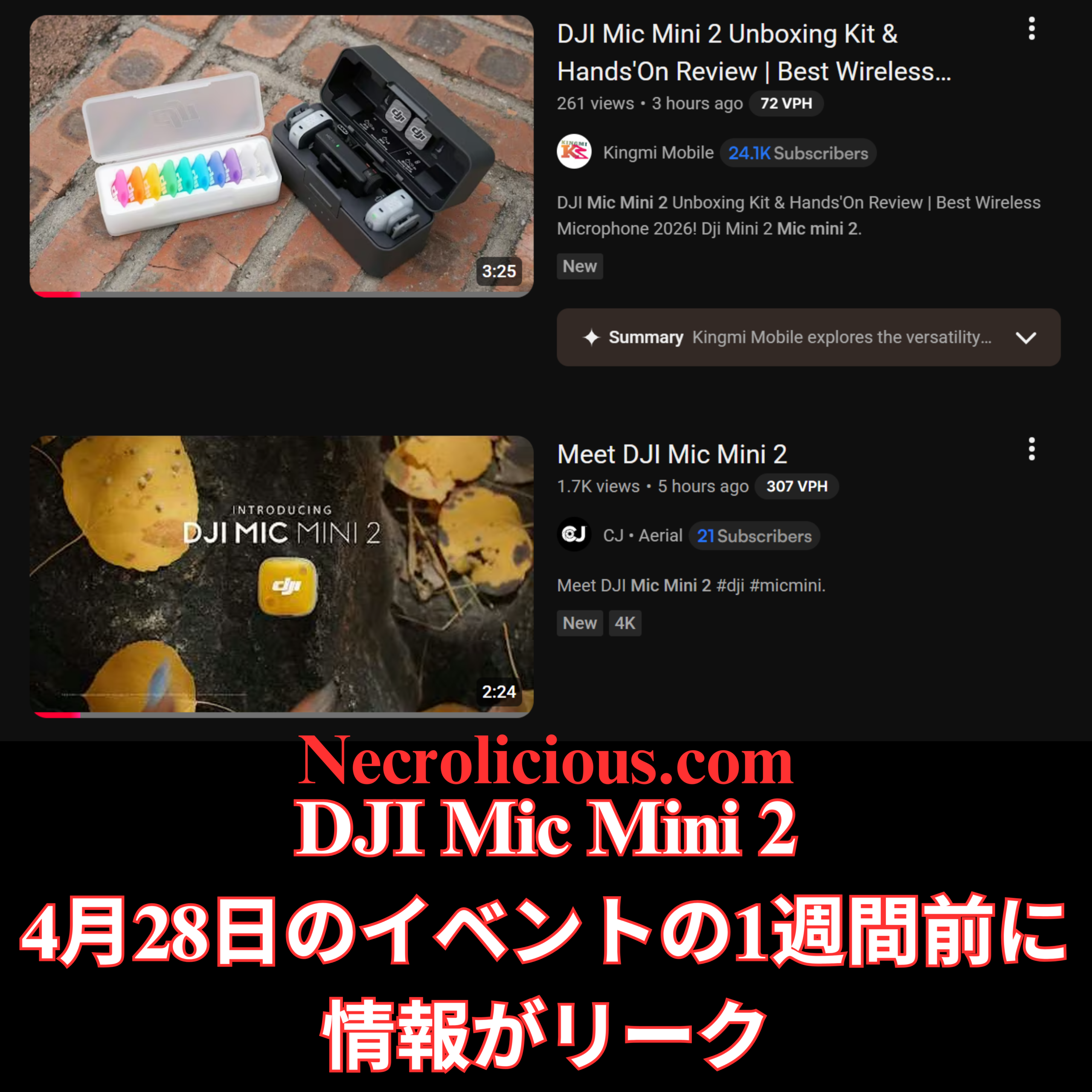
DJIの「More Than Sound」ティザーは、2026年4月14日の公開以来、コンテンツクリエイターやオーディオ愛好家の注目を集めています。虹色のパレットで渦巻く花びらのような形を特徴とする抽象的なアニメーションは、鮮やかなデザイン要素を備えた新しいワイヤレスマイクシステムを強く示唆していました。そのわずか数日後、公式イベントの1週間前に、具体的なリーク情報によって製品の正体が明らかになりました。それは、複数の色から選べる公式の交換可能なマグネット式フェイスプレートを備えたDJI Mic Mini 2です。
規制当局への提出書類が、最初の確かな証拠となった。FCCデータベースのDMMT02モデルのエントリには、DJI Mic Mini 2が明記されており、4月28日の発売時期と関連付けられていた。関連するミドルレンジモデルであるMic Mini 2S(DMMT03)も、米国での認証が取り消される前に一時的に登場していた。これらの文書は、フラッグシップモデルであるMic 3の刷新ではなく、コンパクトで手頃な価格の初代Mic Miniの後継機種であるというコミュニティの期待と完全に一致していた。DJIの他の最近の製品発表と同様に、この新しいマイクセットが米国で購入可能かどうかは依然として不明である。
YouTubeの開封動画が全貌を明らかにする
https://youtu.be/C1gqq7r8zDo?si=D4wgAlLM-MHBXEXN
ここ数時間のうちに、独立系クリエイターたちが、疑念を払拭するような初期のハンズオン映像を公開しました。Kingmi Mobileの「DJI Mic Mini 2 開封キット&ハンズオンレビュー」とCJ Aerialの「DJI Mic Mini 2 をご紹介」というタイトルの動画では、黒色の充電ケースと、ホットピンク、オレンジ、イエロー、グリーン、シアン、ブルー、パープルの7つの鮮やかなマグネットパーツが入った専用の白いアクセサリートレイが紹介されています。これらはサードパーティ製のシリコンスキンや永久的に着色された本体ではなく、DJIの公式10ピースマグネット式フェイスプレートシステムの一部であり、ユーザーは服装や撮影環境に合わせてカバーを瞬時に交換できます。
開封レビューによると、DJI Mic Mini 2は前モデルの超軽量フォームファクターを維持しつつ、瞬時にEQ調整が可能なボーカルトーンプリセット、バッテリー寿命の向上、柔軟なUSB-Cレシーバーオプションなど、実用的なアップグレードが追加されていることが確認できる。価格設定も競争力があり、マルチトランスミッターキットはVloggerやモバイルクリエイターにとって手頃な価格帯となっているようだ。
香港製品ページ Ghost Data
展開に関して特に興味深い点の一つは、XのAIであるGrokに詳細を尋ねた際に発生した。Grokは、香港のDJI公式サイトからの情報漏洩/早期発売について具体的に言及した。しかし、私がそのページへのリンクを尋ねて自分で確認しようとしたところ、そのようなページは存在しないことが判明した。GrokがDJI公式サイトでの早期情報漏洩の存在を完全に妄想していたのか、それとも実際に情報漏洩があったものの、その後削除されたのかは不明である。いずれにせよ、この記事執筆時点では、香港を含むどの地域のDJI公式サイトにもMic Mini 2は掲載されていない。
グローバルローンチで期待できること
専用イベント「More Than Sound」は2026年4月28日午前8時(米国東部時間)に予定されているが、香港での先行販売により、愛好家は構成やカラーオプションをいち早く確認できる。DJIはこれまでも地域限定ストアを利用して、本格的な展開前に需要をテストしてきたため、今回のリストはグローバルな価格設定やバンドル内容の信頼できるプレビューとなる。
マグネット式カスタマイズシステム、改良されたオーディオ機能、そして手頃な価格設定など、DJI Mic Mini 2は、実用的かつ視覚的にも特徴的な方法で、DJIのクリエイター向けオーディオエコシステムを拡大する製品となるでしょう。公式イベントが近づくにつれ、詳細が明らかになるにつれ、確定したハードウェア革新と地域限定の早期アクセスという組み合わせは、既存のMicシリーズユーザーと、多用途なワイヤレスオーディオソリューションを求める新規ユーザーの両方にとって魅力的なものとなることが確実視されています。
Share this:
Cookie Consent
We use cookies to improve your experience on our site. By using our site, you consent to cookies.
Registers a unique ID on mobile devices to enable tracking based on geographical GPS location.
1 day
VISITOR_INFO1_LIVE
Tries to estimate the users' bandwidth on pages with integrated YouTube videos. Also used for marketing
179 days
PREF
This cookie stores your preferences and other information, in particular preferred language, how many search results you wish to be shown on your page, and whether or not you wish to have Google’s SafeSearch filter turned on.
10 years from set/ update
YSC
Registers a unique ID to keep statistics of what videos from YouTube the user has seen.
Session
DEVICE_INFO
Used to detect if the visitor has accepted the marketing category in the cookie banner. This cookie is necessary for GDPR-compliance of the website.
179 days
LOGIN_INFO
This cookie is used to play YouTube videos embedded on the website.