The intersection of premium brick-building & competitive trading card games has long been a dream for dedicated collectors. That dream is now taking physical form. Following a highly competitive public vote, a fan-made LEGO Exodia model has officially won the company’s recent design contest. This victory ensures the legendary monster will be transformed into the first-ever official LEGO Yu-Gi-Oh! set, marking a significant milestone for both the Danish toy manufacturer & the iconic Japanese franchise.
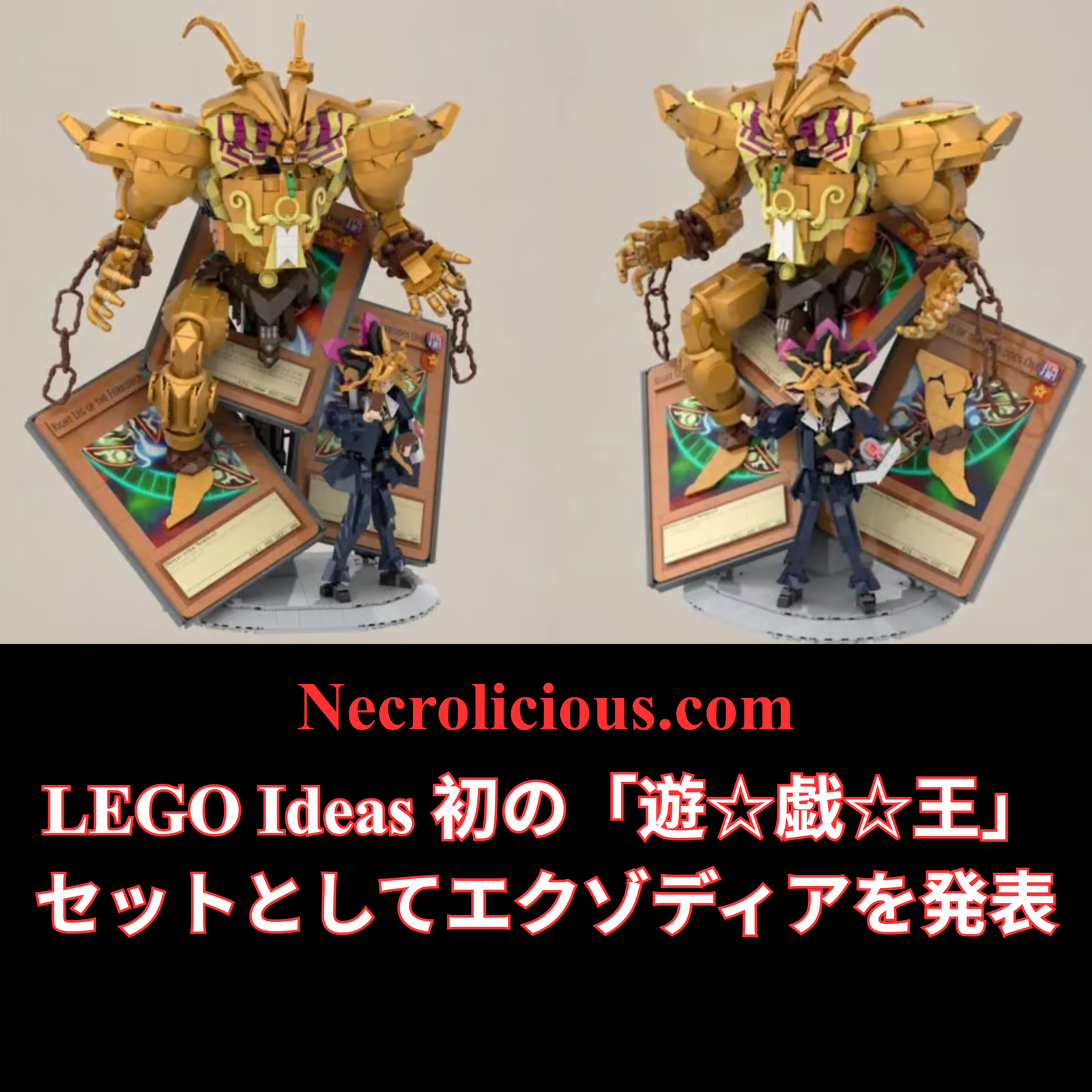
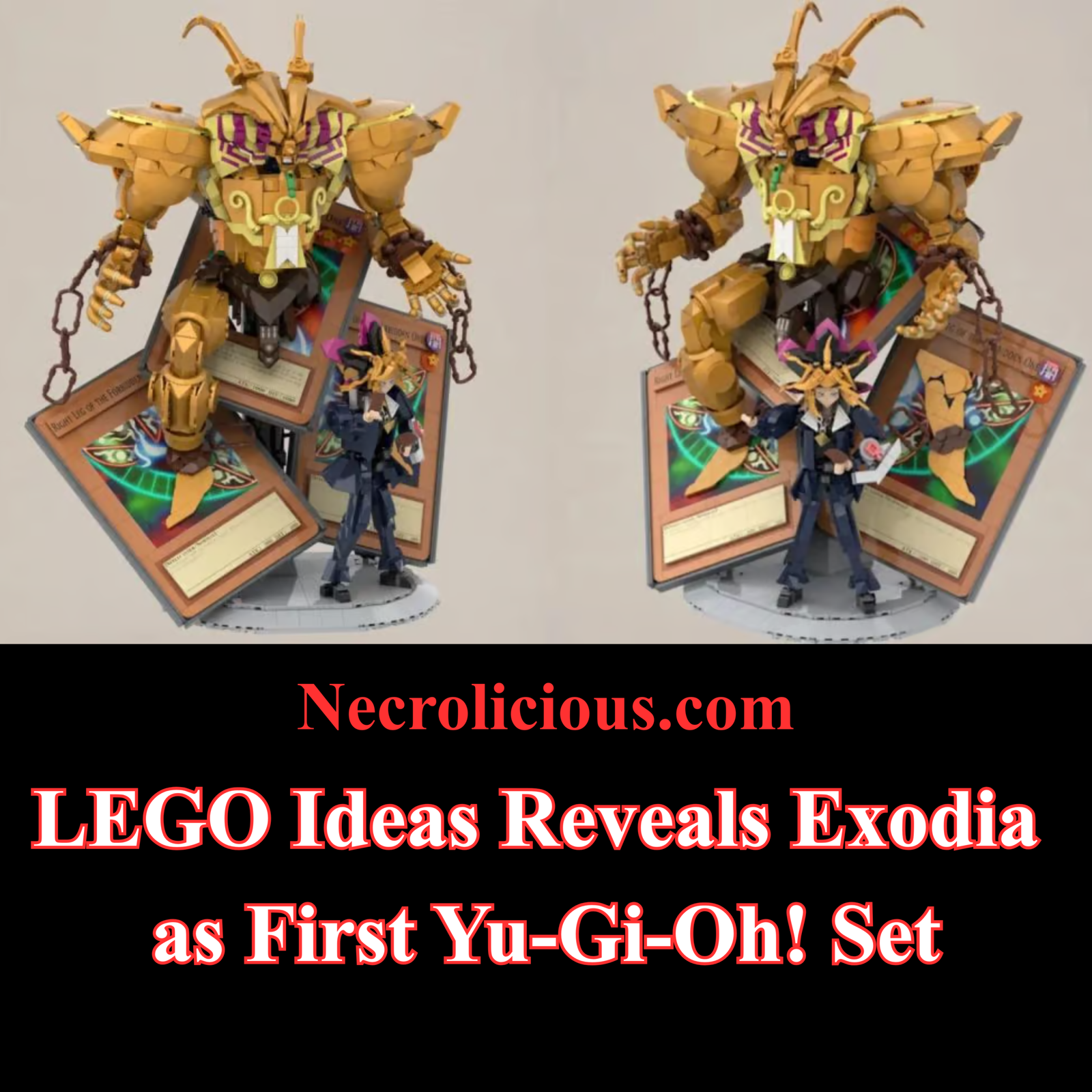
The official announcement, confirmed via the official Yu-Gi-Oh! account on X, revealed the results of the ‘It’s Time to Duel!’ LEGO Ideas challenge. After allowing fans to vote between five remarkable finalists, the winning model emerged as a stunning tribute to the anime’s foundational lore. Titled The Heart of the Cards: Exodia, the build was masterfully crafted by LEGO Ideas user Step_on_a_Brick. The design captures a pivotal narrative moment, depicting series protagonist Yami Yugi summoning Exodia the Forbidden One to secure an impossible victory.
For enthusiasts of both hobbies, this collaboration represents more than just a new product. It signals a mature recognition of anime’s enduring cultural footprint & the increasing overlap between premium collectible markets.
From Fan Concept to Official Retail Reality
The journey to this historic release began in February 2026 when LEGO first announced its dedicated Yu-Gi-Oh! contest. The brief invited builders worldwide to submit imaginative creations inspired specifically by the Duelist Kingdom & Battle City arcs of the original television series. These early story arcs are widely considered the golden era of the franchise, introducing the core characters, iconic monsters & dramatic stakes that would define the brand for decades.
The competition parameters were strict but encouraged immense creativity. Entries were required to contain between 400 & 2,000 pieces. This specific range ensured that submissions would be substantial enough to capture the necessary intricate details while remaining viable for eventual mass-market production.
The response from the community was overwhelming. LEGO ultimately received 264 valid submissions. A panel of professional designers narrowed this massive pool down to five exceptional finalists before handing the final decision over to a public community vote. The winning design secured its victory by offering a perfect blend of character representation, dynamic action & structural ingenuity.
The Mechanics of the Winning Build
The Heart of the Cards: Exodia is a masterclass in translating two-dimensional artwork into three-dimensional space. The build distinguishes itself through several key design choices:
The Dimensional Shift: The model depicts the legendary monster literally emerging from enlarged, brick-built Yu-Gi-Oh! cards. This creates a striking visual effect where Exodia appears to physically tear through the boundary between a flat image & a massive, fully articulated figure.
Character Integration: Unlike some submissions that focused solely on monsters, this design puts the creature front & centre alongside a detailed, brick-built version of Yami Yugi.
Iconic Symbolism: The set pays homage to the literal mechanics of the trading card game, where gathering the five distinct pieces of Exodia results in an automatic victory. The visual of the golden chains breaking translates perfectly to the medium of LEGO bricks.
The Cultural Weight of Exodia the Forbidden One
To understand why this specific monster resonated so deeply with the voting public, one must look at the history of the Yu-Gi-Oh! Official Card Game (OCG). Introduced in the late 1990s, the game revolutionised the tabletop industry. Exodia the Forbidden One is not merely a powerful card; it represents the ultimate alternate win condition. A player can immediately win a duel by gathering all five pieces of Exodia (the head, both arms & both legs) in their hand, bypassing the opponent’s life points entirely.
As an active observer of Tokyo’s vibrant trading card scene & the developer behind the Gothest multimedia trading card project, I have witnessed first-hand how properties like Yu-Gi-Oh! continue to dominate retail spaces across districts like Akihabara & Shinjuku. The Japanese trading card market has evolved significantly over the past decade, shifting from casual hobby spaces into high-end retail environments resembling boutique asset trading.
In this context, Exodia holds an almost mythical status among collectors. The character’s narrative debut in the anime’s first episode—where Yugi defeats the seemingly invincible Seto Kaiba—solidified the concept of “the heart of the cards” in global pop culture. It taught an entire generation of viewers that strategy, patience & a bit of faith could overcome overwhelming odds. Translating this specific cultural touchstone into a premium LEGO model is a brilliant move that taps directly into deep-seated millennial nostalgia.
The Power of the LEGO Ideas Ecosystem
The LEGO Ideas platform has fundamentally changed how toy manufacturers interact with their most dedicated consumers. Rather than relying solely on internal market research, LEGO empowers its community to dictate demand.
For the creator, Step_on_a_Brick, the rewards are both prestigious & financially significant. According to the official rules of the program, the victorious designer will be fully credited in the set’s official instruction booklet. More importantly, they will receive 1% of the product’s net sales as royalties. In the context of a globally recognised intellectual property like Yu-Gi-Oh!, this represents a potentially life-altering payout for a fan creator.
The process from here involves LEGO’s in-house professional designers taking the fan concept & adapting it into a finalised retail product. This step ensures the model meets the company’s rigorous safety, stability & structural standards. Consequently, the final design may undergo slight modifications before it hits store shelves. Details such as the final retail price, the exact piece count & the official launch date remain unannounced, though historical timelines suggest a release could occur within the next 12 to 18 months.
Fan Reception: Triumphs & Missed Opportunities
The broader Yu-Gi-Oh! community largely welcomed Exodia’s victory, viewing it as the most comprehensive representation of the brand. Discussions across platforms like Reddit highlighted the strategic brilliance of the design. As one vocal user noted, it was the best choice for brand representation because it successfully incorporated the central monster, the iconic cards & the main protagonist into a single cohesive display piece.
However, no fan vote is without its dissenting voices. A vocal segment of the community expressed disappointment regarding two main factors:
The Lack of Minifigures: The winning build opts for a larger brick-built figure of Yugi rather than standard minifigures. For traditional LEGO collectors, minifigures are often the main draw of licensed sets.
The Absence of Rivalry: Some fans questioned how the franchise’s inaugural set could arrive without featuring Seto Kaiba or his signature monster, the Blue-Eyes White Dragon. Given the immense popularity of the Blue-Eyes archetype, its exclusion left some enthusiasts hoping for future expansions to the line.
These critiques offer valuable insight into collector priorities. They highlight the delicate balancing act required when merging two distinct fandoms. While Exodia perfectly captures the narrative climax of the series, the demand for minifigures & rival characters indicates a strong market appetite for a broader, ongoing line of Yu-Gi-Oh! sets.
The Expanding Anime Footprint in Western Toys
This upcoming release is not an isolated incident; it is part of a calculated strategy. LEGO is steadily expanding its reach into the anime sector, capitalising on a global surge in the medium’s popularity. The company has already successfully launched products tied to global juggernauts like Pokémon & One Piece, while industry reports suggest a massive multi-set rollout for Dragon Ball Z is currently in development.
This trend is mirrored across the broader collectibles industry. We are increasingly seeing Western toy brands entering the Japanese market by securing licenses for contemporary & classic anime titles. From McFarlane Toys exploring properties like Bleach to Burger King launching exclusive Hello Kitty collaborations, the integration of Japanese pop culture into mainstream Western consumer goods has reached unprecedented levels.
For Yu-Gi-Oh!, an official LEGO set cements its status alongside the most influential entertainment properties in the world. As we await further details on pricing & availability, collectors have ample time to prepare their display shelves. If the final retail product captures even a fraction of the magic demonstrated by Step_on_a_Brick’s original submission, this set will undoubtedly be a mandatory purchase for fans of the heart of the cards.
Frequently Asked Questions (FAQ)
When will the official LEGO Yu-Gi-Oh! Exodia set be released?
An official release date has not yet been announced. Following a LEGO Ideas contest victory, it typically takes the company’s internal design team between 12 to 18 months to finalise the retail product, engineer the build for stability & prepare global distribution.
Will the final set look exactly like the fan-made submission?
Not necessarily. LEGO’s professional designers will adapt Step_on_a_Brick’s concept to ensure it meets strict commercial standards for safety, piece availability & structural integrity. While the core concept of Exodia emerging from the cards will remain, the exact piece count & visual execution may be refined.
Does the creator get paid for winning the contest?
Yes. Step_on_a_Brick will receive 1% of the net sales as royalties for the lifespan of the product, alongside official design credit printed in the set’s instruction booklet.
Are standard LEGO minifigures included in this set?
Based on the winning fan design, the set features a brick-built version of Yami Yugi rather than a traditional, small minifigure. Whether LEGO decides to add an exclusive minifigure during the final redesign process remains to be seen.
Will there be more Yu-Gi-Oh! LEGO sets featuring characters like Kaiba or Blue-Eyes White Dragon?
Currently, only the Exodia set has been officially confirmed through the LEGO Ideas platform. However, if this inaugural set performs exceptionally well at retail, it is highly likely that LEGO could pursue a broader licensing agreement to produce additional characters & monsters in the future.
Unless otherwise noted, image assets above are NOT original content & are shared under fair use doctrine with NO claims to authorship or ownership. Contact necrolicious@necrolicious.com for credit or removal.
This post was sponsored by…ME! If you’d like to support, please buy my original meme merchandise or check out my affiliate links to get yourself some other cool things. Additional affiliate links may be contained in the above article. If you click on an affiliate link & sign up/make a purchase, I may earn a commission. This does not increase the price you pay for the product or service, so it helps support this website at no cost to you.
If you would like to support my work more directly, I accept voluntary cryptocurrency donations in BTC, ETH, XRP & XLM sent directly to necrolicious.x. necrolicious.x is an Unstoppable Domains name that resolves to the wallet addresses I have configured. Simply enter necrolicious.x as the recipient in a supported wallet (such as Trust Wallet, Blockchain.com or others that support Unstoppable Domains). Donation Disclaimer: All cryptocurrency donations sent to me are final, voluntary gifts & are non-refundable & irreversible. These donations are not tax-deductible since I am not a registered charitable organization, & no tax receipts will be issued. No memo or destination tag is required for XRP or XLM donations, as the domain resolves directly to a wallet address. By sending a donation you acknowledge & accept all associated risks, including cryptocurrency price volatility, network fees & potential loss of funds due to incorrect network selection or transaction errors. I am not responsible or liable for any loss related to your donation. No goods, services or other benefits are provided in exchange for donations. This is not financial, tax, legal or investment advice. Please consult a qualified professional regarding any implications of your donation.
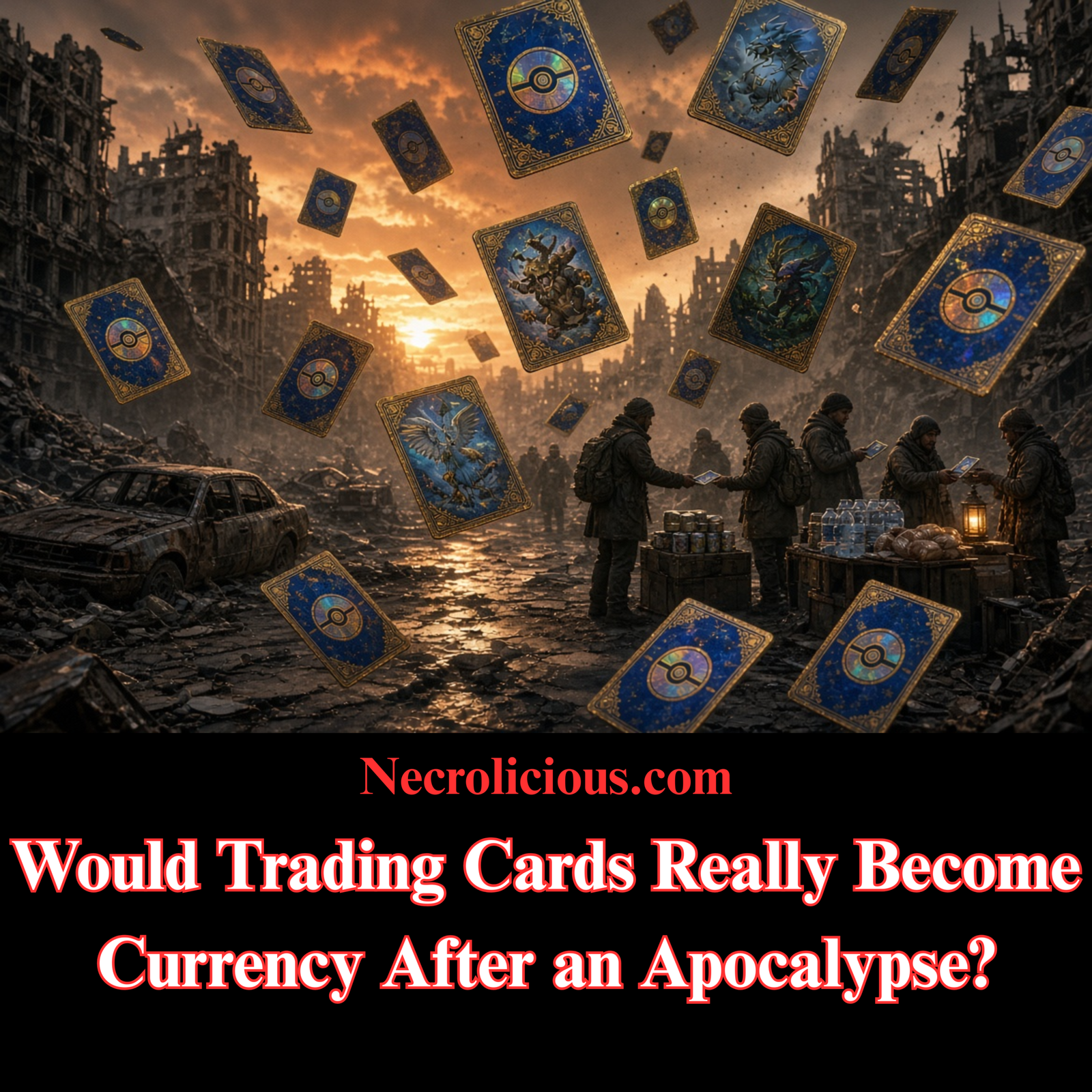
A venture capitalist told The Hollywood Reporter that if civilisation collapsed tomorrow, Pokémon cards would be the next day’s global currency. The line travelled quickly through gaming press because it sounds vivid. It also collapses two different ideas into one claim.
Cards can hold collector value after a shock. That is not the same as working as money at a till. This piece separates those functions, checks what Peter Levin actually said, then tests the grocery-store problem & the counterfeit problem that already exists while institutions are still standing.
What Levin Said — & What He Did Not Say
Peter Levin is founder of Griffin Gaming Partners, which manages over $1.6 billion in gaming assets. Levin himself is a trading card collector who claims to hold more than 500,000 cards. In the September 2026 interview he called Pokémon “a global phenomenon” & added that he was “absolutely convinced that if the world suffered an apocalypse tomorrow, the following day the global currency would be Pokémon cards.” He tied the remark to reported investment performance, including the claim that Pokémon cards have beaten the S&P 500 by about 3,000%.
That currency line was specific to Pokémon. Later in the same conversation he discussed other trading card games as market stories, not as post-collapse cash. He said Pokémon had created an “umbrella” under which Yu-Gi-Oh, Digimon & One Piece could expand. He described One Piece as growing faster than any card game in history, including Pokémon. He called Magic: The Gathering a Hasbro business approaching $2 billion a year.
Coverage that treats the apocalypse remark as a general TCG forecast overstates the quote. The colourful prediction attached to one franchise. The rest was industry commentary.
Store of Value Is Not the Same as Money
Economics textbooks still use a simple test. Money should store value, serve as a unit of account & work as a medium of exchange. Collectibles often manage the first task inside a specialist market. They usually fail the other two.
A first-edition holographic Charizard can sit in a safe as a scarce object people still recognise. That does not tell a shopkeeper how to price bread, milk & batteries in card units by lunchtime. The card’s price depends on set, language, print run, surface wear, centering & whether a grader once assigned a number. Those variables make a poor yardstick.
Anyone who has sorted bulk boxes knows the texture of this problem. Commons arrive by the thousand. Chase cards arrive as exceptions. The pile does not behave like identical coins. One scratched holofoil is not interchangeable with another copy that looks similar in a dim aisle. Condition is not a rounding error. It is the product.
Historical parallels are useful here. Rare stamps, art & numismatic coins have preserved wealth for some holders during inflation or political stress. They have rarely become the thing you spend for supper. Uniform bullion, cigarettes, fuel & food have done that work because they can be counted quickly & used up. Cards sit closer to art than to specie.
Japan’s own market already shows how far collectable paper can travel as an asset class without becoming cash. The domestic trading card sector’s expansion, theft risk & regulatory attention are documented in Japan’s $2.1B Trading Card Boom Sparks Regulation. Scarcity, grading & crime followed the prices. Tills did not start quoting Charizard.
Why the Grocery Checkout Does Not Work
Picture the practical sequence. A customer offers a slabbed card for a basket of staples. Staff must authenticate it, grade it by eye, convert it into a local price & make change. None of those steps is cheap when the lights are unreliable & the queue is hungry.
Divisibility is the next failure. You cannot cut a high-value card into tenths without destroying the premium. You cannot treat a pack of bulk Energy cards as tidy small change when nobody agrees they are worth a tin of fish. Liquidity concentrates at the top. The bottom of the print run is wallpaper.
Durability works against circulation. Money is meant to be handled. Pokémon cardboard is meant to stay flat. A week in a pocket would erase the finish that supports resale. Graded slabs delay that damage until someone cracks them, swaps the contents or copies the label.
The realistic collapse use is narrower. Two people who already collect might settle a large trade: a known rare for fuel, medicine or transport. That is barter among specialists. It is not a payment rail. Commons from mass retail would be nearly worthless as money. The scarce pieces would be too lumpy, too fragile & too disputed to circulate as daily cash.
Forgery would not arrive after the collapse. It is already the tax on this hobby.
Professional Sports Authenticator reported intercepting more than $200 million in fraudulent collectibles in 2025 & called the figure conservative. Counterfeit submissions rose as a share of the queue. Fake Pokémon cards submitted to PSA jumped 125% year over year. Trading card games accounted for more than half of the counterfeits the company recorded, with Pokémon leading the category. Altered cards rose as well. Those numbers capture only what reached a grading desk. Raw fakes on marketplaces sit outside that count.
The pattern is rational. High resale prices attract printers. Modern cards are paper, ink & foil. The tools to imitate them have improved. Community checks — light tests, texture, back-pattern comparison — still catch many poor copies. They do not scale to a panicked crowd making five-second decisions.
Remove the current defences & the problem worsens. No lab queue. No online population comparing print lines. No customs seizures. No civil courts for a bad trade. Demand for anything that “looks official” would rise just as verification collapsed. Trust would shrink to face-to-face circles. Outside those circles, cards would be treated as colourful paper.
Slabs would last a little longer as tokens of prior authentication. Then labels get copied. Inners get swapped. Alteration, already rising on Pokémon according to PSA, becomes easier when nobody can send the object back to a reference archive.
Crime has already followed value in ordinary times, from shop raids to reports of organised buying for overseas resale. A collapse would not civilise that incentive. It would strip away the remaining friction.
What Would Survive in Practice
Levin’s remark works as a comment on brand recognition. Pokémon is widely known across age groups & borders. Recognition can support a residual collector bid. Recognition is not acceptance at retail.
If cards kept purchasing power, it would likely look like this:
Rare, widely recognised pieces used for occasional high-value settlement among people who can inspect them
Sealed product treated as a bulky store of value, not as small change
Graded slabs trusted only while the holder’s reputation lasts
Commons & damaged copies discarded or reused as scrap
Other games Levin mentioned would follow the same logic. One Piece’s growth rate & Magic: The Gathering’s revenue matter to publishers today. They do not solve fungibility after institutions fail. Licensed crossovers & limited collabs can intensify collecting without creating a currency. Even a light promotional hook such as Yu-Gi-Oh’s Cup Noodle Instant Fusion collaboration shows how brands travel through everyday products while remaining merchandising, not money.
Long-running Japanese game intellectual property holds cultural weight for the same reason Pokémon does: memory, characters & repeat contact. That weight still does not turn a printed card into a unit of account. Durable franchises can outlast platforms, as seen when service titles close & older catalogues retain fans, including coverage such as Castlevania: Grimoire of Souls Ends Service on Apple Arcade. Survival of an IP is not the same as monetary function.
Practical Takeaways for Collectors
Treat the apocalypse line as rhetoric, then use the underlying market facts.
Separate hobby value from spendability. A card can be scarce & still be a poor medium of exchange.
Authentication skill matters more than slogans. Learn backs, texture & light behaviour on cards you actually own.
Storage protects the only premium that exists. Circulation destroys it.
Diversify scarce objects if the goal is shock insurance. Uniform goods & skills clear local markets faster than unique cardboard.
Watch fraud data from graders as a leading indicator. Rising fake rates tell you where the money already is.
From handling cards as a collector & from building a small trading-card project, the tactile lesson is consistent. People will overpay for a story they recognise. They will not pause a food queue to debate print quality. Those instincts can coexist. They should not be merged into a single forecast.
FAQ
Did Peter Levin say Yu-Gi-Oh, One Piece & Magic: The Gathering would be apocalypse currency? No. The currency sentence named Pokémon only. The other titles appeared later as growth examples.
Could Pokémon cards keep any value after a collapse? Yes, inside a narrow circle of people who already collect & can inspect authenticity. That is residual demand, not a payment system.
Why not use common cards as small change? Commons are plentiful, easy to copy & weakly desired. They fail as a unit of account once nobody agrees they buy a fixed basket of goods.
Is counterfeiting already serious? Yes. PSA’s 2025 fraud reporting put intercepted fake & altered collectibles above $200 million, with Pokémon fakes up 125% year over year among submissions.
What historically works better as emergency exchange? Items that are uniform, consumed & easy to count: food, fuel, ammunition in some settings, labour & widely recognised bullion. Unique collectables settle occasional large trades at best.
Unless otherwise noted, image assets above are NOT original content & are shared under fair use doctrine with NO claims to authorship or ownership. Contact necrolicious@necrolicious.com for credit or removal.
This post was sponsored by…ME! If you’d like to support, please buy my original meme merchandise or check out my affiliate links to get yourself some other cool things. Additional affiliate links may be contained in the above article. If you click on an affiliate link & sign up/make a purchase, I may earn a commission. This does not increase the price you pay for the product or service, so it helps support this website at no cost to you.
If you would like to support my work more directly, I accept voluntary cryptocurrency donations in BTC, ETH, XRP & XLM sent directly to necrolicious.x. necrolicious.x is an Unstoppable Domains name that resolves to the wallet addresses I have configured. Simply enter necrolicious.x as the recipient in a supported wallet (such as Trust Wallet, Blockchain.com or others that support Unstoppable Domains). Donation Disclaimer: All cryptocurrency donations sent to me are final, voluntary gifts & are non-refundable & irreversible. These donations are not tax-deductible since I am not a registered charitable organization, & no tax receipts will be issued. No memo or destination tag is required for XRP or XLM donations, as the domain resolves directly to a wallet address. By sending a donation you acknowledge & accept all associated risks, including cryptocurrency price volatility, network fees & potential loss of funds due to incorrect network selection or transaction errors. I am not responsible or liable for any loss related to your donation. No goods, services or other benefits are provided in exchange for donations. This is not financial, tax, legal or investment advice. Please consult a qualified professional regarding any implications of your donation.
As children we laughed at the melodrama. In Yu-Gi-Oh!, Grandpa collapsed into hospital after losing a single card. Weevil hurled Exodia’s piece cards into the ocean. Kaiba Corp treated rare cards as instruments of corporate & global power. Team Four Star’s abridged series drove the joke home, labelling it all a “children’s card game.” Two decades later the satire has been all but lost as trading cards are are increasingly considered real-world hard assets of extraordinary value. In 2026 the same intensity, corporate manoeuvring & outright crime have spilled from anime screens into Japanese streets & parliamentary chambers.
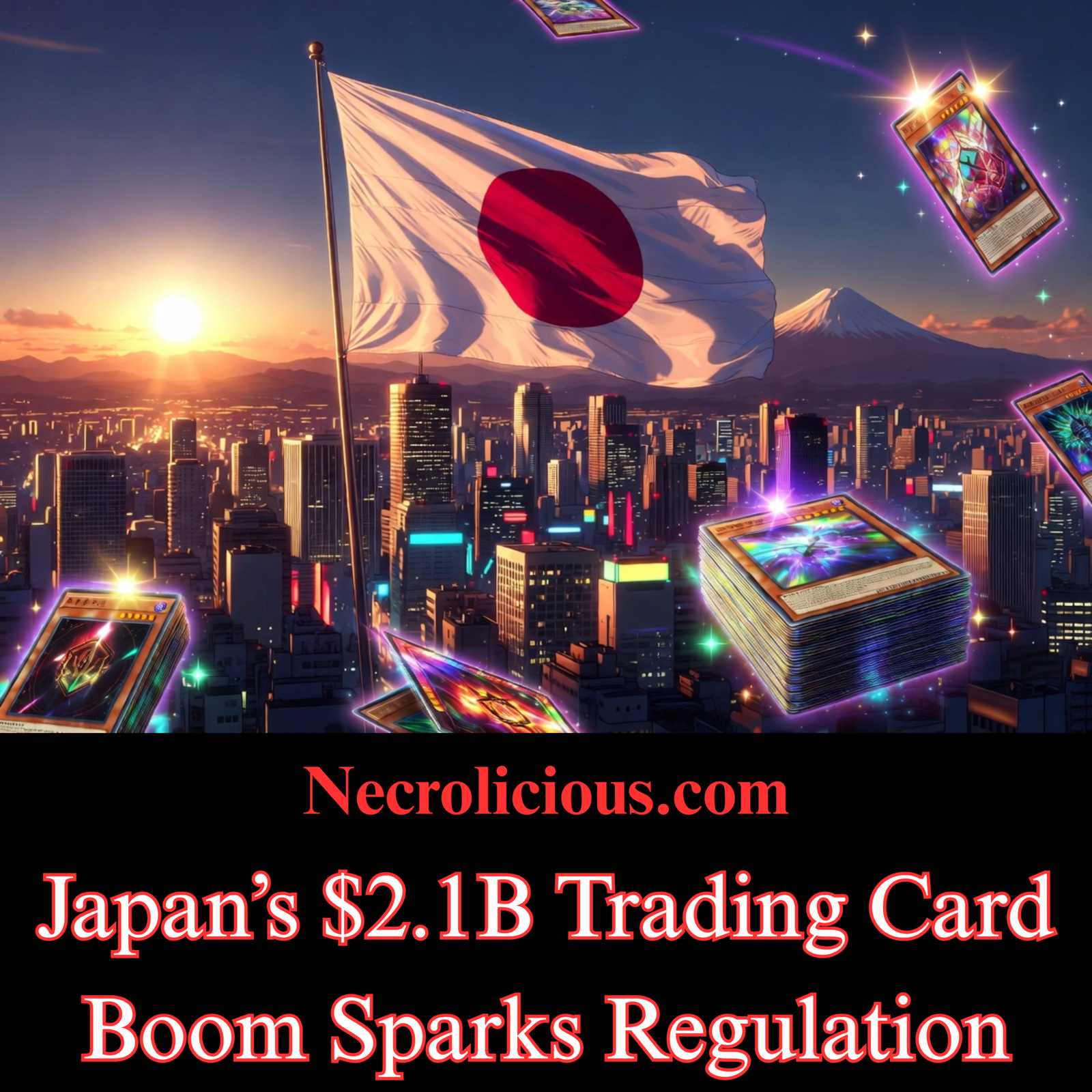
The domestic trading card market has grown 90 percent to ¥338 billion ($2.1 billion) in the four years to 2025. Rare Pokémon cards now change hands for the equivalent of millions of dollars. Lawmakers are forming special groups to regulate the sector. Shops in Tokyo have been hit by smash-&-grab robberies that target display cases while leaving cash registers untouched. What once felt like pure fantasy has become a high-stakes industry with real financial, legal & security consequences.
From Anime Exaggeration to Market Reality
The cultural roots run deep. Yu-Gi-Oh! (known in Japan as Yu-Gi-Oh! Official Card Game) & Pokémon TCG both originated in Japan & built global followings by blending gameplay with narrative intensity. It also served as a major point of inspiration for the trading card game I made. Collectors who followed Japanese releases through the 2010s & early 2020s watched secondary-market prices climb steadily. Graded vintage cards, limited promotional prints & popular modern singles began attracting investors alongside traditional hobbyists.
By 2025 the asset-like behaviour of the highest-value cards had become impossible to ignore. A single Pikachu Illustrator linked to influencer Logan Paul sold for approximately $16 million. Grading companies, primarily based in the United States, exert significant influence over perceived value even though the intellectual property remains Japanese. This dynamic has not gone unnoticed in Tokyo.
As a long-time observer of Japanese trading card games and a creator of my own trading card game, it has not escaped my notice that shops in Tokyo continue to evolve from casual hobby spaces into venues that increasingly resemble specialised retail for high-value goods. Security shutters, reinforced cases & identity checks are no longer unusual. The shift mirrors the very corporate competition once played for laughs in anime.
The Regulatory Response Takes Shape
In July 2026, Japan’s ruling Liberal Democratic Party established a parliamentary caucus chaired by Seiji Kihara, former deputy chief cabinet secretary. The group’s stated purpose is to examine “appropriate rule-making” for the trading card sector while promoting the industry as part of Japan’s broader content economy.
Official statements emphasise that trading cards “are no longer simply consumer products.” Rapid expansion & rising asset values have produced problems that cannot be ignored: scalping through bulk purchasing, circulation of counterfeits & potential misuse for money laundering. The caucus plans to consult manufacturers, retailers & the Ministry of Economy, Trade & Industry before issuing recommendations.
Importantly the discussion is not limited to Pokémon. Coverage & official remarks regularly reference Yu-Gi-Oh! & other Japanese-origin titles such as the One Piece Card Game. The Japan Toy Association’s market figures cover the sector as a whole. Lawmakers have expressed a desire to support Japanese intellectual property without repeating the overly restrictive approach that previously pushed domestic cryptocurrency activity overseas.
Parallel industry measures are already under way. Pokémon Japan announced that from approximately August 2026 customers will need to verify identity with the government-issued My Number Card to enter certain lotteries & purchase selected products via Pokémon Center Online. The system also applies to some official events. The stated aim is fairer access for genuine collectors & reduced opportunity for organised scalping.
These steps reflect a pragmatic recognition that the secondary market’s scale now exceeds traditional self-regulation by individual shops.
Crime Follows the Value
High prices have attracted criminals. Multiple incidents in recent years demonstrate a clear pattern of targeted thefts.
In December 2023 two masked individuals broke into Trading Card Highlight in Ikebukuro, Tokyo. They smashed glass display cases with a hammer & removed more than 300 Pokémon cards valued by the shop at approximately 20 million yen. The entire operation lasted roughly two minutes. Cash registers were left untouched. Surveillance footage captured the thieves timing themselves aloud.
On 31 December 2025 three men entered another East Ikebukuro shop during business hours. One used a hammer-like object to break a showcase while the others intimidated staff & a customer. They escaped with around a dozen high-value cards. The shop estimated losses between 30 million & 40 million yen. No injuries were reported.
Further afield a June 2026 overnight break-in in Niigata saw approximately 5,000 Pokémon cards stolen, with losses around 10 million yen. Again the cash register remained undisturbed. In Gifu Prefecture in 2025 a knife-point robbery of cards & cash worth roughly $94,000 led to arrests that included a manager from a rival nearby shop.
These cases are not isolated. Police have investigated additional bulk thefts from buyback stores & even delivery vehicles. The common thread is selectivity: thieves focus on portable, high-resale-value singles rather than general merchandise. Shops have responded with stronger physical security, better safes & tighter purchase protocols, yet the incentives created by secondary-market prices remain strong.
Broader Implications for Collectors & the Industry
The convergence of regulation, crime & soaring values creates both risks & opportunities.
For everyday collectors, the practical effects are already visible. Identity verification will limit some online purchases to those holding Japanese government ID. Purchase limits & lottery systems reduce the chance of walking into a shop & simply buying popular new product on release day. At the same time, these measures may improve long-term access for local players & reduce the frustration of empty shelves caused by organised resale.
For the industry the LDP caucus represents an attempt to formalise oversight while preserving growth. Success will depend on avoiding rules that freeze the secondary market or drive activity underground. Transparent grading standards, clearer anti-counterfeit measures & cooperation with online platforms appear more promising than blunt price controls.
International collectors face secondary effects. Japanese product has long been prized for print quality & exclusive cards. Tighter domestic controls may reduce the volume of cards reaching overseas markets through grey channels, potentially supporting higher prices for remaining stock. Conversely any perception of excessive regulation could encourage some capital to shift toward Western or other Asian releases.
Culturally the moment invites reflection. The same properties that once provided light-hearted escapism now sit at the intersection of entertainment, investment & public policy. The anime’s exaggerated stakes have been realised through ordinary market forces rather than ancient Egyptian artefacts or shadow games.
Practical Takeaways for Enthusiasts
Collectors navigating the current environment can take several concrete steps:
Prioritise purchases through official channels that already implement identity or lottery systems; these are less likely to face sudden disruption.
Store high-value cards in secure locations rather than shop-style display cases at home.
Follow official announcements from Pokémon Japan, Konami (for Yu-Gi-Oh!) & the relevant ministries rather than relying solely on secondary reporting.
Consider the broader collecting ecosystem. Limited collaborations & physical media remain vibrant parts of Japanese pop culture, as seen in recent cross-promotions & figure releases.
Maintain realistic expectations about secondary-market liquidity. Cards that trade at extreme premiums can also experience sharp corrections.
The trading card sector’s transformation offers a case study in how digital-age attention & scarcity can elevate a hobby into an asset class with corresponding responsibilities. Regulation, when carefully designed, can protect both intellectual property & ordinary participants. Crime targeting the same goods underscores the need for proportionate security.
What began as childhood entertainment has matured into a multi-billion-yen industry that Japanese lawmakers now treat with seriousness once reserved for more traditional sectors. The irony is complete: the “children’s card game” has grown up, & the real world has matched the drama that once seemed confined to anime.
Is the regulation focused only on Pokémon cards? No. Official discussion covers the broader trading card market, including Yu-Gi-Oh! & other Japanese titles. Pokémon receives the most attention because of its scale & extreme secondary prices.
Have card shop robberies been limited to Tokyo? No. Confirmed incidents have occurred in Ikebukuro (Tokyo), Niigata, Gifu & other locations. The common pattern is targeted theft of high-value cards.
Will My Number Card requirements affect foreign collectors? The announced Pokémon Center Online system is designed around Japanese government ID. Overseas buyers are already restricted in many official lotteries; further limits are likely.
Could regulation damage the secondary market? Lawmakers have explicitly stated an intention to avoid overly strict rules that previously hindered other sectors. The final recommendations will determine the balance between oversight & growth.
Unless otherwise noted, image assets above are NOT original content & are shared under fair use doctrine with NO claims to authorship or ownership. Contact necrolicious@necrolicious.com for credit or removal.
This post was sponsored by…ME! If you’d like to support, please buy my original meme merchandise or check out my affiliate links to get yourself some other cool things. Additional affiliate links may be contained in the above article. If you click on an affiliate link & sign up/make a purchase, I may earn a commission. This does not increase the price you pay for the product or service, so it helps support this website at no cost to you.
If you would like to support my work more directly, I accept voluntary cryptocurrency donations in BTC, ETH, XRP & XLM sent directly to necrolicious.x. necrolicious.x is an Unstoppable Domains name that resolves to the wallet addresses I have configured. Simply enter necrolicious.x as the recipient in a supported wallet (such as Trust Wallet, Blockchain.com or others that support Unstoppable Domains). Donation Disclaimer: All cryptocurrency donations sent to me are final, voluntary gifts & are non-refundable & irreversible. These donations are not tax-deductible since I am not a registered charitable organization, & no tax receipts will be issued. No memo or destination tag is required for XRP or XLM donations, as the domain resolves directly to a wallet address. By sending a donation you acknowledge & accept all associated risks, including cryptocurrency price volatility, network fees & potential loss of funds due to incorrect network selection or transaction errors. I am not responsible or liable for any loss related to your donation. No goods, services or other benefits are provided in exchange for donations. This is not financial, tax, legal or investment advice. Please consult a qualified professional regarding any implications of your donation.
Share this:
Cookie Consent
We use cookies to improve your experience on our site. By using our site, you consent to cookies.
Registers a unique ID on mobile devices to enable tracking based on geographical GPS location.
1 day
VISITOR_INFO1_LIVE
Tries to estimate the users' bandwidth on pages with integrated YouTube videos. Also used for marketing
179 days
PREF
This cookie stores your preferences and other information, in particular preferred language, how many search results you wish to be shown on your page, and whether or not you wish to have Google’s SafeSearch filter turned on.
10 years from set/ update
YSC
Registers a unique ID to keep statistics of what videos from YouTube the user has seen.
Session
DEVICE_INFO
Used to detect if the visitor has accepted the marketing category in the cookie banner. This cookie is necessary for GDPR-compliance of the website.
179 days
LOGIN_INFO
This cookie is used to play YouTube videos embedded on the website.