格闘ゲーム愛好家たちの情熱に再び火を灯す動きとして、『ソウルキャリバーIII』がPlayStation Plus Premiumのクラシックスカタログに収録されることが決定しました。このカタログは2025年12月16日より利用可能です。2005年にPlayStation 2で発売された本作は、革新的なゲームプレイメカニクスと奥深いストーリーモードで高い評価を得ているソウルキャリバーシリーズの最高峰です。PS5とPS4での再リリースは、名作を蘇らせるだけでなく、新たな世代にその遺産を体験する機会を提供します。この追加要素の重要性、そしてゲームへのノスタルジアと現代のアクセシビリティという幅広い領域にどのように適合するかを掘り下げていきましょう。
ソウルキャリバーIIIの遺産
ナムコが開発した『ソウルキャリバーIII』は、堅牢なキャラクタークリエイションシステムと、リアルタイムストラテジーと伝統的な格闘ゲームのメカニクスを融合させた「クロニクル・オブ・ザ・ソード」モードの導入により、シリーズ最高傑作の一つと称されることがしばしばあります。これらの機能と、武器を駆使した滑らかな3D戦闘が相まって、本作は商業的成功を収め、全世界で100万本以上を売り上げました。PlayStation Plus Premiumへの登場は、現代のハードウェア性能を活かしたリマスター版または再リリース版を待ち望んでいたファンにとって、まさに記念すべき瞬間です。
PlayStation Plus Premiumのクラシックカタログに『ソウルキャリバーIII』が追加されたことは、単なる再リリースにとどまりません。本作の揺るぎない魅力と、ソウルキャリバーシリーズの揺るぎないレガシーを証明するものです。プレイヤーが名作バトルや独創的なモードを再び体験するにつれ、本作は過去と現在のゲーム文化をつなぐ架け橋として存在感を放ちます。ノスタルジアと革新の融合を求めるプレイヤーにとって、最新コンソールで『ソウルキャリバーIII』を体験できるこの機会は見逃せません。長年のファンも、初めてプレイする方も、剣と魂の激突が、新たな英雄たちを歴史に刻む時を待ち受けています。
In a move that has reignited the passion of fighting game enthusiasts, Soulcalibur III has been confirmed for inclusion in PlayStation Plus Premium’s Classics Catalogue, available from December 16, 2025. Originally launched on the PlayStation 2 in 2005, this title stands as a pinnacle in the Soulcalibur series, celebrated for its innovative gameplay mechanics & deep narrative modes. This re-release on PS5 & PS4 not only revives a classic but also invites a new generation to experience its legacy. Let’s delve into what makes this addition significant & how it fits into the broader landscape of gaming nostalgia & modern accessibility.
The Legacy of Soulcalibur III
Soulcalibur III, developed by Namco, is often regarded as one of the finest entries in the series, thanks to its robust character creation system & the introduction of Chronicles of the Sword, a mode that blends real-time strategy with traditional fighting game mechanics. These features, combined with the game’s fluid 3D weapon-based combat, contributed to its commercial success, selling over one million copies worldwide. The game’s arrival on PlayStation Plus Premium marks a significant moment for fans who have long awaited a remastered or re-released version that leverages modern hardware capabilities.
Enhanced Experience on Modern Consoles
The porting of Soulcalibur III to PS5 & PS4 promises an enhanced experience, with improved visuals & performance that were not possible on the original PS2 hardware. Although the re-release does not include trophy support—a point of contention among some fans—it retains the core elements that made the game a favourite. The absence of trophies, however, does not detract from the game’s appeal, as its depth in gameplay & storytelling remains intact. For subscribers, this means accessing a title that not only holds historical value but also offers a fresh perspective through contemporary technology.
The announcement has sparked a wave of excitement across social media platforms, with fans expressing nostalgia & anticipation. The official Soulcalibur X account shared a video montage showcasing the game’s fighters & dynamic arenas, which has amassed significant engagement. Replies to the post reflect a mix of joy at the re-release & calls for further expansions, such as PC ports & the long-rumoured Soulcalibur VII. This community dialogue underscores the enduring popularity of the series & the desire for its continued evolution.
The Appeal of a Pre-“Wokeness” Era Gaming Experience:
Soulcalibur III’s re-release resonates deeply with many fans not only for its gameplay & nostalgic value but also because it hails from a period in gaming history that predates significant cultural & political shifts. Originally released in 2005, the game emerged during a time before the advent of movements like Gamergate & the broader discussions around “wokeness” in media. This era is often nostalgically remembered for offering what some perceive as simpler, purer forms of entertainment, unencumbered by the complex social & political debates that have since permeated the industry.
The absence of influences from entities like BlackRock & the DEI they force inject into their subsidiaries, Soulcalibur III’s original development is a point of note for some enthusiasts. These elements, which have become more prominent in recent years, are seen by some as having introduced new layers of complexity or controversy into game design & marketing. For these fans, Soulcalibur III represents a return to a time when the focus was primarily on crafting engaging gameplay & rich narratives without the overlay of contemporary social agendas. The game’s character roster, while diverse in its own right through its fantasy & historical inspirations, was not shaped by modern diversity mandates, allowing players to engage with its world on its own terms.
This re-release, therefore, offers a form of escapism—not just from the technological limitations of the past but also from the cultural battles that have divided gaming communities in recent years. The joy expressed by fans on social media platforms reflects a desire to revisit a title that embodies non-political fun, where the primary objective was to master combat techniques, explore creative character designs, & immerse oneself in the fictional histories of its warriors. The simplicity of this experience, untainted by external controversies, is a significant draw for those who yearn for the unadulterated joy of gaming as it once was.
Oh, Spawn Where Art Thou?
Additionally, the re-release evokes memories of the original console-specific characters that were a hallmark of the Soulcalibur series but are notably absent in this version. The PlayStation 2 version of Soulcalibur II, for instance, featured Tekken’s Heihachi Mishima, while the Nintendo GameCube had The Legend of Zelda’s Link, & the Xbox included Spawn from the comic book series. These characters, cancelled from Soulcalibur III due to a policy against repeating guest appearances, were a source of excitement & platform exclusivity that added to the game’s appeal. Their absence in this re-release is a reminder of the era’s unique marketing strategies & the distinct identities of each console’s gaming ecosystem.
Looking Forward: The Future of Soulcalibur:
While Soulcalibur III’s re-release is a cause for celebration, it also reignites discussions about the series’ future. Rumours of a potential Soulcalibur VII announcement, possibly at a Nintendo Direct in 2025, add an layer of intrigue. Whether these speculations hold true, the reintroduction of Soulcalibur III serves as a reminder of the series’ impact & the potential for its revival in new formats. Fans & newcomers alike are encouraged to explore this classic, which continues to offer a rich tapestry of combat & narrative.
Soulcalibur III’s addition to PlayStation Plus Premium’s Classics Catalogue is more than a mere re-release; it is a testament to the game’s lasting appeal & the enduring legacy of the Soulcalibur series. As players revisit its storied battles & creative modes, the title stands as a bridge between past & present gaming cultures. For those seeking a blend of nostalgia & innovation, this opportunity to engage with Soulcalibur III on modern consoles is not to be missed. Whether you are a long-time fan or a curious newcomer, the clash of swords & souls awaits, ready to etch new heroes into history.
Unless otherwise noted, image assets above are NOT original content & are shared under fair use doctrine with NO claims to authorship or ownership. Contact necrolicious@necrolicious.com for credit or removal.
This post was sponsored by…ME! If you’d like to support, please buy my original meme merch from Necrolicious.store or check out my affiliate links to get yourself some other cool things. Additional affiliate links may be contained in the above article. If you click on an affiliate link & sign up/make a purchase, I may earn a commission. This does not increase the price you pay for the product or service, so it helps support this website at no cost to you.
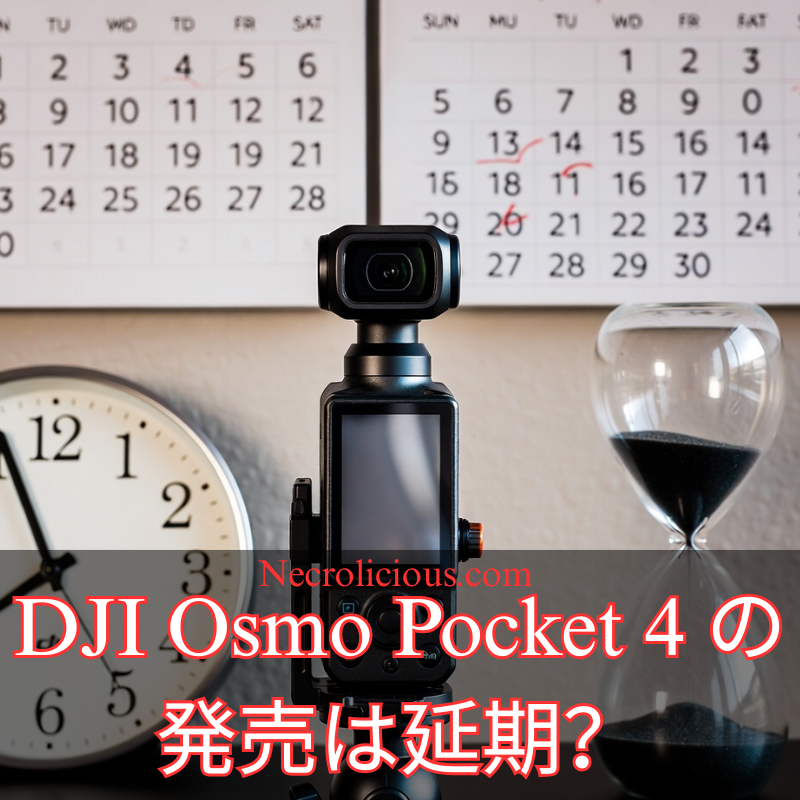
The highly anticipated DJI Osmo Pocket 4, the next iteration of DJI’s popular ultra-compact 3-axis gimbal camera, has encountered a setback in its release schedule. Initially rumoured to launch as early as 18 December 2025, the device is now expected to arrive in the latter half of January 2026, according to reliable industry sources.
Reasons Behind the DJI Osmo Pocket 4 Delay
Insider reports from Photorabz indicate that the postponement stems from unprepared accessories for the new model. The core camera is reportedly ready, but ensuring a complete and polished ecosystem has led to the shift. Recent updates suggest the release is slated for January 2026, likely towards the latter half of the month.
Potential Teaser & Ongoing Preparations
Action camera outlets report that DJI may unveil a teaser page by the end of December 2025. While a December launch is now ruled out, preparations continue – the device has secured FCC certification in the United States, clearing regulatory pathways.
What to Expect from the DJI Osmo Pocket 4
As the successor to the acclaimed Osmo Pocket series, the DJI Osmo Pocket 4 is poised to feature enhancements such as a larger battery, potential dual-camera setup & improved stabilisation for portable videography.
DJI fans are far from short of new gear. The company has delivered several notable launches in recent months, including the compact DJI Osmo Nano wearable camera (launched September 2025), the flagship Osmo Action 6 action camera (launched November 2025), & the advanced DJI Mic 3 wireless microphone system (released August 2025). Additionally, the innovative Osmo 360 panoramic camera debuted in July 2025, expanding options for immersive content creation.
Advice for Osmo Pocket 3 Owners Looking to Upgrade
Those considering selling their Osmo Pocket 3 to fund the Pocket 4 & secure the best resale value should act promptly. The delay provides an extra grace period before the new model’s arrival potentially impacts second-hand prices. Listing on resale platforms now could yield stronger returns ahead of the January 2026 launch.
Unless otherwise noted, image assets above are NOT original content & are shared under fair use doctrine with NO claims to authorship or ownership. Contact necrolicious@necrolicious.com for credit or removal.
This post was sponsored by…ME! If you’d like to support, please buy my original meme merch from Necrolicious.store or check out my affiliate links to get yourself some other cool things. Additional affiliate links may be contained in the above article. If you click on an affiliate link & sign up/make a purchase, I may earn a commission. This does not increase the price you pay for the product or service, so it helps support this website at no cost to you.
In a significant move to foster competition in the digital marketplace, Japan’s Fair Trade Commission has announced that a landmark law will take effect on 18 December 2025. This legislation targets the longstanding dominance of global tech giants such as Apple & Google over smartphone ecosystems, aiming to empower consumers with enhanced options for app stores, web browsers & search engines. As the nation continues to solidify its position as a leader in mobile technology innovation, this development signals a proactive stance on regulating Big Tech while balancing the need for user security.
Breaking the Monopoly: What the Law Entails
At its core, the new regulations prohibit companies like Apple & Google from restricting access to third-party app stores on iOS & Android devices sold in Japan. Previously, users were largely confined to the official App Store for iPhones or the Google Play Store for Android phones, limiting choices & potentially stifling innovation from smaller developers. Under the updated framework, these firms must permit alternative distribution channels, opening the door for independent app marketplaces to thrive.
Beyond app stores, the law extends its reach to default services. For the first time, new smartphone users — & those updating their operating systems — will encounter prompts offering multiple selections for web browsers & search engines. This means an end to the automatic preselection of Safari or Chrome as defaults, or Google Search as the primary engine, providing greater flexibility tailored to individual preferences.
The Fair Trade Commission emphasises that these changes are designed to “improve convenience by encouraging new market entrants.” By levelling the playing field, the authority anticipates a surge in diverse offerings, from localised apps optimised for Japan’s unique digital landscape to innovative tools that cater to specific user needs, such as enhanced privacy features or seamless integration with domestic services.
The Broader Implications for Consumers & the Tech Sector
For everyday smartphone users in Japan, the immediate benefits could include access to a wider array of applications without the barriers imposed by proprietary ecosystems. Developers, too, stand to gain: reduced reliance on dominant platforms may lower commission fees — often as high as 30% — allowing for more affordable apps & faster iteration on user feedback. In a market where mobile penetration exceeds 90%, this could accelerate the adoption of cutting-edge technologies, including AI-driven tools & augmented reality experiences that align with Japan’s forward-thinking tech culture.
However, the transition is not without challenges. Public comments submitted to the Fair Trade Commission have highlighted legitimate concerns over user security. Critics argue that third-party app stores might introduce vulnerabilities, such as unvetted software or inconsistent data protection standards, potentially exposing users to malware or privacy breaches. The commission acknowledges these risks & has committed to ongoing monitoring, with provisions for swift enforcement against non-compliant entities. To mitigate these issues, the law includes safeguards requiring all app distributors to adhere to rigorous certification processes, ensuring that security remains paramount.
This balanced approach reflects Japan’s regulatory philosophy: promoting fair competition without compromising the trust that underpins its world-class digital infrastructure. As one of Asia’s largest economies, Japan’s actions could serve as a model for other nations grappling with similar antitrust dilemmas in the smartphone sector.
A Step Towards a More Inclusive Digital Future
The enactment of this law on 18 December marks a pivotal moment in Japan’s efforts to democratise access to technology. By challenging the status quo, it not only enhances consumer choice but also invigorates the local tech ecosystem, fostering innovation that benefits developers, businesses & users alike. While security concerns warrant vigilant oversight, the potential rewards — a more dynamic, user-centric mobile landscape — are substantial.
As the implementation unfolds, stakeholders will watch closely to assess its real-world impact. For now, this legislation underscores Japan’s commitment to an open & equitable digital economy, one where choice drives progress.
Unless otherwise noted, image assets above are NOT original content & are shared under fair use doctrine with NO claims to authorship or ownership. Contact necrolicious@necrolicious.com for credit or removal.
This post was sponsored by…ME! If you’d like to support, please buy my original meme merch from Necrolicious.store or check out my affiliate links to get yourself some other cool things. Additional affiliate links may be contained in the above article. If you click on an affiliate link & sign up/make a purchase, I may earn a commission. This does not increase the price you pay for the product or service, so it helps support this website at no cost to you.
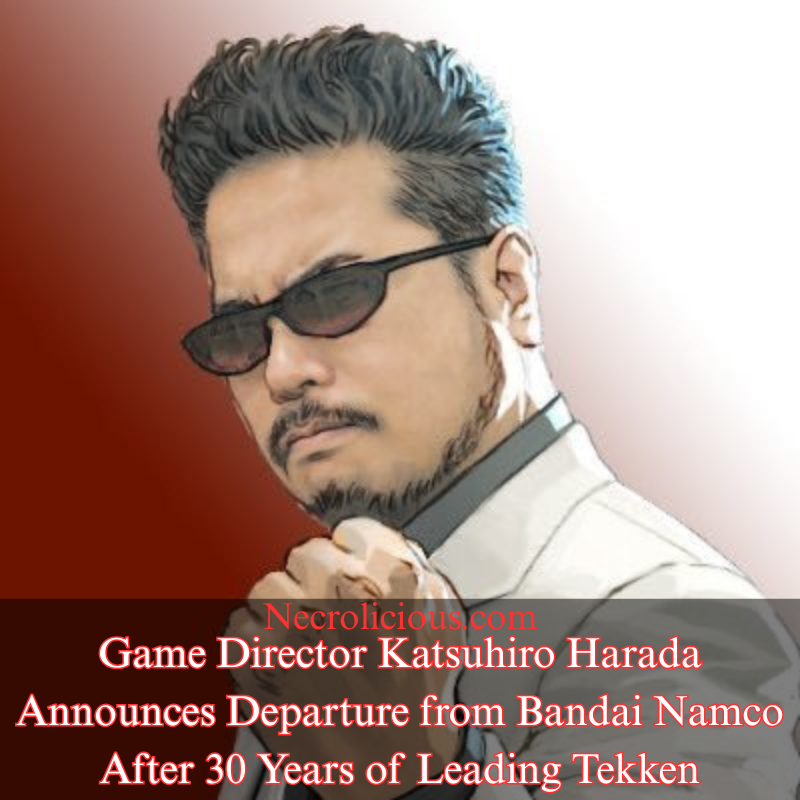
I’d like to share that I’ll be leaving Bandai Namco at the end of 2025. With the TEKKEN series reaching its 30th anniversary—an important milestone for a project I’ve devoted much of my life to—I felt this was the most fitting moment to bring one chapter to a close.
発表の注目すべき追加点として、原田はバンダイナムコの招待により、2026年1月下旬の『鉄拳ワールドツアー(TWT)ファイナル』にゲストとして参加することが決定しました。さらに、長年の約束を果たす形で、彼が自身で編集した60分間のDJミックス『‘TEKKEN: A 30-Year Journey – Harada’s Final Mix’』をSoundCloudで公開しました。この個人的なプロジェクトは、30年にわたるキャリアへのノスタルジックなオマージュとして、ファンやプレイヤーに多くの思い出を呼び起こします。
In a significant development for the gaming industry, Katsuhiro Harada, the renowned director and chief producer of the iconic Tekken series, has announced his departure from Bandai Namco at the end of 2025. The announcement, made via a heartfelt post on X at 08:52 UTC on 8 December 2025, coincides with the 30th anniversary of Tekken, marking the close of a remarkable chapter for one of the most influential figures in fighting game development.
I’d like to share that I’ll be leaving Bandai Namco at the end of 2025. With the TEKKEN series reaching its 30th anniversary—an important milestone for a project I’ve devoted much of my life to—I felt this was the most fitting moment to bring one chapter to a close.
Harada’s tenure with Bandai Namco has been defined by his stewardship of the Tekken franchise, which debuted in 1994. His journey began modestly, transporting arcade cabinets to small tournaments in Japanese arcades and community centres overseas. These early experiences, where he engaged directly with players, shaped his approach to game design and fostered a deep connection with the global gaming community. Over the years, he oversaw the evolution of Tekken into a global phenomenon, contributing to titles such as Tekken 8, alongside diverse projects including Summer Lesson, Pokkén Tournament, and the Soulcalibur series.
The decision to step away follows a period of personal reflection, triggered by the loss of close friends and the retirement or passing of respected senior colleagues. Harada sought counsel from Ken Kutaragi, a pivotal figure in the gaming industry known for his role in developing the PlayStation, whose guidance reinforced his resolve. Over the past four to five years, Harada has gradually transferred his responsibilities, including story development and worldbuilding, to the Tekken team, ensuring a smooth transition.
The Announcement & Future Plans
In his X post, Harada expressed profound gratitude to fans, communities worldwide, and colleagues for their support throughout his career. He highlighted the 30th anniversary as an opportune moment to conclude this phase, stating, “I felt this was the most fitting moment to bring one chapter to a close.” While he has not disclosed his next steps, he promised further updates in due course, suggesting that his departure does not signify a full retirement from the industry.
A notable addition to the announcement is Harada’s commitment to attend the Tekken World Tour (TWT) Finals in late January 2026 as a guest, at Bandai Namco’s invitation. Furthermore, fulfilling a long-standing promise, he has released a 60-minute DJ mix titled ‘TEKKEN: A 30-Year Journey – Harada’s Final Mix’, available on SoundCloud (https://on.soundcloud.com/pEYofA4yXOwyC7lj0O). This personal project, edited by Harada himself, serves as a nostalgic tribute to his 30-year tenure, evoking memories for fans and players alike.
Community Response & Industry Impact
The announcement has elicited an outpouring of emotion from the gaming community, with over 8,300 likes, 2,200 reposts, and 380,000 views on X within hours. Fans, professional players such as DRX|KNEE, and industry figures like MarkMan have shared tributes, recounting personal stories of how Tekken shaped their lives. The official @TEKKEN_Project account also responded, outlining Harada’s retirement and reaffirming the franchise’s ongoing development.
Harada’s departure represents a pivotal moment for the fighting game genre. His candid engagement with the community, including addressing fan concerns on social media, has been a hallmark of his leadership. This transition underscores a shift in Tekken’s direction, with the franchise now poised to build on his legacy under new leadership.
Katsuhiro Harada’s exit from Bandai Namco after 30 years is a testament to his enduring influence on the Tekken series and the broader gaming landscape. As the industry bids farewell to a veteran leader, anticipation builds for his next endeavours. Fans and professionals alike await further details, while the Tekken community prepares to honour his legacy at the upcoming TWT Finals.
Unless otherwise noted, image assets above are NOT original content & are shared under fair use doctrine with NO claims to authorship or ownership. Contact necrolicious@necrolicious.com for credit or removal.
This post was sponsored by…ME! If you’d like to support, please buy my original meme merch from Necrolicious.store or check out my affiliate links to get yourself some other cool things. Additional affiliate links may be contained in the above article. If you click on an affiliate link & sign up/make a purchase, I may earn a commission. This does not increase the price you pay for the product or service, so it helps support this website at no cost to you.
It’s nearly 2026, but my 2019 Samsung Galaxy S10 remains in daily use. Why? It was part of the final mainline Galaxy S lineup to ever include a microSD card slot. For me & countless other Android enthusiasts, this single feature represented genuine freedom: expandable storage that could be upgraded or replaced for pennies compared to the ever-escalating cost of built-in memory. When Samsung dropped the slot with the Galaxy S20 in 2020 & every flagship since, many of us felt the industry was simply copying Apple’s long-standing refusal to offer expandable storage on any iPhone. We warned that removing this incalculably beneficial feature would be bad for business – & now, in late 2025, it appears that prediction is proving more correct than ever. Soaring DRAM prices are pushing manufacturers to the limit, & the latest supply-chain intelligence strongly suggests that microSD card slots are being seriously reconsidered for future flagship devices. The feature we refused to surrender may be on the verge of a full-scale return.
In an era where smartphone storage demands continue to escalate, the prospect of expandable memory options returning to flagship devices has sparked considerable interest among consumers & industry observers alike. Recent reports suggest that surging prices for DRAM – the core component in device memory – may compel leading manufacturers to reinstate the microSD card slot, a feature absent from premium handsets for over six years. This potential revival could alleviate the financial burden on buyers facing ever-higher costs for internal storage upgrades, offering a more flexible & cost-effective alternative.
The Surge in DRAM Prices: A Catalyst for Change
Dynamic Random Access Memory (DRAM) forms the backbone of smartphone storage, enabling the seamless multitasking & high-resolution media handling that modern users expect. However, global supply constraints have driven DRAM prices to unprecedented levels, with shortages projected to endure until at least the fourth quarter of 2027. Analysts note that prices for 12GB LPDDR5X components – essential for contemporary flagships – have more than doubled, climbing from $33 at the year’s outset to $70 per unit.
This escalation stems from broader semiconductor challenges, including production bottlenecks & heightened demand from data centres & AI applications. Even established players like Samsung have prioritised profitability over internal supply chains, reportedly declining bulk memory requests from their own mobile division in favour of quarterly contracts. As a result, manufacturers face mounting pressure to maintain competitive pricing without eroding margins, prompting a reevaluation of longstanding design choices.
With DRAM costs showing no signs of abating through 2026, reinstating microSD slots emerges as a pragmatic response for manufacturers. By enabling consumers to purchase entry-level storage models & augment them with high-capacity cards, brands can mitigate the need for across-the-board price hikes. This strategy not only preserves shipment volumes but also appeals to value-driven buyers, fostering loyalty in a saturated market.
Emerging standards like microSD Express further bolster the case, promising read & write speeds exceeding 800 MB/s – on par with internal SSDs. Samsung’s own 512 GB P9 Express card, available for around $75, exemplifies this evolution, delivering rapid transfers without the performance bottlenecks of older formats. Chinese supply chain whispers indicate that new flagships slated for the latter half of 2026 could integrate these slots.
Such a revival would democratise access to ample storage, empowering photographers, videographers, & power users to sidestep the escalating cost of built-in memory.
Looking Ahead: A More Inclusive Storage Landscape
Your trusty Galaxy S10 might soon stop being the last of its kind. As smartphone innovation accelerates, the rumoured return of microSD slots signals a potential recalibration towards consumer-centric design. The flexibility many of us miss may soon enhance the devices of tomorrow.
Unless otherwise noted, image assets above are NOT original content & are shared under fair use doctrine with NO claims to authorship or ownership. Contact necrolicious@necrolicious.com for credit or removal.
This post was sponsored by…ME! If you’d like to support, please buy my original meme merch from Necrolicious.store or check out my affiliate links to get yourself some other cool things. Additional affiliate links may be contained in the above article. If you click on an affiliate link & sign up/make a purchase, I may earn a commission. This does not increase the price you pay for the product or service, so it helps support this website at no cost to you.